
Question (15 marks)
Topic: Human Interactions with Environments
Question a (1 mark) – Topic: Human Interactions with Environments – Pollution/Conservation
Precipitation is one step in the water cycle. Select the location for the other three processes shown in the water cycle.
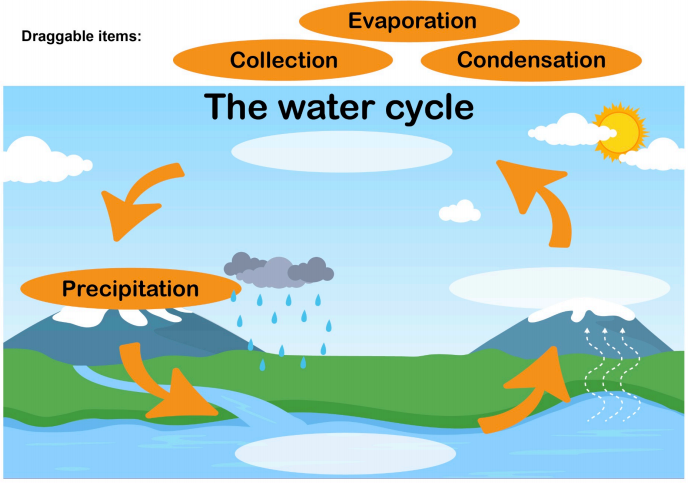
- [ ] Evaporation
- [ ] Condensation
- [ ] Collection
▶️ Answer/Explanation
Answer:
- Evaporation: Surface water (oceans, lakes, rivers)
- Condensation: Atmosphere (clouds)
- Collection: Land surface (rivers, lakes, groundwater)
Detailed Explanation:
- Evaporation: Water from oceans, lakes, and rivers absorbs solar energy, turning into vapor and rising into the atmosphere (e.g., 86% of global evaporation from oceans).
- Condensation: Water vapor cools in the atmosphere, forming droplets that aggregate into clouds (e.g., at altitudes of 1-10 km).
- Collection: Precipitation falls and collects in water bodies or infiltrates soil, replenishing groundwater (e.g., 78% of precipitation occurs over oceans).
Mark: 1 for correctly identifying all three locations relative to the diagram.
Question b (2 marks) – Topic: Human Interactions with Environments – Pollution/Conservation
Outline the consequences to a region if precipitation changes due to climate change.
▶️ Answer/Explanation
Answer:
Changes in precipitation due to climate change can lead to either excessive rainfall causing floods and ecosystem disruption, or reduced rainfall resulting in droughts and biodiversity loss.
Detailed Explanation:
- Increased Precipitation: Heavy rainfall can cause flooding (e.g., 2022 Pakistan floods displaced 33 million), eroding soil, damaging crops (e.g., 30% rice yield loss), and altering habitats, reducing species diversity.
- Decreased Precipitation: Droughts (e.g., 2021 Horn of Africa crisis) deplete water resources, lower agricultural output (e.g., 50% maize reduction), and trigger desertification, threatening species survival (e.g., 20% tree mortality in arid zones).
Marks: 1 for identifying a consequence (floods/droughts), 1 for linking to regional impact (ecosystems/agriculture), totaling 2.
Question c (12 marks) – Topic: Human Interactions with Environments – Pollution/Conservation
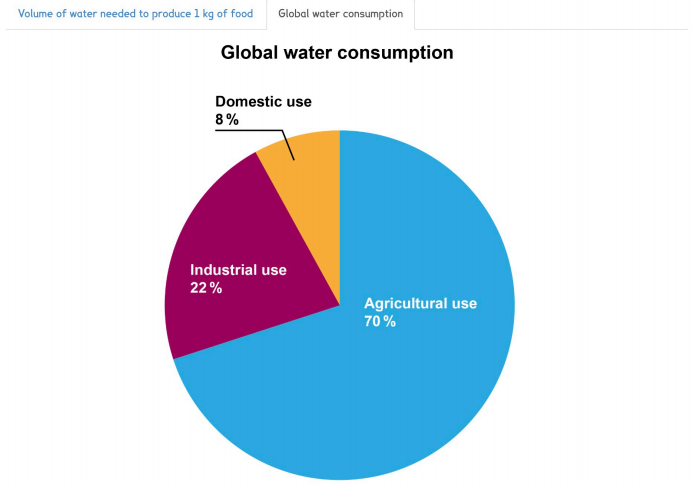
Water is a finite resource. It is essential for life. It is necessary for hydration, hygiene, agriculture, and food production. Human actions have changed the water cycle.
Using information from this task and your wider MYP studies, discuss and evaluate how the decisions made by individuals and governments can make water use more sustainable. Include:
- Steps that could be taken to reduce water usage in the home
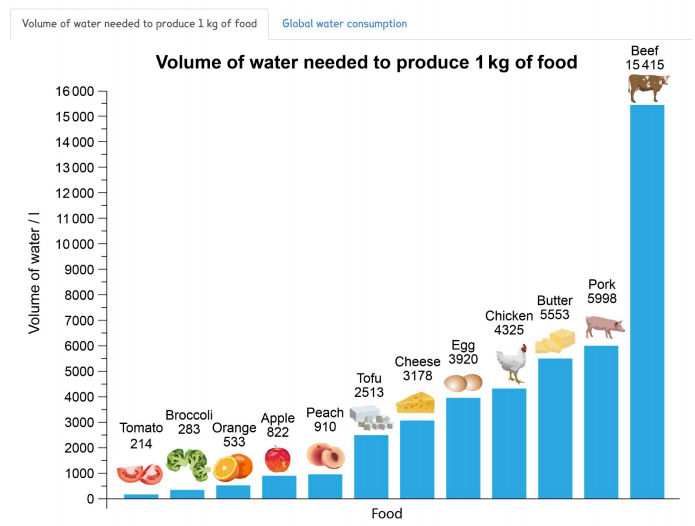
- A description of how an individual’s dietary choices can affect their water footprint
- A suggestion of how government policies can influence water use
- A concluding appraisal
▶️ Answer/Explanation
Answer:
- Steps to Reduce Water Usage in the Home: Installing low-flow fixtures, repairing leaks, and collecting rainwater reduce domestic water consumption significantly.
- Dietary Choices and Water Footprint: Opting for plant-based diets lowers water use, as meat production demands far more water than crops.
- Government Policies: Policies like water pricing and recycling infrastructure promote conservation and sustainable supply.
- Concluding Appraisal: Combined efforts of individuals and governments are essential for sustainable water management, balancing immediate action with systemic change.
Detailed Explanation:
- Home Water Reduction: Low-flow showerheads cut usage by 2.5 gallons/minute (e.g., 50% savings), fixing leaks prevents 10% household waste (EPA data), and rainwater harvesting can supply 1,000 liters/year for gardens, reducing potable water demand.
- Dietary Impact: Beef production uses 15,000 liters/kg versus 1,000 liters/kg for vegetables (Water Footprint Network); shifting to vegetarian diets could halve an individual’s water footprint (e.g., from 4,000 to 2,000 liters/day).
- Government Influence: Tiered pricing (e.g., California’s model) reduces usage by 20%, recycling plants (e.g., Singapore’s NEWater) reclaim 40% of wastewater, and education campaigns increase awareness, cutting per capita use by 10% (UN studies).
- Appraisal: Individual actions offer quick wins (e.g., 30% home savings), but government policies ensure scalability (e.g., 50% national water recovery). Integration is key, as over-reliance on one risks failure (e.g., policy without public buy-in falters).
Marks: 3 per section (relevance, detail, evaluation) for 12 total.