
Digestion
🌟 Introduction
Digestion is the process that breaks down food into small, absorbable molecules so the body can use them for energy, growth, and repair. It includes mechanical breakdown, chemical breakdown, absorption, and egestion.
🧩 Why Digestion Is Needed?
- Food molecules are too large to be absorbed directly.
- Digestion converts:
- Proteins → amino acids
- Carbohydrates → glucose
- Fats → fatty acids + glycerol
- Allows nutrients to enter blood and reach cells for metabolism.
🍽️ Types of Digestion
Mechanical digestion
- Physical breakdown of food.
- Increases surface area for enzyme action.
- Examples: chewing, stomach churning, segmentation.
Chemical digestion
- Breakdown using enzymes.
- Reactions are highly specific.
- Mainly occurs in stomach and small intestine.
🏗️ Human Digestive System (Organs + Functions)
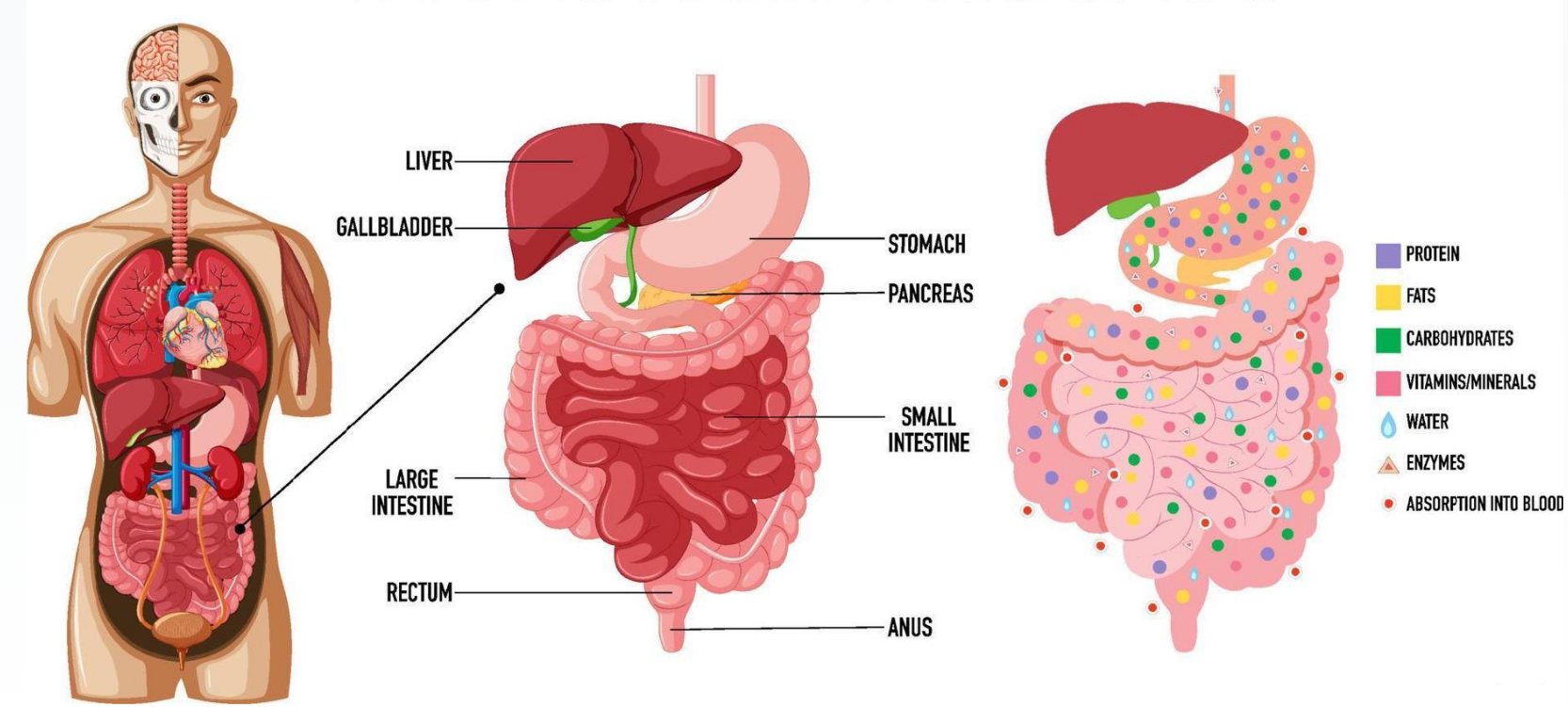
a) Mouth
- Teeth grind food.
- Saliva moistens food.
- Amylase begins starch digestion.
- Tongue rolls food into bolus.
b) Oesophagus
- Pushes food to stomach by peristalsis.
c) Stomach
- Stores food temporarily.
- HCl kills microbes and provides acidic medium for pepsin.
- Pepsin begins protein digestion.
- Muscular walls churn food (mechanical digestion).
d) Small intestine
Main site of chemical digestion + absorption.
Duodenum
- Receives bile from liver.
- Receives pancreatic enzymes.
- Neutralizes stomach acid.
- Enzymes:
- Amylase → starch to maltose
- Lipase → fats to fatty acids + glycerol
- Trypsin → proteins to peptides
Jejunum + Ileum
- Villi and microvilli increase surface area.
- Absorb glucose, amino acids, fatty acids, vitamins, minerals.
e) Liver
- Makes bile for fat emulsification.
- Processes absorbed nutrients (glucose → glycogen).
- Detoxifies harmful substances.
f) Gallbladder
- Stores and releases bile.
g) Pancreas
- Produces digestive enzymes.
- Releases bicarbonate to neutralize acid.
h) Large intestine (Colon)
- Absorbs water and minerals.
- Forms feces.
i) Rectum and Anus
- Stores undigested waste until egestion.
🧬 Digestive Enzymes
| Nutrient | Enzyme | Product | Site |
|---|---|---|---|
| Starch | Amylase | Maltose | Mouth, pancreas |
| Proteins | Pepsin, Trypsin | Peptides → amino acids | Stomach, small intestine |
| Fats | Lipase | Fatty acids + glycerol | Small intestine |
| Maltose | Maltase | Glucose | Small intestine |
Tip: ALTM → Amylase, Lipase, Trypsin, Maltase.
🧫 Absorption
Occurs mainly in small intestine through villi.
Features of villi
- Thin epithelium
- Rich blood supply
- Lacteals for fat transport
- Large surface area due to microvilli
What gets absorbed?
- Glucose → blood
- Amino acids → blood
- Fatty acids → lacteals
- Vitamins + minerals → blood
♻️ Assimilation
- Glucose → energy production
- Amino acids → protein synthesis
- Fatty acids → membranes / storage
- Calcium → bones
- Iron → hemoglobin formation
🚽 Egestion
- Removal of undigested food through rectum and anus.
- Not the same as excretion (metabolic waste removal).
🧠 Common Digestive Disorders
- Ulcers – erosion of stomach lining
- Diarrhea – insufficient water absorption
- Constipation – excessive water absorption
- Jaundice – improper liver function
- Gallstones – solidified bile blocking ducts
📌 Summary Table
| Process | Meaning |
|---|---|
| Ingestion | Taking in food |
| Digestion | Mechanical and chemical breakdown |
| Absorption | Movement of nutrients into blood |
| Assimilation | Use of nutrients by cells |
| Egestion | Removal of undigested waste |
⚡ Quick Recap
Digestion = breakdown of food into absorbable units.
Mechanical digestion → chewing, churning, segmentation.
Chemical digestion → enzymes like amylase, lipase, pepsin.
Small intestine = main site of digestion and absorption.
Villi increase surface area for absorption.
Liver makes bile, pancreas makes enzymes.
Disorders include ulcers, diarrhea, constipation, jaundice.