
Pathogens and Parasites
🌟 Introduction
Pathogens and parasites are biological agents that cause diseases or harm in their hosts. They invade, reproduce, and disrupt normal body functions, leading to illness. Although both cause harm, they differ in type, mode of action, and life cycle.
🧫 What Are Pathogens?
Pathogens are microorganisms that cause disease when they enter a host body.
Major Types of Pathogens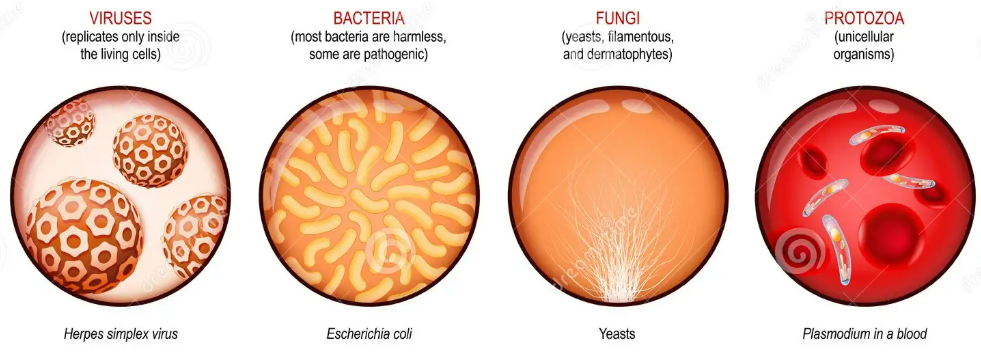
a) Bacteria
- Single-celled prokaryotes
- Reproduce quickly inside the host
- Produce toxins that damage tissues
- Examples: Streptococcus, Mycobacterium tuberculosis
b) Viruses
- Non-living particles
- Need a host cell to reproduce
- Hijack host DNA machinery
- Cause destruction of host cells
- Examples: Influenza virus, HIV
c) Fungi
- Eukaryotic organisms (yeasts, molds)
- Prefer warm, moist body areas
- Cause skin and systemic infections
- Examples: athlete’s foot, ringworm
d) Protozoa
- Single-celled eukaryotes
- Often spread by contaminated water or vectors
- Example: Plasmodium (malaria)
e) Prions
- Misfolded infectious proteins
- Very rare
- Example: mad cow disease
🪱 What Are Parasites?
Parasites live in or on another organism (the host) and take nutrients, harming the host but usually not killing it immediately.
Types of Parasites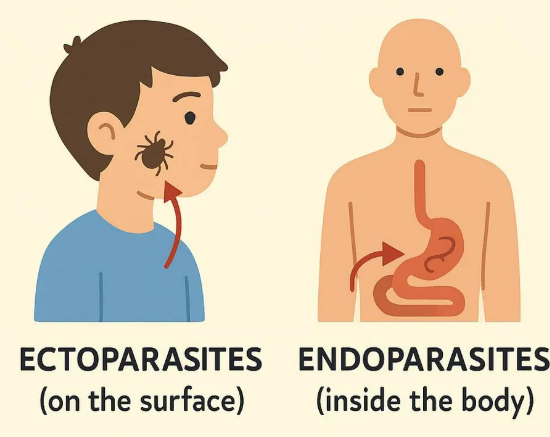
a) Ectoparasites
- Live on the surface of the host
- Feed on blood or skin
- Examples: lice, ticks, fleas
b) Endoparasites
- Live inside the host
- Often found in blood, intestines, or tissues
- Examples: tapeworms, roundworms
🔬 Differences Between Pathogens and Parasites
| Feature | Pathogens | Parasites |
|---|---|---|
| Definition | Microorganisms causing disease | Organisms living in or on a host |
| Size | Mostly microscopic | Often visible (worms, arthropods) |
| Harm caused | Disease and cell damage | Slow harm by stealing nutrients |
| Reproduction | Inside host cells or tissues | Complex life cycles |
| Examples | Bacteria, viruses | Tapeworms, lice |
🏥 How Pathogens Enter the Body
Common entry points:
- Respiratory tract (airborne)
- Digestive tract (contaminated food or water)
- Skin wounds
- Bloodstream (via vectors like mosquitoes)
- Reproductive tract
🧩 How Parasites Enter the Body
Common entry methods:
- Contaminated food
- Insect bites
- Walking barefoot on soil
- Poor hygiene
- Uncooked meat
- Drinking unsafe water
🔁 Life Cycles
Pathogens
- Simple, fast reproduction
- Direct infection cycles (especially viruses and bacteria)
Parasites
- Often involve multiple hosts
- Complex stages such as larvae and adult
- May survive in the environment before infecting a host
Example: Plasmodium requires both human and mosquito hosts.
Diseases Caused
By Pathogens
- Tuberculosis
- COVID-19
- Cholera
- Fungal infections
- Malaria (protozoan pathogen)
By Parasites
- Tapeworm infection
- Filariasis
- Schistosomiasis
- Head lice
🛡️ Prevention and Control
Against Pathogens
- Vaccination
- Antibiotics for bacterial infections
- Antiviral drugs
- Clean drinking water
- Regular hand hygiene
Against Parasites
- Deworming tablets
- Mosquito control
- Wearing shoes outdoors
- Clean living environment
- Properly cooked meat
- Safe drinking water
📊 Summary Table
| Aspect | Pathogens | Parasites |
|---|---|---|
| Nature | Microbes | Organisms |
| Living? | Some non-living (viruses) | Always living |
| Harm level | Can be severe and quick | Usually slow and long-term |
| Transmission | Air, water, contact | Vectors, contaminated food |
| Prevention | Vaccines, hygiene | Deworming, vector control |
⚡ Quick Recap
Pathogens are microbes that cause diseases.
Parasites live on or inside a host and steal nutrients.
Pathogens include viruses, bacteria, fungi, protozoa, and prions.
Parasites may be ectoparasites or endoparasites.
Both harm the host but in different ways.
Prevention relies on hygiene, clean water, vector control, and sometimes vaccines.