
Receptors and Hormones
🌟 Introduction
Living organisms constantly sense changes inside and outside their bodies. To respond properly, they use:
- Receptors → detect the change
- Hormones → carry slow, long-lasting messages through blood
Together, they help maintain coordination + homeostasis.
👁️ Receptors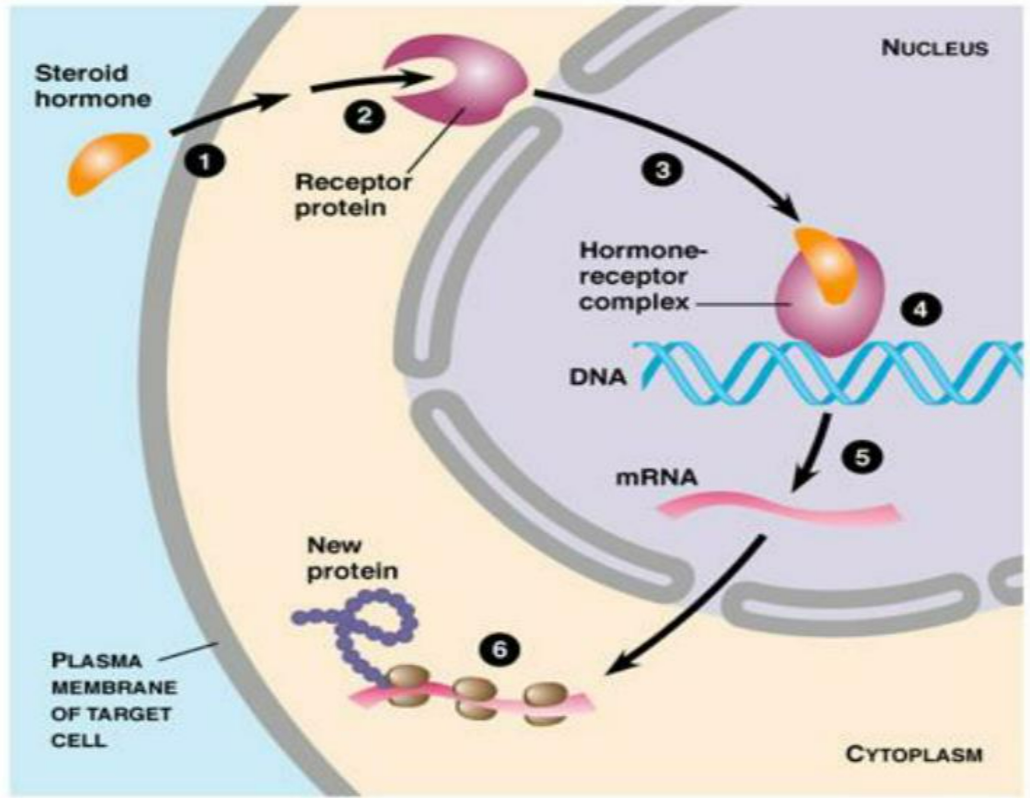
Receptors are specialized cells or proteins that detect a specific type of stimulus.
Key Points
- Located in sense organs or inside the body
- Each receptor is specific (light receptor responds only to light etc.)
- Converts stimulus into electrical signals (nerve impulses)
- Sends information to the brain/spinal cord
🧭 Types of Receptors
- Photoreceptors (Light)
Found in the retina (rods and cones)
Rods → dim light
Cones → color vision - Chemoreceptors (Chemicals)
Tongue (taste) and nose (smell)
Also inside body for CO₂ and pH changes - Mechanoreceptors (Touch/Pressure)
Skin: detects pressure, stretch, vibration - Thermoreceptors (Temperature)
Skin and hypothalamus
Sense hot/cold - Pain Receptors (Nociceptors)
Respond to tissue damage - Internal Receptors
In muscles/tendons (proprioceptors) → sense body position
In blood vessels → sense pressure, CO₂, glucose etc.
How Receptors Work
Stimulus → Receptor → Sensory Neuron → Brain/Spinal Cord → Response
- Quick
- Precise
- Electrical signals
Hormones
Hormones are chemical messengers secreted by endocrine glands into the bloodstream.
Key Features
- Travel through blood, not neurons
- Cause slow but long-lasting effects
- Act on target organs that have the matching receptors
- Maintain growth, metabolism, reproduction, homeostasis
🧬Major Endocrine Glands & Hormones
- Pituitary Gland (Master gland)
Growth hormone
Controls other glands - Thyroid
Thyroxine → regulates metabolism - Pancreas
Insulin → lowers blood glucose
Glucagon → raises blood glucose - Adrenal Glands
Adrenaline → fight/flight (increases heart rate, breathing) - Ovaries
Estrogen, progesterone → menstrual cycle, secondary sexual characters - Testes
Testosterone → male characteristics - Hypothalamus
Links nervous + endocrine system
Controls pituitary
🎛️ How Hormones Work (Mechanism)
- Endocrine gland releases hormone
- Hormone enters bloodstream
- Travels to target cells
- Target cells have specific receptors
- Hormone binds → triggers response (like opening a lock with the right key)
- Hormone only acts where receptors match
- Prevents unwanted responses
🧪 Types of Hormones
- Protein/Peptide Hormones (e.g., insulin)
Cannot enter cells
Bind to receptors on cell surface - Steroid Hormones (e.g., estrogen)
Can enter cells
Bind to DNA → change gene expression
Long-lasting effects
🔗 Receptors vs Hormones Interaction
Receptors detect changes → brain responds → may release hormones.
Example:
- Low glucose → receptors detect → pancreas releases glucagon → glucose rises.
- Maintains homeostasis
- Nervous system = fast
- Endocrine system = slow but steady
📋 Summary Table
| Topic | Key Idea | Speed | Duration | Example |
|---|---|---|---|---|
| Receptors | Detect stimuli | Very fast | Short | Retina detects light |
| Hormones | Chemical messages in blood | Slower | Long-lasting | Insulin lowers glucose |
| Link | Receptors trigger hormone release | Mixed | Maintains homeostasis | Glucose control |
🧠 Quick Recap
Receptors detect stimuli (light, smell, pressure, temp).
Each receptor is specific for its stimulus.
Hormones are chemical messengers that travel in blood.
Only target organs with matching receptors respond.
Endocrine system = slow, long-lasting.
Nervous system = fast, short-lived.
Examples: insulin, adrenaline, estrogen, thyroxine.