
Reproduction
🌟 Introduction
Reproduction is the process by which organisms produce new individuals of the same species. It maintains population continuity and transfers genetic information to future generations.
There are two main types:
- Asexual reproduction
- Sexual reproduction
🧬 Asexual Reproduction
A single parent produces offspring without gamete fusion. Offspring are usually genetically identical (clones).
🌟 Main Features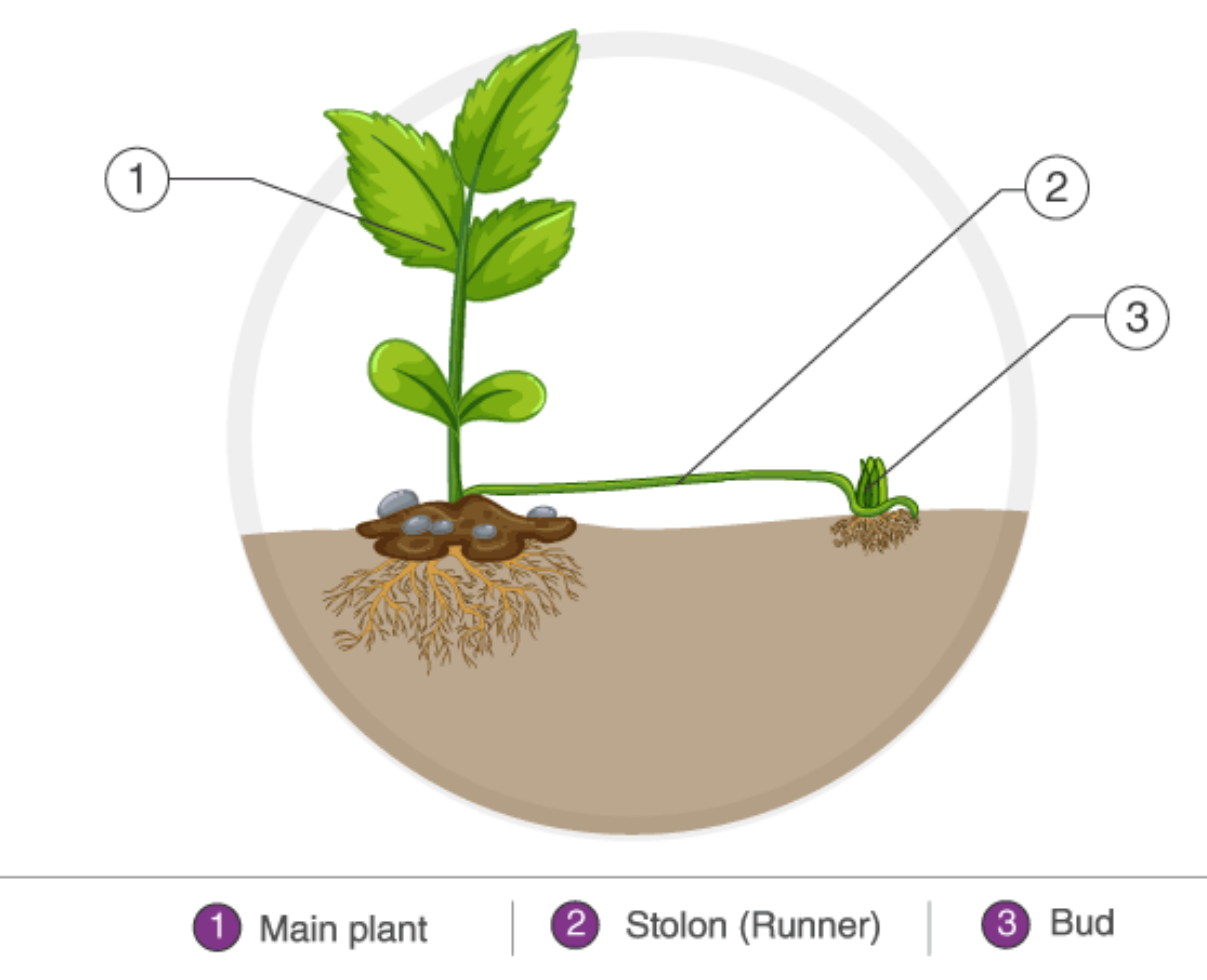
- One parent required
- Fast process
- No genetic variation (except mutations)
- Common in bacteria, protists, fungi, plants, simple animals
🧩 Types of Asexual Reproduction
a) Binary Fission
- Seen in bacteria, amoeba
- Cell divides into two identical cells
- Very rapid
b) Budding
- New organism grows as a bud on parent
- Seen in yeast, hydra
c) Fragmentation
- Body breaks into pieces → each piece forms a new organism
- Seen in starfish, planaria
d) Regeneration
- Restores lost parts of the body
- Lizard tail regeneration (does not form a new organism)
e) Vegetative Propagation (Plants)
- New plants grow from root, stem, or leaf
- Examples: potato (tuber), ginger (rhizome), Bryophyllum (leaf buds)
f) Spore Formation
- Spores spread through air/water
- Found in fungi and mosses
🧬 Sexual Reproduction
Two parents produce offspring through fusion of sperm and egg. Offspring show genetic variation.
🌟 Main Features
- Involves meiosis
- Produces haploid gametes
- Slower than asexual reproduction
- Creates variation → improves survival
🧩 Steps in Sexual Reproduction
a) Gamete Formation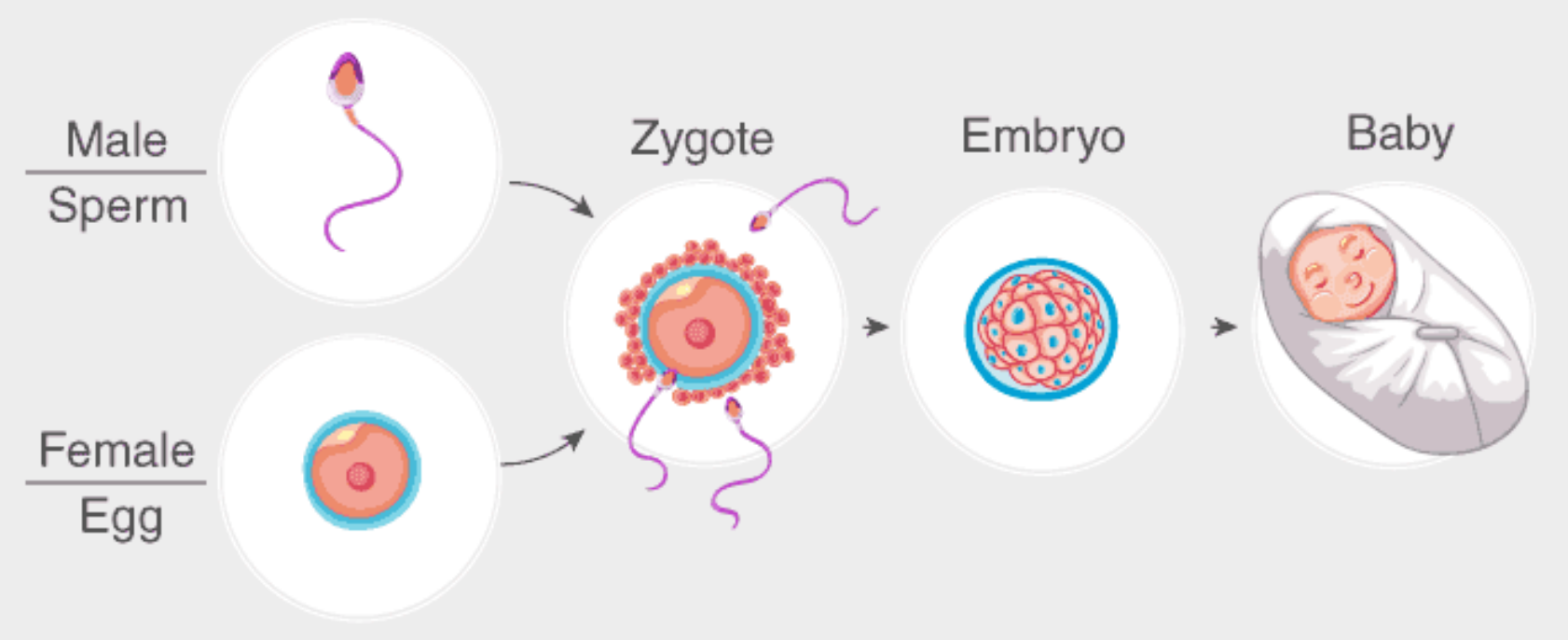
- Meiosis forms haploid sperm and eggs
b) Fertilization
- Sperm + egg fuse → zygote
- Restores diploid number
c) Development
- Zygote → embryo → complete organism
🌸 Sexual Reproduction in Plants
Key Points
- Male part → stamen (anther makes pollen)
- Female part → carpel (ovary makes ovules)
Steps:
- Pollination
- Fertilization
- Seed formation
- Fruit formation
- Germination
🐾 Sexual Reproduction in Animals
Male system produces:
- Sperm
- Hormones (testosterone)
Female system produces:
- Eggs
- Hormones (estrogen, progesterone)
- Supports embryo development
🔬 Advantages & Disadvantages
Asexual Reproduction
Advantages
- Fast
- No mate needed
- Many offspring quickly
Disadvantages
- No genetic variation
- Low adaptability
Sexual Reproduction
Advantages
- Variation present
- Better disease and environment resistance
Disadvantages
- Slow
- Requires mate
- Energy costly
📊 Summary Table
| Feature | Asexual | Sexual |
|---|---|---|
| Parents | One | Two |
| Gametes | Not involved | Involved |
| Variation | No | Yes |
| Speed | Fast | Slow |
| Examples | Hydra, yeast, bacteria | Humans, animals, many plants |
⚡ Quick Recap
Reproduction maintains species continuity.
Asexual → one parent, fast, no variation.
Sexual → gametes + fertilization, variation present.
Key asexual types: fission, budding, fragmentation, spores.
Sexual reproduction increases survival through diversity.