
Respiration
🌟 Introduction
Respiration is the process by which cells release energy from food (mainly glucose).
It is the opposite of photosynthesis and occurs in all living organisms.
Respiration provides ATP, which powers every activity in a cell (movement, growth, transport, repair).
🧬 What Is Respiration
- A biochemical process that breaks down glucose.
- Occurs mostly in mitochondria.
- Energy is released and stored in ATP.
- Happens all the time in every living cell.
General equation
Glucose + Oxygen → Carbon dioxide + Water + Energy (ATP)
🔑 Types of Respiration
A) Aerobic Respiration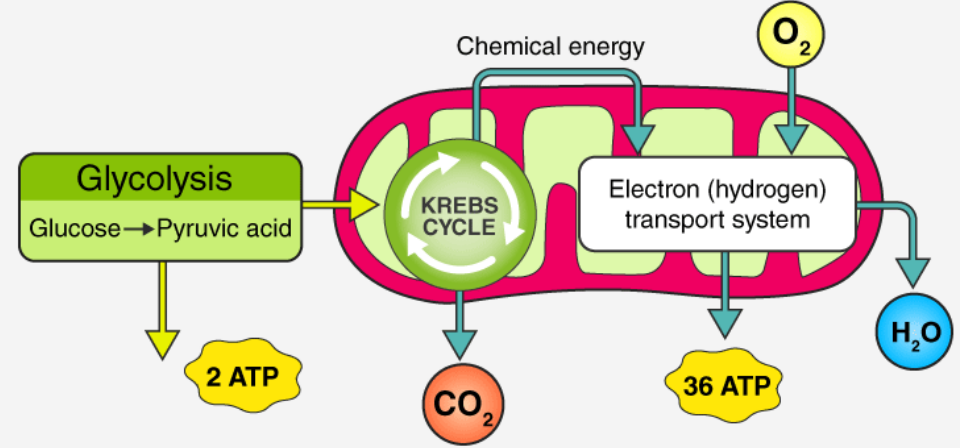
- Occurs with oxygen.
- Most efficient type.
Steps
- Glycolysis (in cytoplasm) – Glucose → pyruvate, small ATP formed.
- Krebs Cycle (in mitochondria) – Produces CO₂ and high energy electrons.
- Electron Transport Chain – Maximum ATP formed, water produced.
Products
- Large ATP yield
- CO₂ and water
B) Anaerobic Respiration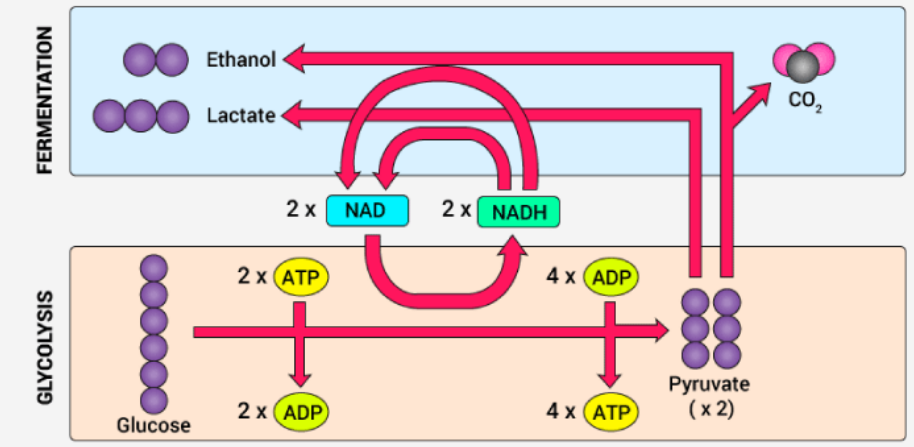
- Occurs without oxygen.
- Less efficient.
In animals
Glucose → Lactic acid + small ATP (causes cramps and fatigue)
In yeast/plants (fermentation)
Glucose → Ethanol + CO₂ + small ATP
🔍 Why We Need Respiration
ATP produced is required for:
- Growth and repair
- Movement (muscle contraction)
- Active transport
- Maintaining body temperature
- Cell division
- Producing enzymes, hormones, proteins
🔥 Mitochondria – The “Powerhouse”
- Double membrane organelle
- Inner membrane forms cristae → increases enzyme surface area
- Matrix contains enzymes for respiration
- Cells with high energy needs have more mitochondria (muscles, brain, sperm)
🫁 Breathing vs Respiration
| Feature | Breathing | Respiration |
|---|---|---|
| Meaning | Physical process of inhaling and exhaling | Chemical breakdown of glucose to release energy |
| Location | Lungs | Cells (mitochondria) |
| Energy use | Requires energy | Releases energy |
| Inputs | Air | Glucose + O₂ |
| Outputs | CO₂ exhaled | CO₂, water, ATP |
🍃 Role of Oxygen
- Acts as the final electron acceptor in mitochondria.
- Helps release maximum ATP during electron transport chain.
- Lack of oxygen forces cells into anaerobic mode.
🧪 Evidence of Respiration
- Release of CO₂ (limewater turns milky)
- Release of heat
- Consumption of oxygen
- Formation of water
🧩 Importance of Respiration in Ecosystems
- Provides energy to all organisms
- Linked to photosynthesis (opposite processes)
- Drives all metabolic activities
- Maintains carbon cycle through CO₂ release
📌 Summary Table
| Type | Oxygen Required | End Products | ATP Yield | Example Organisms |
|---|---|---|---|---|
| Aerobic | Yes | CO₂ + H₂O | High (36 to 38 ATP) | Humans, animals |
| Anaerobic (animals) | No | Lactic acid | Low | Muscles during intense exercise |
| Anaerobic (yeast) | No | Ethanol + CO₂ | Low | Yeast, bacteria |
📦 Quick Recap
Respiration releases energy (ATP) by breaking down glucose.
Occurs in all cells, mainly in mitochondria.
Two types: aerobic (with oxygen) and anaerobic (without oxygen).
Aerobic produces much more ATP.
Anaerobic forms lactic acid in animals and ethanol + CO₂ in yeast.
Needed for movement, growth, repair, and all cell functions.