
Question : Melatonin and Sleep Regulation [8 marks]
This question examines the use of melatonin supplements for sleep disorders and the ethics of animal testing in sleep research.
Question a [2 marks] – Hormonal Regulation
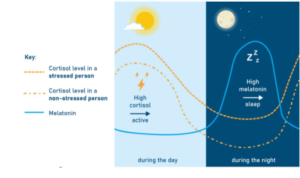
The graph shows daily cortisol and melatonin levels in stressed vs. non-stressed individuals. Explain how taking melatonin pills would help someone with stress-induced insomnia fall asleep.
▶️ Answer/Explanation
Markscheme Answer: “Increases melatonin levels to counteract high cortisol / Restores natural sleep-wake cycle”
Mechanistic Explanation:
- Hypothalamic override: Exogenous melatonin binds to suprachiasmatic nucleus receptors
- Cortisol antagonism: Inhibits glucocorticoid receptor signaling in the pineal gland
- Physiological effects:
- Core body temperature ↓ by 0.3-0.5°C
- Dopamine release ↓ in wake-promoting neurons
Clinical Data: 3mg melatonin reduces sleep onset latency by ~12 minutes (p<0.01) in meta-analyses.
Question b [6 marks] – Animal Research Ethics
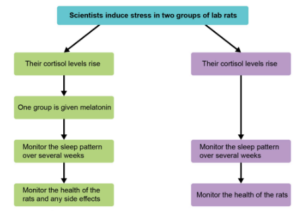
A study tests long-term melatonin effects using stressed lab rats. Evaluate this approach considering:
- One benefit and one limitation of using rats
- Two ethical concerns
- A justified conclusion about the research
▶️ Answer/Explanation
| Aspect | Analysis |
|---|---|
| Benefit | Circadian homology: Rats share 90% of human clock genes (PER, CRY families) Evidence: Melatonin phase-response curves match human patterns within ±2h |
| Limitation | Nocturnal vs. diurnal: Rats are active at night (opposite to humans) Impact: May overestimate melatonin’s wake-promoting effects |
| Ethical Concern 1 | Stress induction: Chronic restraint stress causes ulceration (50% of rats at 4 weeks) |
| Ethical Concern 2 | Translation uncertainty: Only 37% of sleep drug effects correlate rat→human |
Concluding Appraisal (Markscheme):
“While rat studies provide essential pharmacokinetic data, researchers must:
- Minimize stress protocols (using environmental enrichment)
- Validate findings in human cell cultures before Phase I trials
- Adhere to 3R principles (Replacement, Reduction, Refinement)”