
Solubility and Factors Affecting It
Solubility is defined as the maximum amount of solute that can dissolve in a given amount of solvent at a specific temperature to form a saturated solution.
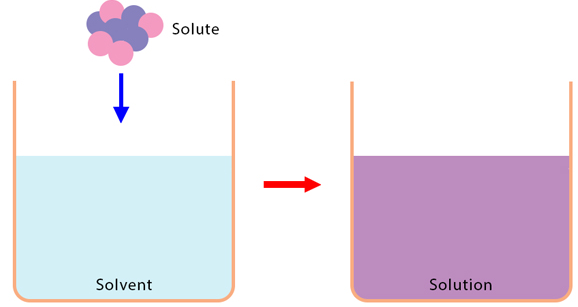
Solubility (S) = \( \mathrm{\dfrac{mass\ of\ solute\ dissolved}{mass\ of\ solvent}} \) (at a fixed temperature)
Units: Usually expressed as grams of solute per 100 g of solvent (g/100 g solvent) or moles per dm³.
Types of Solutions (based on solubility)
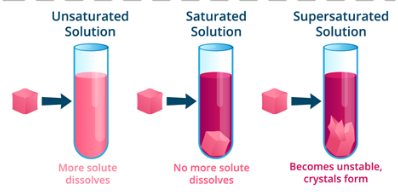
| Type of Solution | Description | Example |
|---|---|---|
| Unsaturated Solution | Contains less solute than it can hold at a given temperature. | Salt solution before reaching its limit. |
| Saturated Solution | Contains the maximum amount of solute that can dissolve at that temperature. | Salt solution with undissolved salt at the bottom. |
| Supersaturated Solution | Contains more solute than it can normally hold at that temperature (unstable). | Hot sodium thiosulfate solution cooled slowly. |
Solubility Curve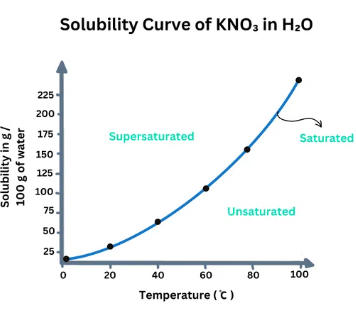
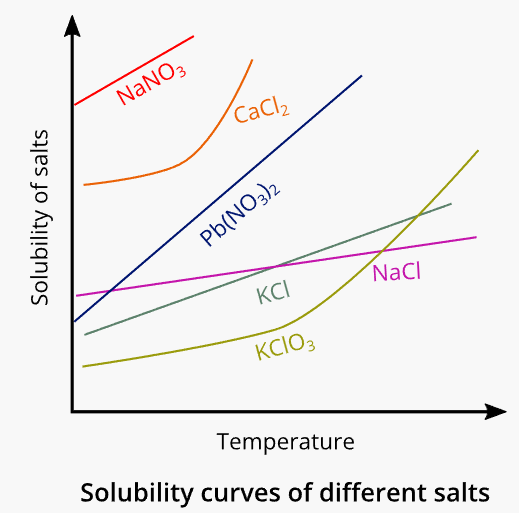
A solubility curve shows how solubility of a substance changes with temperature.
- For most solids, solubility increases with temperature.
- For gases, solubility decreases with increasing temperature.
The solubility curve helps predict whether a solution will be saturated, unsaturated, or supersaturated at a given temperature.
Factors Affecting Solubility
Solubility depends on several factors that influence how easily solute particles disperse within a solvent.
| Factor | Effect on Solubility | Explanation / Example |
|---|---|---|
Nature of Solute and Solvent | “Like dissolves like” — polar solutes dissolve in polar solvents; non-polar in non-polar. | Salt dissolves in water (both polar); oil does not dissolve in water (non-polar). |
Temperature | For most solids → solubility increases. For gases → solubility decreases. | Sugar dissolves faster in hot tea; CO₂ escapes from warm soda. |
Pressure | Has little effect on solids and liquids, but increases gas solubility. | Carbonated drinks contain CO₂ under high pressure. |
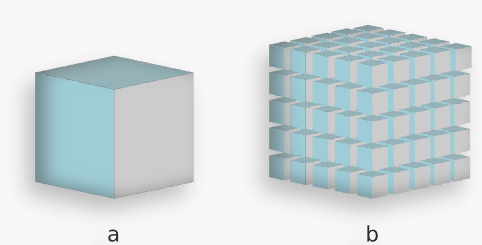
Particle Size | Smaller particles dissolve faster (greater surface area). | Powdered salt dissolves faster than large crystals. |
| Stirring or Agitation | Increases rate of dissolving but not total solubility. | Stirring sugar in water speeds up dissolution. |
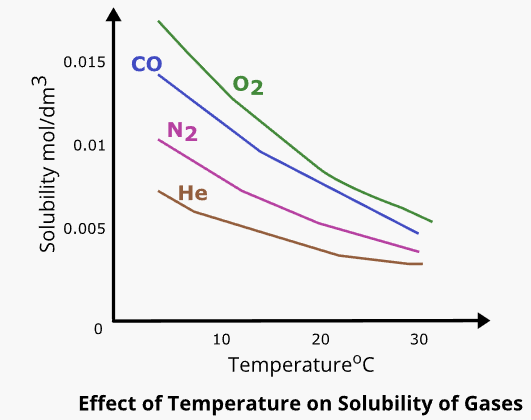
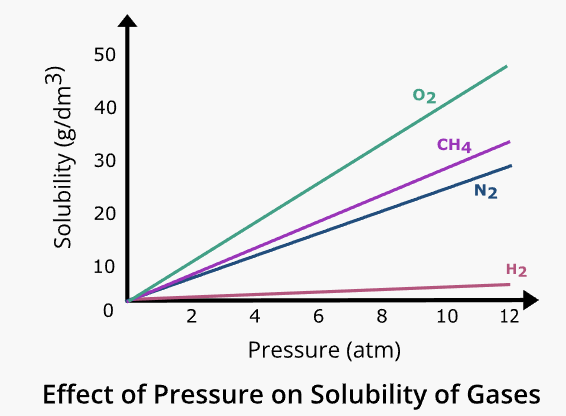
Solubility of Gases in Liquids — Henry’s Law
The solubility of a gas in a liquid is directly proportional to the pressure of the gas above the liquid (at constant temperature):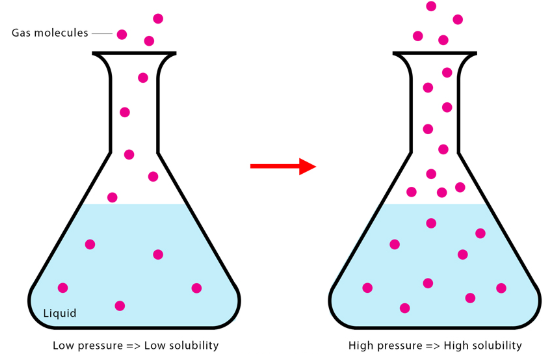
\( \mathrm{S \propto P} \)
Example: CO₂ in soft drinks is dissolved under pressure — when the bottle is opened, pressure drops and gas escapes as bubbles.
Saturation and Dynamic Equilibrium
- In a saturated solution, the rate of dissolving equals the rate of crystallization.
- This establishes a dynamic equilibrium between solute dissolving and solute coming out of solution.
Equation representation:
\( \mathrm{solute_{(solid)} ⇌ solute_{(aqueous)}} \)
Example
At 25°C, 36 g of NaCl dissolves in 100 g of water to form a saturated solution. How much NaCl will dissolve in 200 g of water at the same temperature?
▶️ Answer / Explanation
Step 1: Solubility is 36 g per 100 g water.
Step 2: For 200 g water, solubility doubles.
Calculation: \( \mathrm{36 \times 2 = 72\ g} \)
Final Answer: 72 g of NaCl will dissolve in 200 g of water at 25°C.
Example
Explain why gases become less soluble in liquids as temperature increases.
▶️ Answer / Explanation
Step 1: Dissolving gases in liquids is an exothermic process (releases heat).
Step 2: Increasing temperature adds energy to gas molecules.
Step 3: This extra energy allows more gas molecules to escape into the air.
Final Answer: Solubility of gases decreases with temperature because added heat reduces the attraction between gas molecules and the solvent.
Example
A solubility curve shows that at 30°C, 80 g of KNO₃ can dissolve in 100 g of water. If a solution containing 90 g of KNO₃ in 100 g of water is cooled to 30°C, what type of solution will it become?
▶️ Answer / Explanation
Step 1: At 30°C, solubility = 80 g/100 g water.
Step 2: The solution contains 90 g KNO₃ → more than the solubility limit.
Step 3: 10 g KNO₃ will remain undissolved or crystallize out.
Final Answer: The solution will become saturated with undissolved solute at 30°C.