Home / iGCSE Biology (0610) 1.2 Concept and uses of classification systems iGCSE Style Questions Paper 1

iGCSE Biology (0610) 1.2 Concept and uses of classification systems iGCSE Style Questions Paper 1

Question

A rat has the scientific name Rattus rattus.

What do the two parts of this name refer to?

(A) genus and species
(B) kingdom and genus
(C) kingdom and species
(D) species and group
▶️ Answer/Explanation
Scientific names follow the system of binomial nomenclature, which assigns a unique two-part name to every organism. The first part of the name represents the genus and is always capitalized (e.g., Rattus). The second part identifies the specific species within that genus and is written in lowercase (e.g., rattus). Therefore, the name Rattus rattus corresponds to the genus and species of the rat.
Answer: (A)

Question

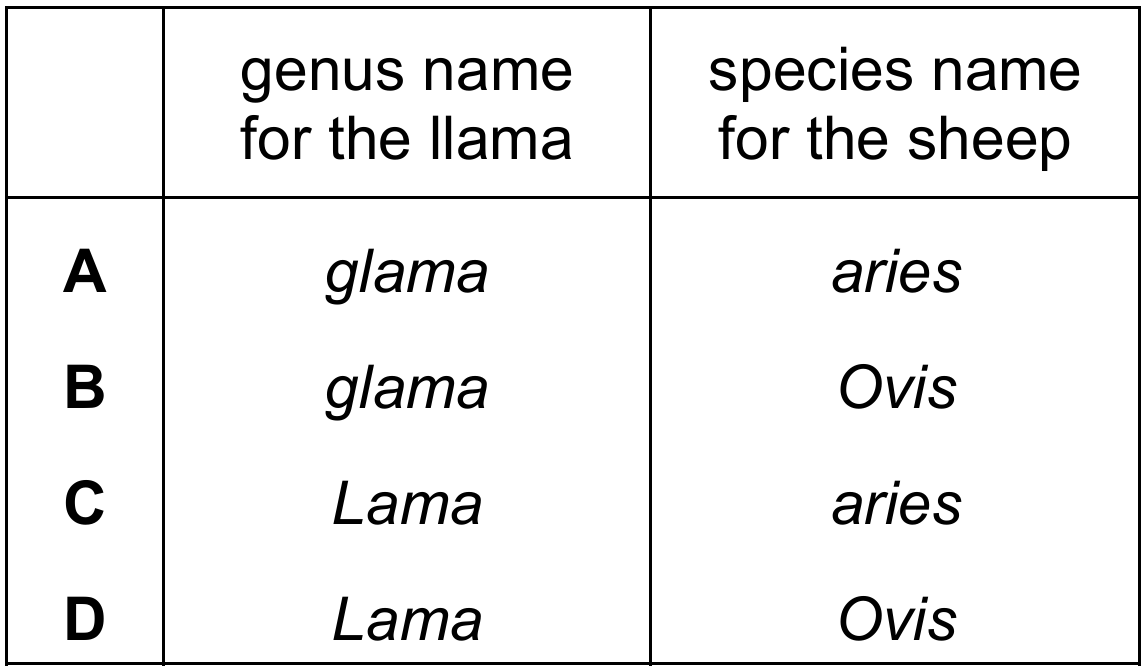
The scientific name for a domesticated llama is Lama glama.
The scientific name for a domesticated sheep is Ovis aries.
What is the genus name for the llama and the species name for the sheep?
▶️ Answer/Explanation
Correct Answer: C

In biological classification, the binomial nomenclature system developed by Carl Linnaeus uses two parts to name every species:

  • The First Name: This is the Genus. It is always capitalized and written in italics (or underlined if handwritten).
  • The Second Name: This is the Specific Epithet (often referred to simply as the species name). It is always lowercase and also written in italics.
Question

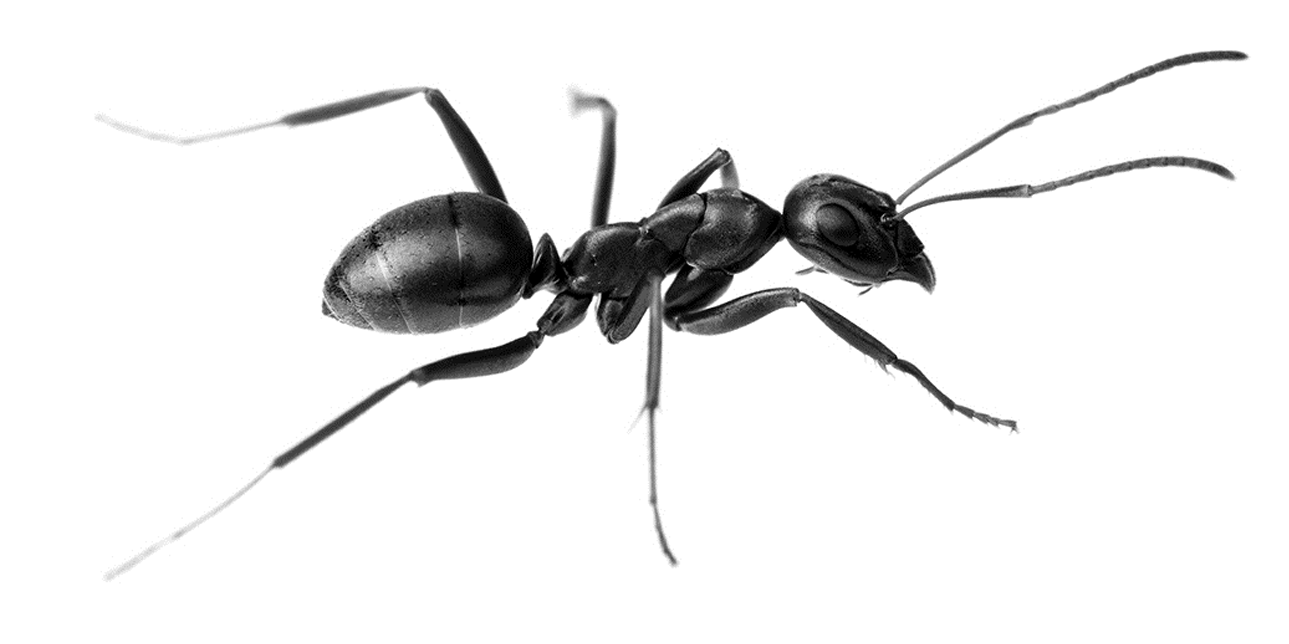
The photograph shows an arthropod, $\textit{Formica fusca}$.
What is the reason for placing $\textit{Formica fusca}$ into the correct group?
  • A It is an arachnid, because the body is in segments.
  • B It is a crustacean, because the legs have joints.
  • C It is an insect, because there are three pairs of legs.
  • D It is a myriapod, because there are two antennae.
▶️ Answer/Explanation
Detailed solution

The correct answer is C.

The organism shown is an ant ($\textit{Formica fusca}$), which belongs to the class Insecta. The defining characteristic that distinguishes insects from other arthropod groups is the presence of three pairs of legs (a total of $6$ legs).

Scroll to Top