

▶️ Answer/Explanation
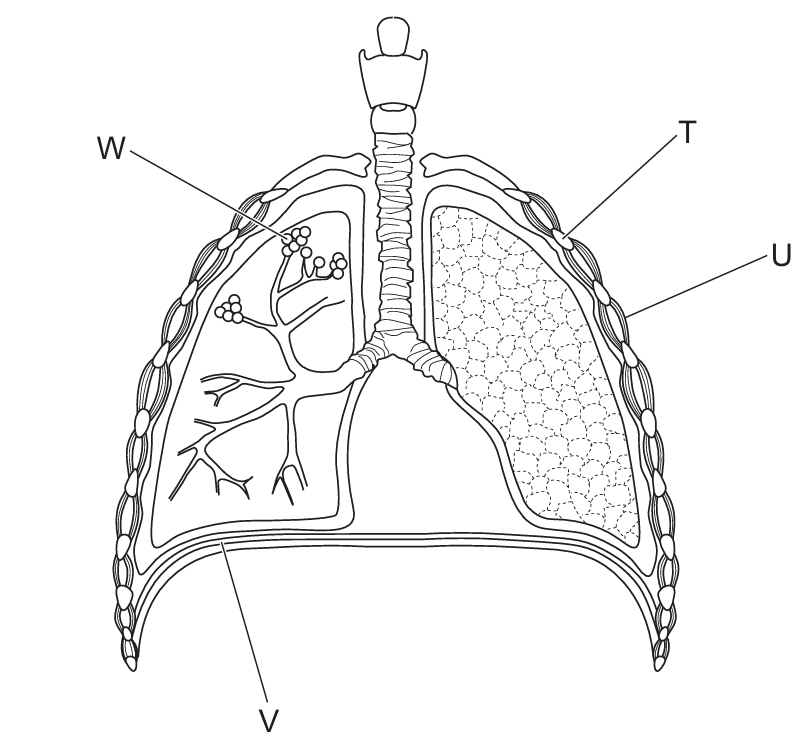
To identify the correct row, we must match the labels to the anatomical structures of the respiratory system. Label T points to the bone structure of the chest wall, which is the rib. Label U points to the tissue located between the ribs, identifying the intercostal muscle. Label V points to the large, dome-shaped muscular sheet at the base of the thorax, which is the diaphragm. Finally, label W points to the tiny air sacs at the end of the bronchioles where gas exchange occurs, known as the alveoli. Comparing these identifications with the table, row A is the only option that correctly matches all four structures.
✅ Answer: (A)
✅ Answer: (A)
▶️ Answer/Explanation
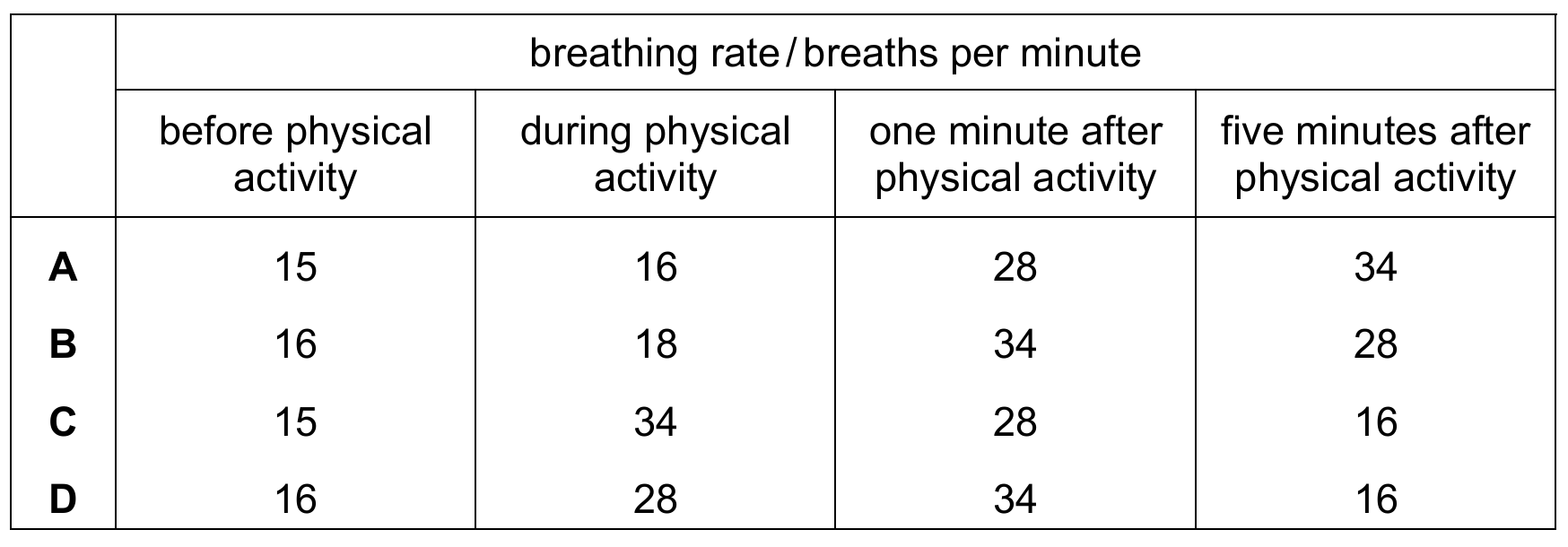
Correct Answer: C
During physical activity, breathing rate increases significantly to supply more oxygen to muscles and remove carbon dioxide. Row C correctly illustrates this peak during exercise ($15 \rightarrow 34$). Immediately after activity stops, the rate begins to decrease ($34 \rightarrow 28$) as the body starts to recover. Within five minutes, the breathing rate should return to near-resting levels ($16$). Row D is incorrect because the rate cannot continue to rise after exercise stops, while Rows A and B show insufficient increases for physical exertion.