Home / iGCSE Biology (0610)-14.2 Sense organs – iGCSE Style Questions Paper 1

iGCSE Biology (0610)-14.2 Sense organs – iGCSE Style Questions Paper 1

Question

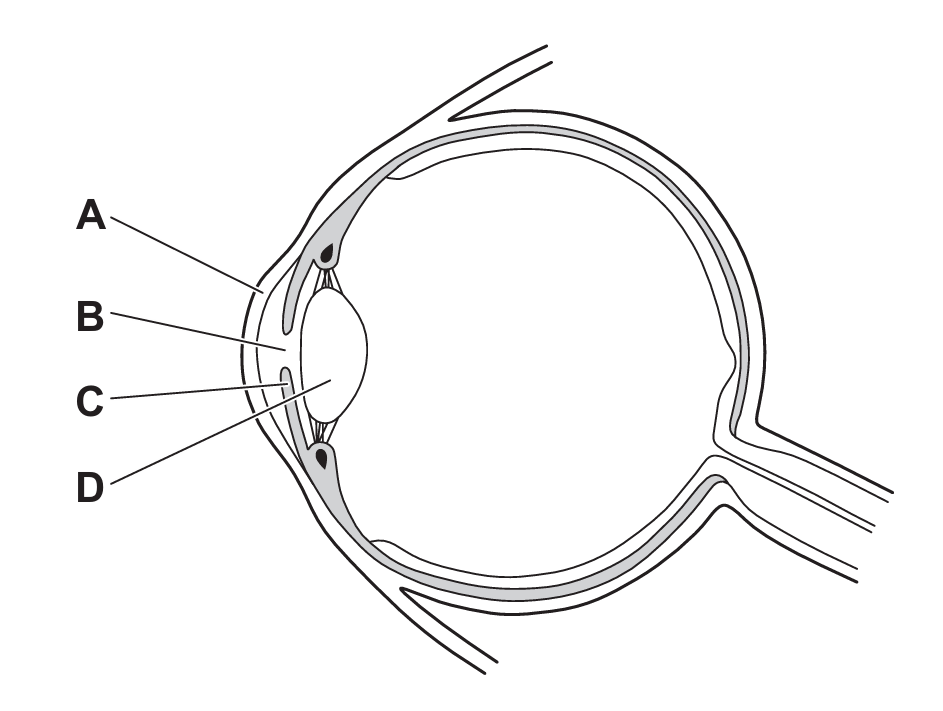
The diagram shows a section through the human eye.

Which label identifies the iris?

▶️ Answer/Explanation
In the provided diagram of the eye, each letter represents a specific anatomical structure. Label A points to the cornea, the transparent outer layer. Label B indicates the pupil, which is the opening that allows light to enter. Label C identifies the iris, the colored muscular structure that controls the size of the pupil. Finally, Label D points to the lens, which focuses light onto the retina. Therefore, the iris is correctly identified by label C.
Answer: (C)

Question

Which structure in the eye changes the direction of the light as it enters the eye?

(A) cornea
(B) iris
(C) pupil
(D) retina
▶️ Answer/Explanation
The structure that primarily changes the direction of light entering the eye is the cornea. It is the transparent, curved front surface of the eye that acts as the first and most powerful refractive element. By bending (refracting) light rays, the cornea helps focus them toward the retina. The pupil is merely an opening that controls the amount of light entering. The iris regulates pupil size. The retina is the light-sensitive layer where the image is formed, but it does not refract light.
Answer: (A)

Question

Which hormone increases pupil diameter and is secreted in ‘fight or flight’ situations?

(A) adrenaline
(B) insulin
(C) oestrogen
(D) testosterone
▶️ Answer/Explanation
The hormone in question is adrenaline (also known as epinephrine). It is secreted by the adrenal medulla in response to stress or perceived danger, triggering the ‘fight or flight’ response. One of its key physiological effects is the dilation of the pupils (mydriasis), which allows more light to enter the eye, thereby enhancing visual acuity and awareness of the surroundings during a threatening situation. The other options—insulin (regulates blood glucose), oestrogen (female sex hormone), and testosterone (male sex hormone)—are not primarily involved in this acute stress response and do not cause pupil dilation.
Answer: (A)
Scroll to Top