
▶️ Answer/Explanation
Explanation:
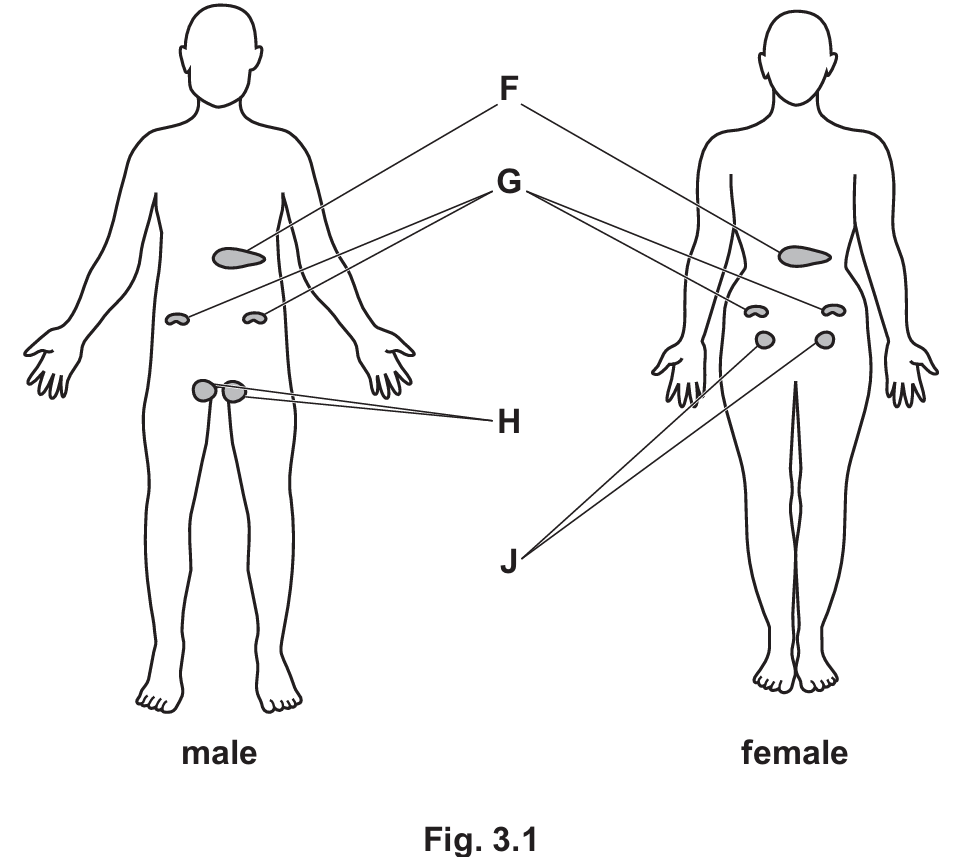
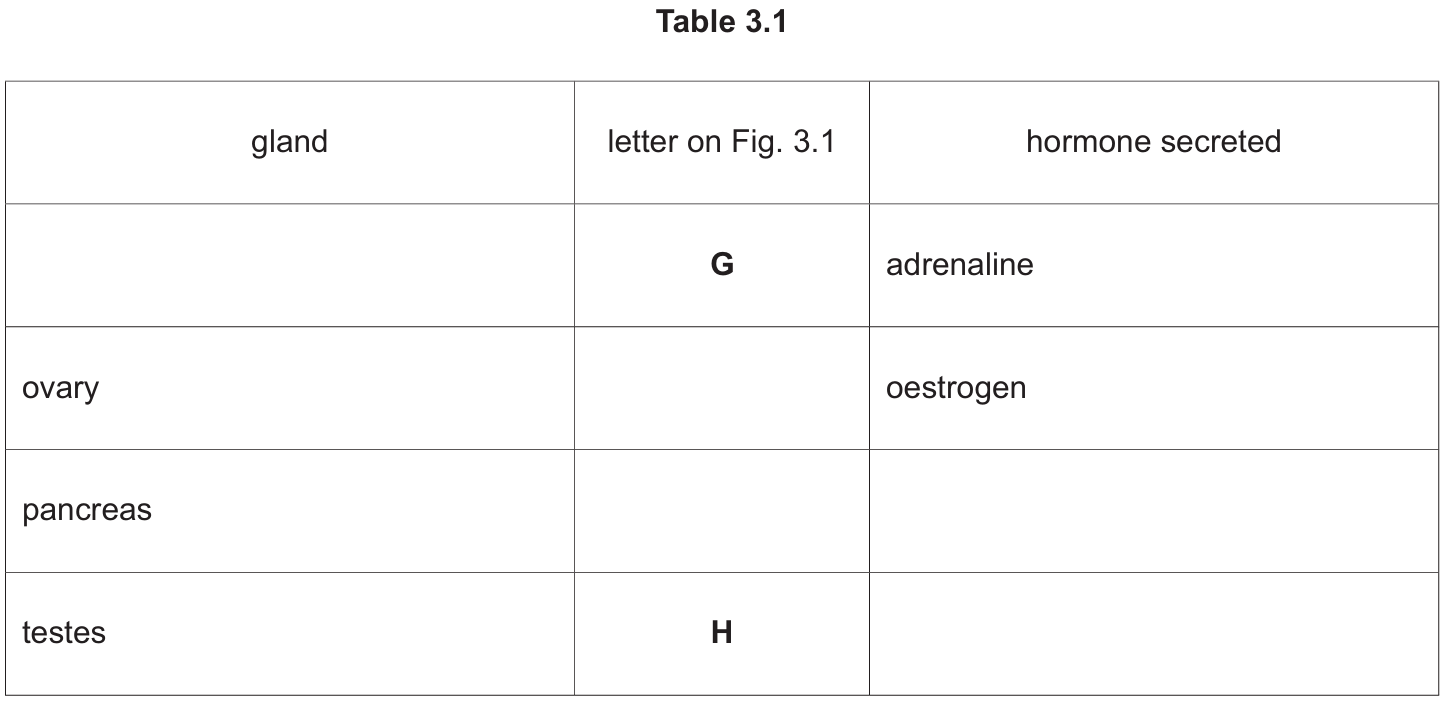
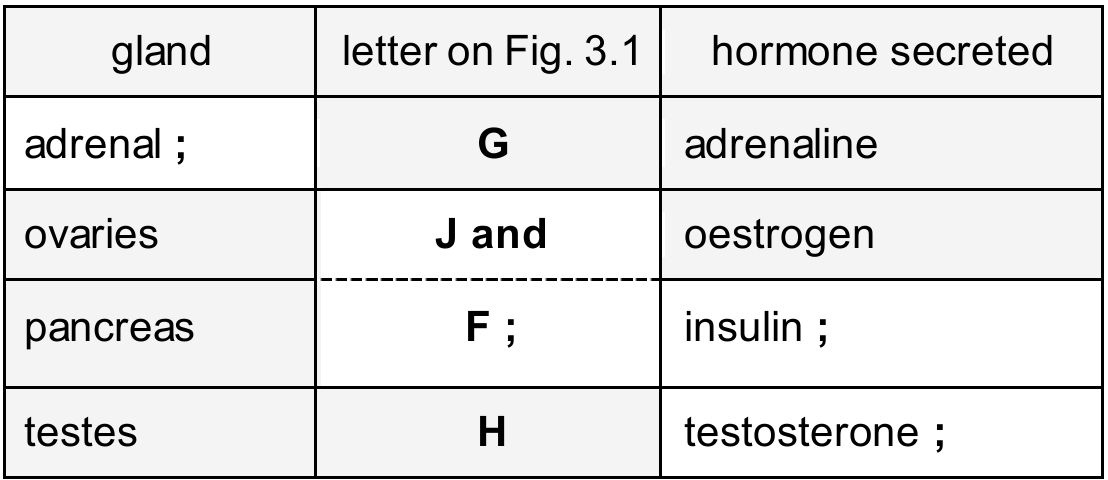
G (Adrenal Gland): Located immediately above the kidneys .
J (Ovary): Located in the lower abdomen of the female diagram .
F (Pancreas): Located behind the stomach, typically leaf-shaped .
H (Testes): Located in the scrotal sac of the male diagram .
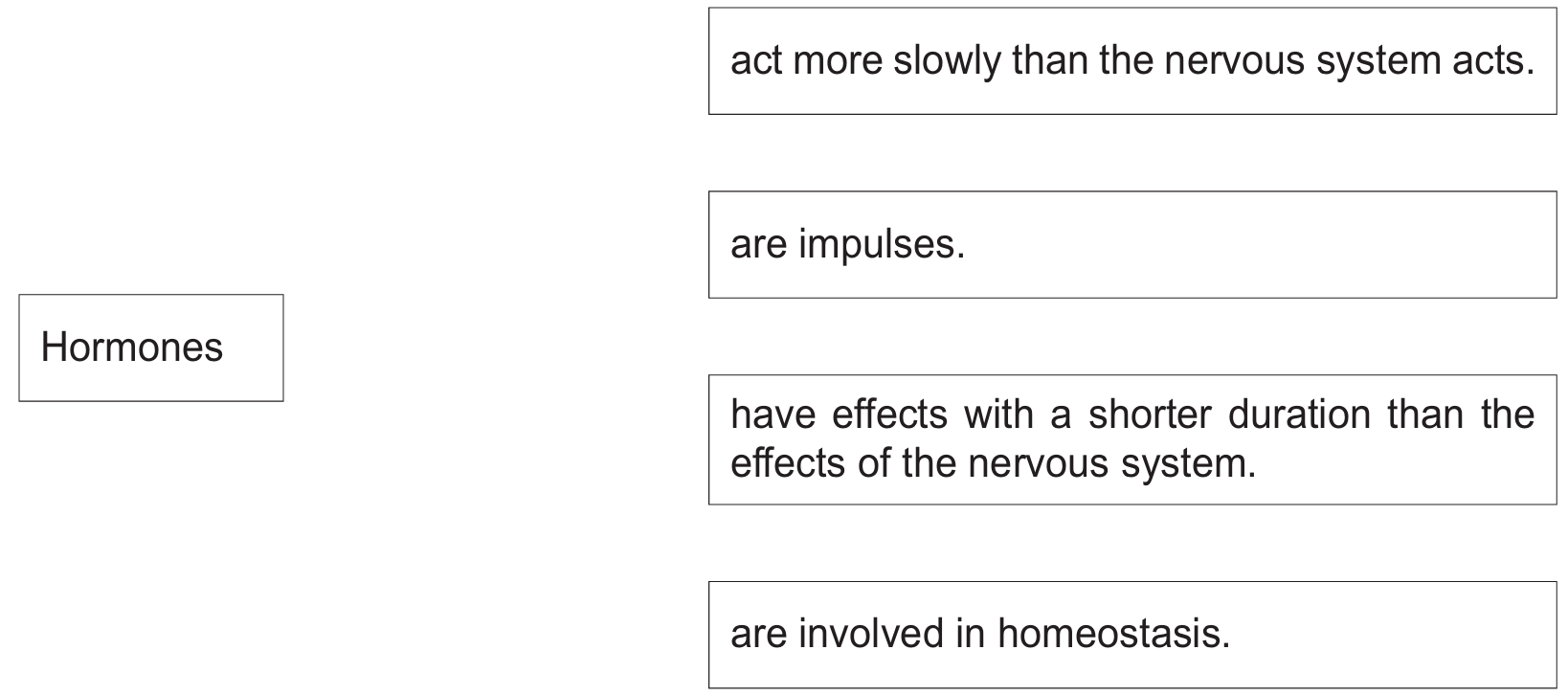
A hormone is a chemical substance produced by a gland and carried by the blood, which alters the activity of one or more specific target organs .
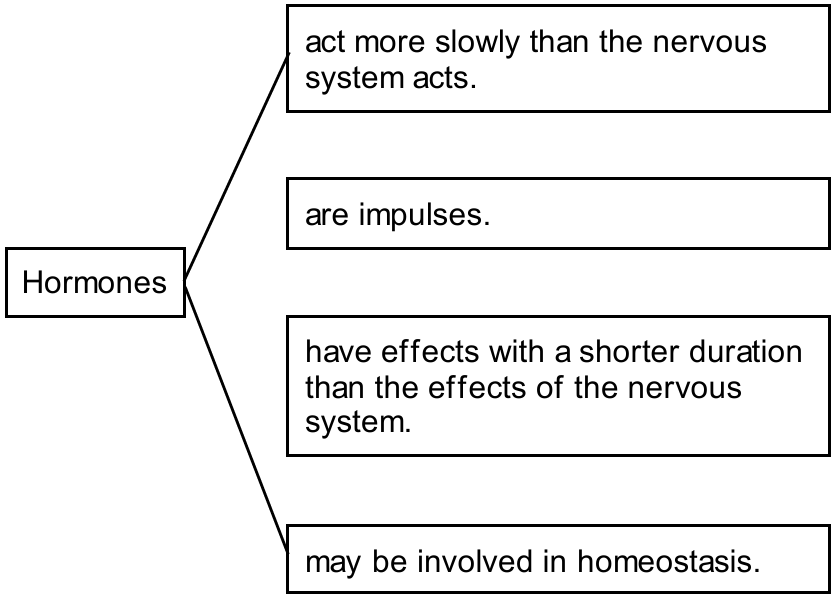
The two correct completions are:
- Hormones act more slowly than the nervous system acts .
- Hormones are involved in homeostasis .
Reasoning: The nervous system uses electrical impulses for rapid, short-term responses, whereas hormonal control is slower and longer-lasting. Many hormones (like insulin) regulate internal conditions (homeostasis).
1. Adrenaline is secreted to prepare the body for action.
(Often called the “fight or flight” response).
2. The heart rate increases to pump more blood containing oxygen to the muscles.
(Muscles need oxygen for aerobic respiration to generate energy).
3. The breathing rate increases to excrete more carbon dioxide from the body.
(High rates of respiration produce (\text{CO}_2) as a waste product, which must be removed).
4. The diameter of the pupils increases to let in more light.
(Dilated pupils improve vision in dim light, helping with situational awareness).