
▶️ Answer/Explanation
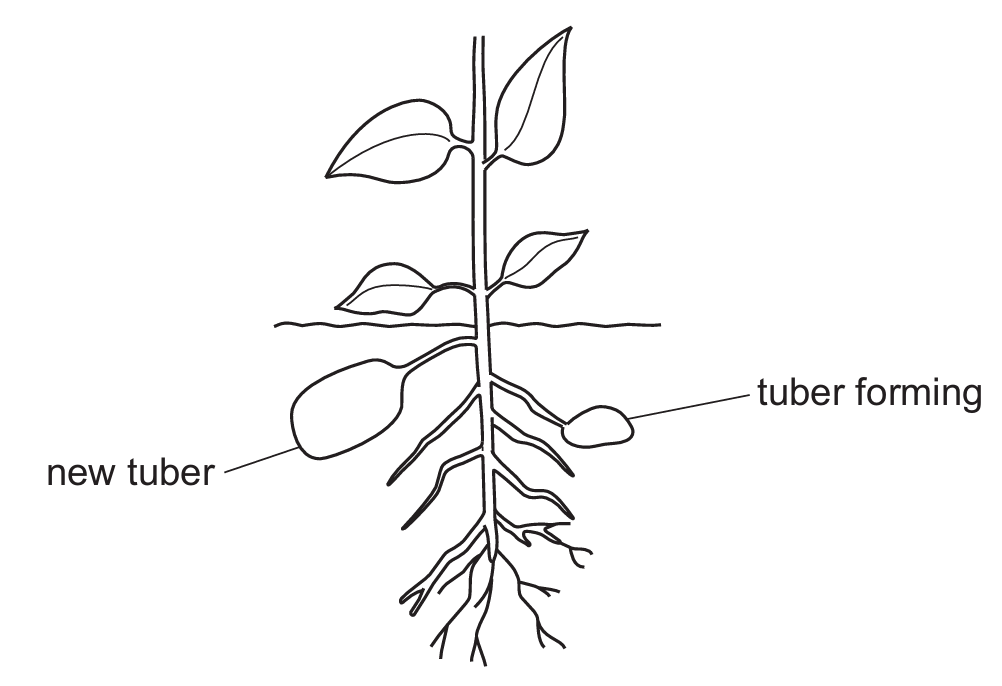
The description states that new plants grow from tubers and are “genetically identical” to the parent. This is the key characteristic of asexual reproduction, where offspring are produced from a single parent without the fusion of gametes. Processes like fertilisation (B) and pollination (C) are steps in sexual reproduction (D), which involves two parents and results in genetic variation. Since tubers are modified stems that sprout into clones of the parent, the correct process is asexual reproduction.
✅ Answer: (A) asexual reproduction
✅ Answer: (A) asexual reproduction
▶️ Answer/Explanation
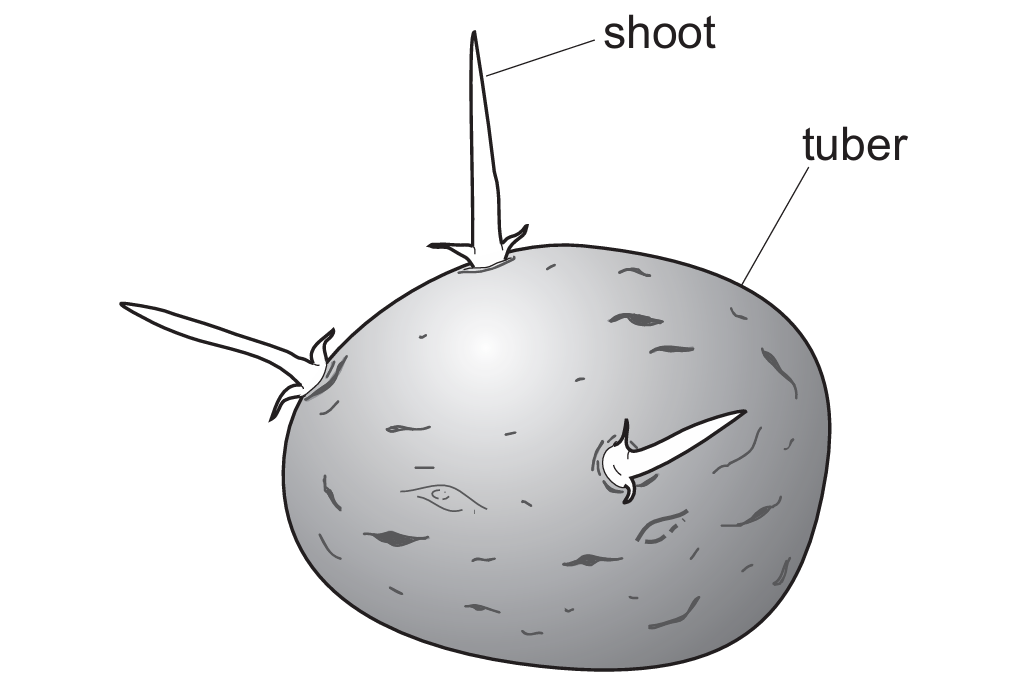
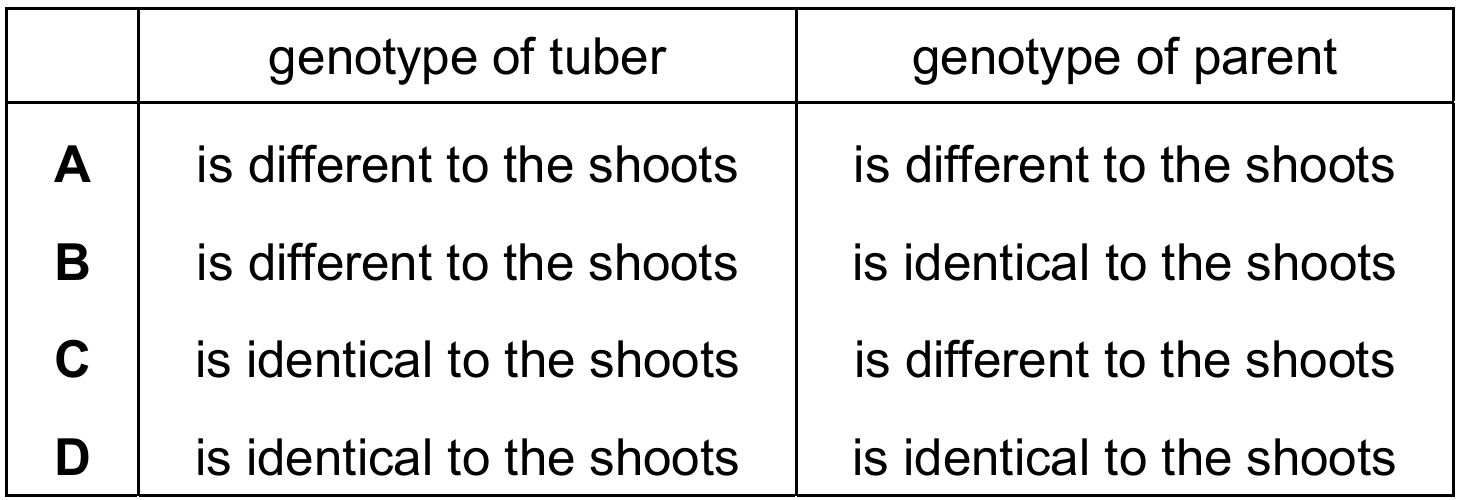
A potato tuber is a modified stem that grows asexually from the parent plant. This type of reproduction, known as vegetative propagation, does not involve meiosis or gamete fusion, so no genetic recombination occurs. Therefore, the tuber is genetically identical (a clone) to the parent plant. The shoots growing from the tuber arise from its meristematic tissue through mitosis, making them genetically identical to both the tuber and the original parent.
✅ Answer: (D) – The genotypes of the tuber and the parent are both identical to the shoots.