Home / iGCSE Biology (0610)-16.2 Sexual reproduction – iGCSE Style Questions Paper 2

iGCSE Biology (0610)-16.2 Sexual reproduction – iGCSE Style Questions Paper 2

Question

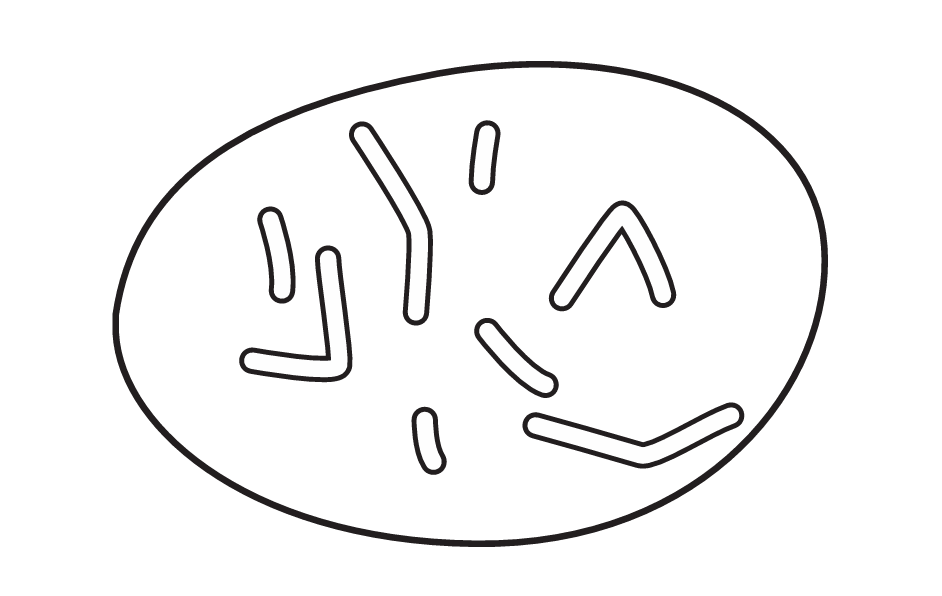
The diagram shows the chromosomes in the nucleus of a cell that divides by mitosis.

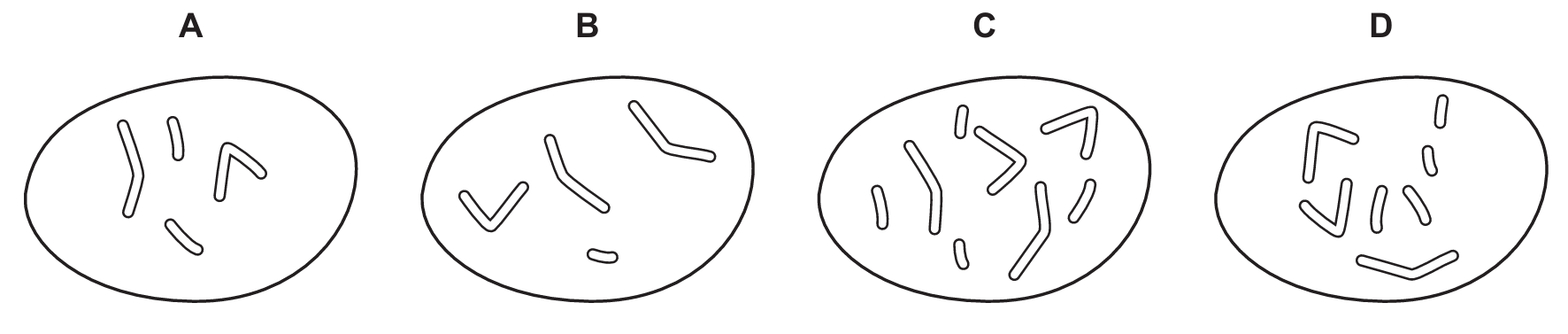
Which diagram shows the chromosomes in the nucleus of one of the daughter cells produced?

▶️ Answer/Explanation
Mitosis is a type of cell division that results in two daughter cells each having the same number and kind of chromosomes as the parent nucleus. In the original diagram, the parent cell contains exactly $8$ chromosomes of specific shapes and sizes. Since mitosis maintains the chromosome number (genetically identical), the correct daughter cell must also contain $8$ chromosomes that match the original set. Diagram C is the only option that maintains this diploid count of $8$ and the correct morphology. Options A, B, and D are incorrect as they show a reduced number of chromosomes, which would be characteristic of meiosis or an error in division.
Answer: (C)
Question

Some descriptions of reproduction are listed.

  1. formation of a zygote with a diploid nucleus
  2. formation of a zygote with a haploid nucleus
  3. fusion of diploid nuclei of two gametes
  4. fusion of haploid nuclei of two gametes

Which are correct descriptions of sexual reproduction in humans?

▶️ Answer/Explanation
Solution

Ans: B

In human sexual reproduction, haploid gametes (sperm and egg) fuse to form a diploid zygote (1 correct). The fusion is of haploid nuclei (4 correct), not diploid nuclei. Therefore, the correct combination is 1 and 4.

Question

What is a disadvantage of sexual reproduction for a population in the wild?

▶️ Answer/Explanation
Solution

Ans: C

Sexual reproduction requires mates, so isolated individuals cannot reproduce (C). Options A/B/D are incorrect because sexual reproduction actually increases genetic diversity and adaptability. The real disadvantage is the need for a partner, making C the correct answer.

Scroll to Top