
▶️ Answer/Explanation
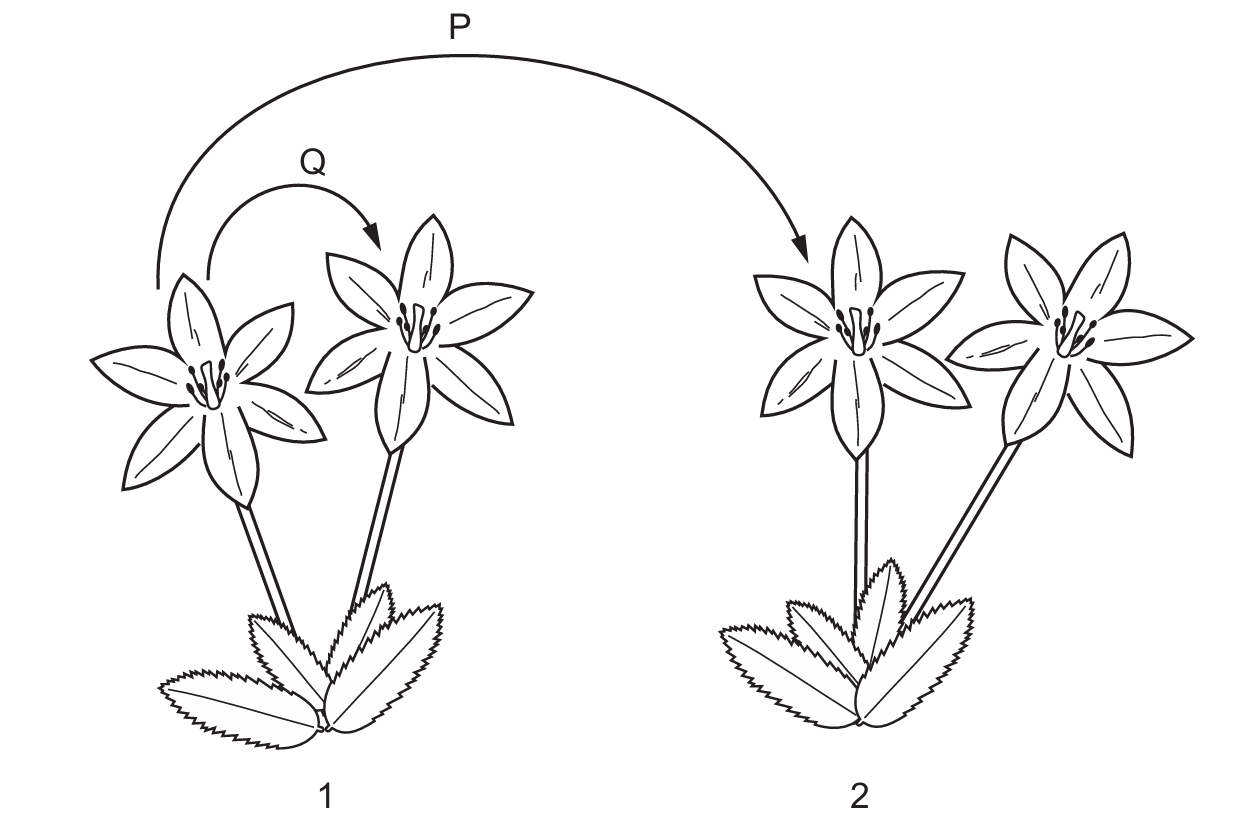
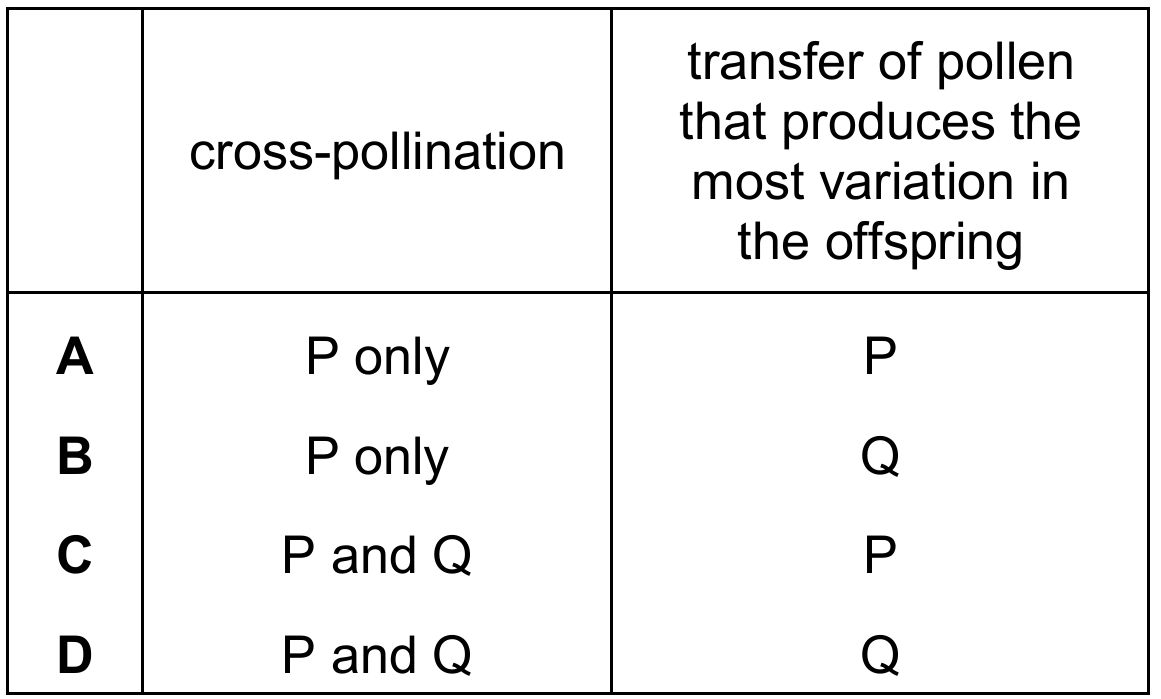
Cross-pollination occurs when pollen is transferred from the anther of a flower on one plant to the stigma of a flower on a different plant of the same species. In the diagram, arrow $P$ represents cross-pollination, while arrow $Q$ represents self-pollination (transfer between flowers on the same plant). Since cross-pollination combines genetic material from two genetically distinct parents, it results in greater genetic variation among the offspring compared to self-pollination. Therefore, transfer $P$ is both the only instance of cross-pollination and the one that produces the most variation.
✅ Answer: (A)
✅ Answer: (A)
▶️ Answer/Explanation
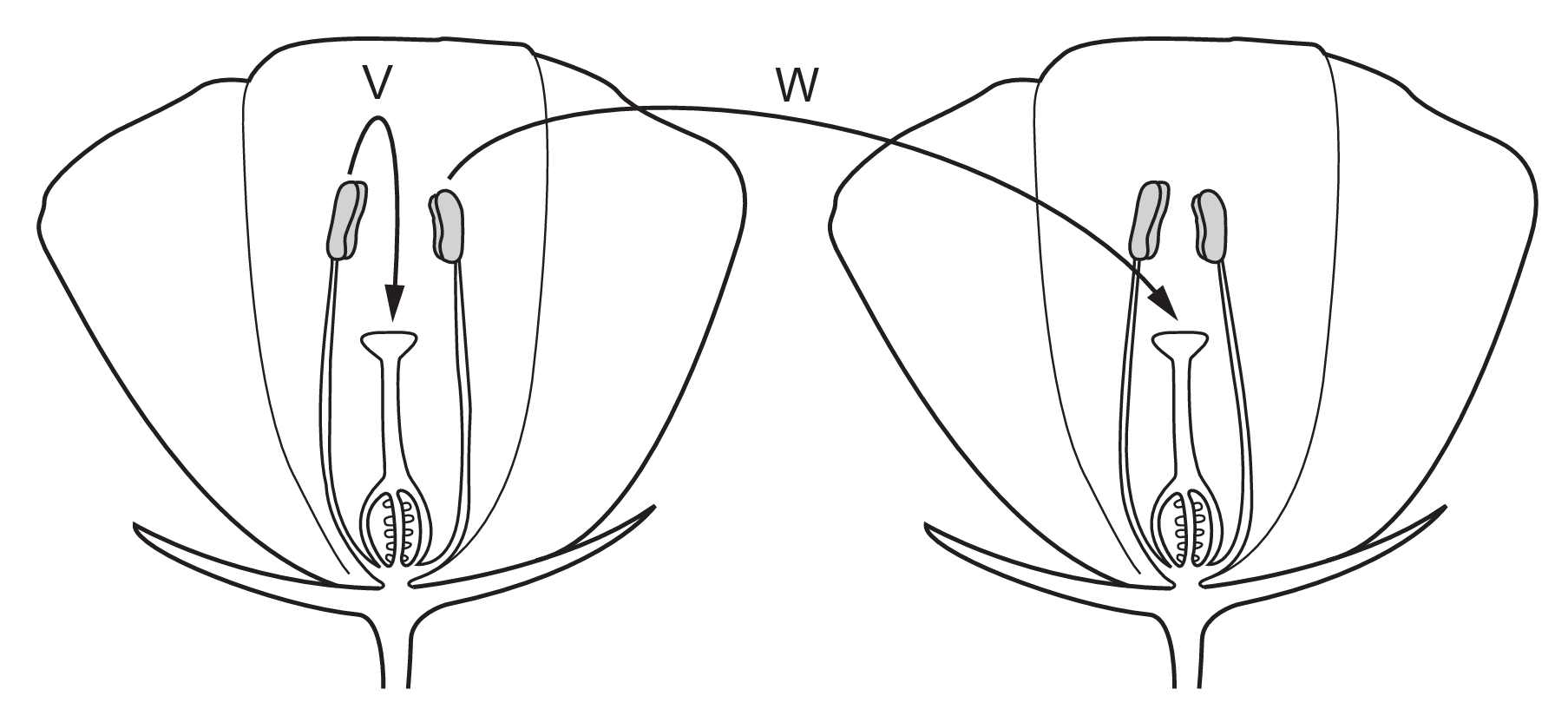
Method $V$ is self-pollination, which still involves meiosis and the fusion of gametes; therefore, the offspring are not genetically identical (clones), making conclusion $1$ incorrect. Method $W$ is cross-pollination between two different plants, which significantly increases genetic variation by combining alleles from two distinct parents. This increased genetic diversity ensures that offspring are genetically different (conclusion $2$) and provides a larger gene pool for natural selection to act upon. Consequently, the species has a better chance of adapting to environmental changes (conclusion $3$). Since only statements $2$ and $3$ are valid, the correct option is $D$.
✅ Answer: (D)
✅ Answer: (D)