
▶️ Answer/Explanation
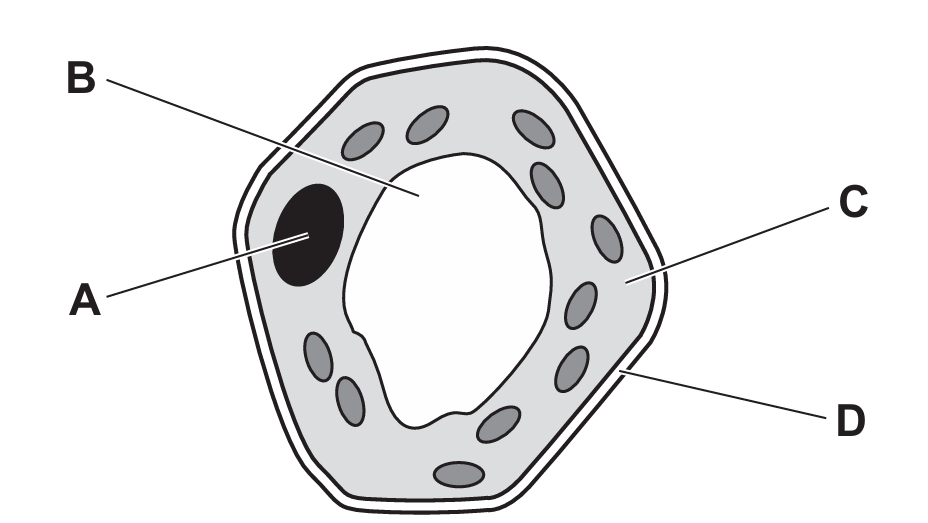
Chromosomes are thread-like structures made of protein and a single molecule of DNA that serve to carry genomic information from cell to cell. In eukaryotic organisms like plants, these chromosomes are housed within the nucleus. Label A points directly to the nucleus, which acts as the control center of the cell and contains the genetic material. Label B indicates the large central vacuole, C points to the cytoplasm, and D represents the cell wall, none of which contain the primary set of chromosomes. Therefore, to count the number of chromosomes, a biologist must focus their examination on the nucleus.
✅ Answer: (A)
✅ Answer: (A)
▶️ Answer/Explanation
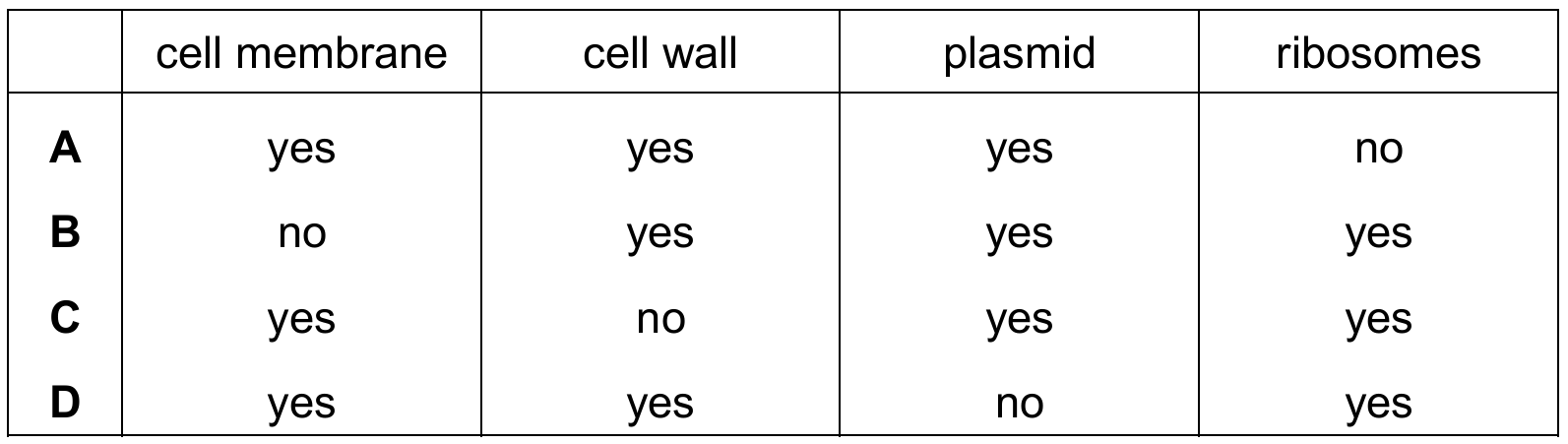
Both plant cells (eukaryotic) and bacterial cells (prokaryotic) share basic structural features like the cell membrane and ribosomes for protein synthesis. While both possess a cell wall, the composition differs (cellulose in plants vs. peptidoglycan in bacteria). However, plasmids—small, circular DNA loops—are characteristic of bacteria and are not typically found in plant cells. Therefore, the combination of “yes” for membrane, wall, and ribosomes, but “no” for plasmid, is correct.
✅ Answer: (D)
✅ Answer: (D)