
▶️ Answer/Explanation
Detailed solution
(a) (i)
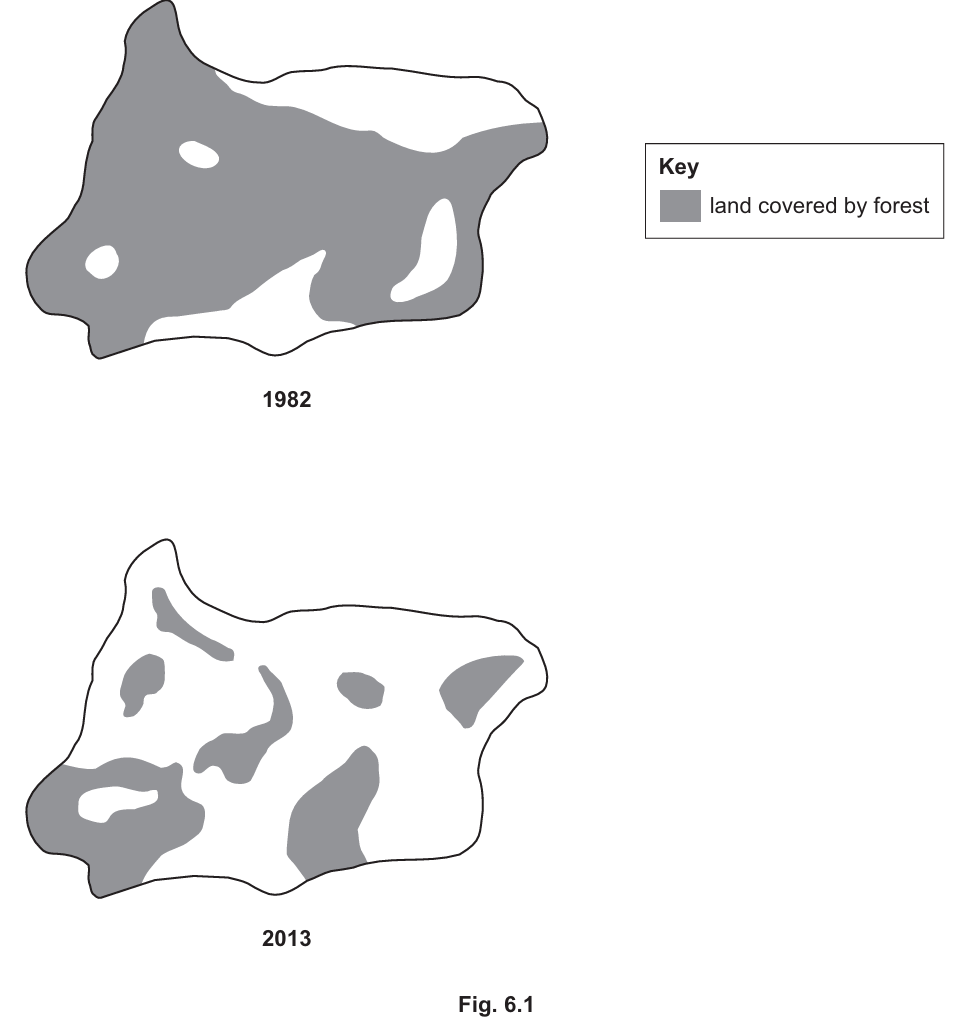
The changes observed in the diagrams are:
- There is less land covered by forest overall.
- The forest has become more fragmented (broken into smaller patches).
- There is specifically less forest around the coast.
(a) (ii)
Possible causes for this reduction (deforestation) include:
- Housing / Urbanization.
- Agriculture (farming/crops/livestock).
- Logging for timber, fuel, or paper.
- Extraction of natural resources (mining).
(b)
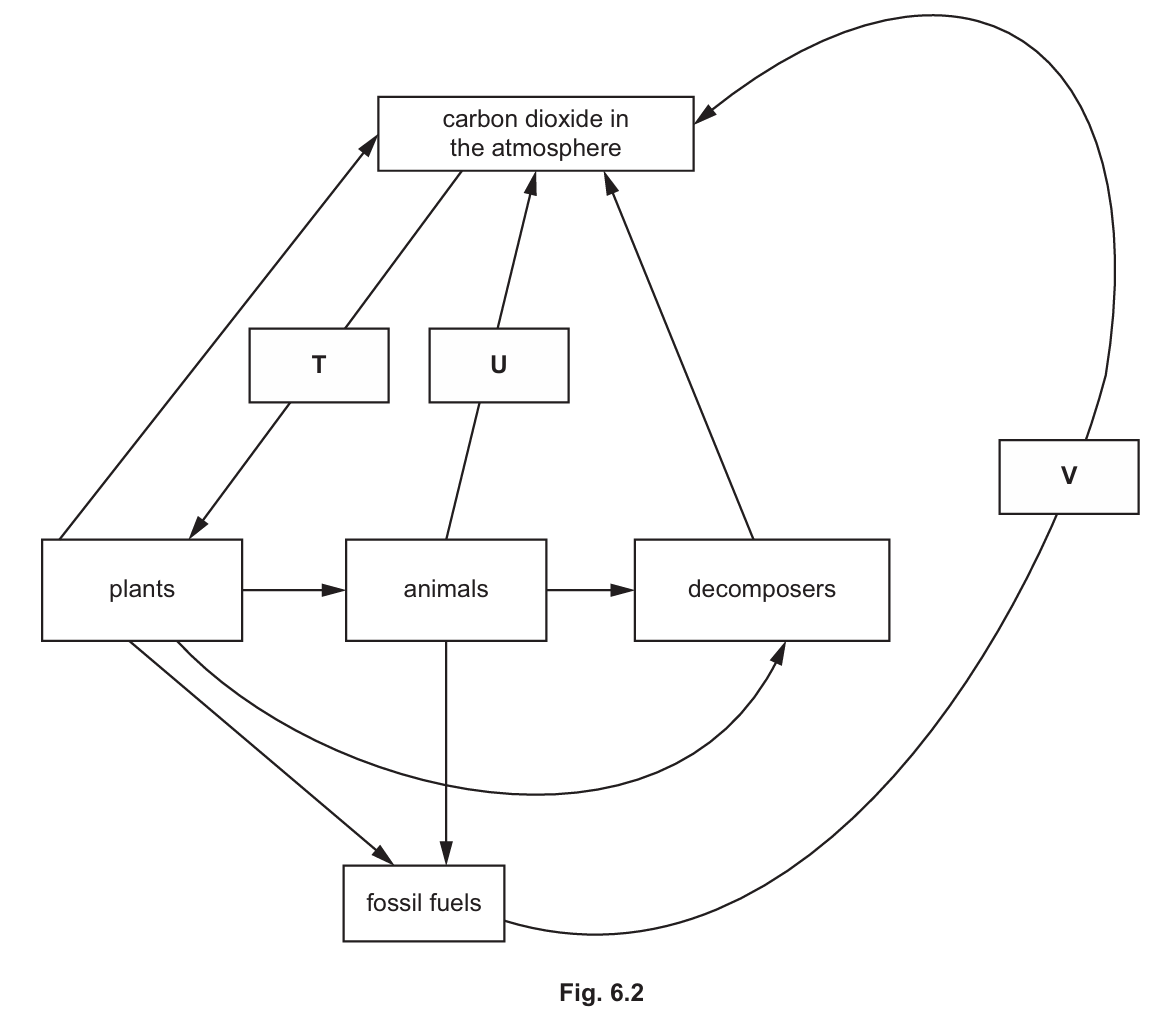
- T: Photosynthesis. This process removes carbon dioxide from the atmosphere and incorporates it into plants.
- U: Respiration (specifically aerobic respiration).This process releases carbon dioxide from animals back into the atmosphere.
- V: Combustion. This is the burning of fossil fuels, which releases stored carbon as carbon dioxide.
(c) (i)
Deforestation contributes to global warming through the greenhouse effect:
- Decreased Photosynthesis: Fewer trees mean less \(CO_2\) is removed from the atmosphere.
- Combustion/Decomposition: Burning or rotting felled trees releases stored carbon as \(CO_2\) into the atmosphere.
- Greenhouse Effect: The accumulated \(CO_2\) is a greenhouse gas that traps infrared (thermal) radiation emitted by the Earth, leading to an enhanced greenhouse effect and rising temperatures.
(c) (ii)
Other undesirable effects include:
- Loss of habitat and subsequent extinction of species or reduction in biodiversity.
- Soil erosion: Without roots to hold the soil, it is washed away, leading to infertile land.
- Flooding: Increased runoff occurs as there are fewer trees to intercept rain or absorb water.
- Disruption of the water cycle: Less transpiration leads to less water vapour in the atmosphere, potentially causing droughts or desertification.