
▶️ Answer/Explanation
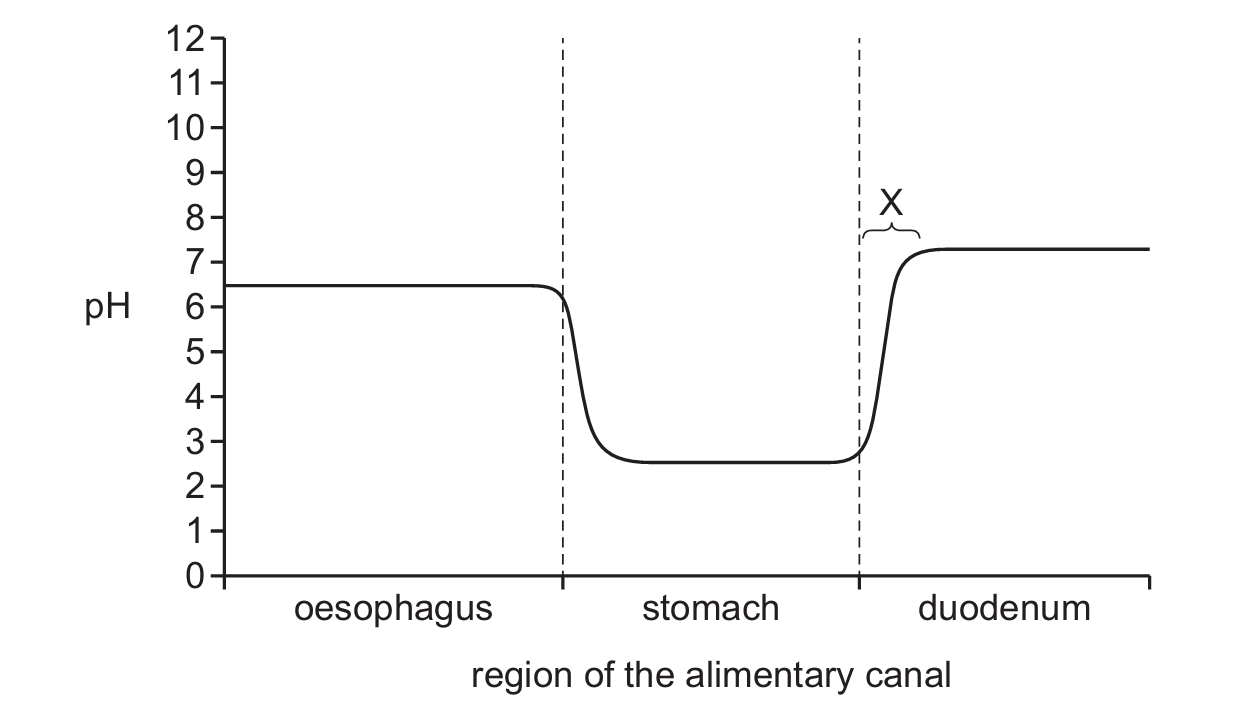
The graph indicates that at point $X$, the $pH$ rises sharply from an acidic level (around $pH$ $2.5$) in the stomach to a more neutral or slightly alkaline level (around $pH$ $7$–$8$) in the duodenum. This neutralization is primarily caused by bile and pancreatic juice. Bile is an alkaline fluid produced by the liver that contains sodium hydrogencarbonate, which neutralizes the hydrochloric acid from the stomach. Gastric juice (B) would make the environment more acidic, while glucagon (C) is a hormone involved in blood sugar regulation, not digestion. Trypsin (D) is a protease enzyme that functions best in the alkaline environment created after the $pH$ has already shifted. Therefore, the substance responsible for the initial shift is bile.
✅ Answer: (A)
✅ Answer: (A)
▶️ Answer/Explanation
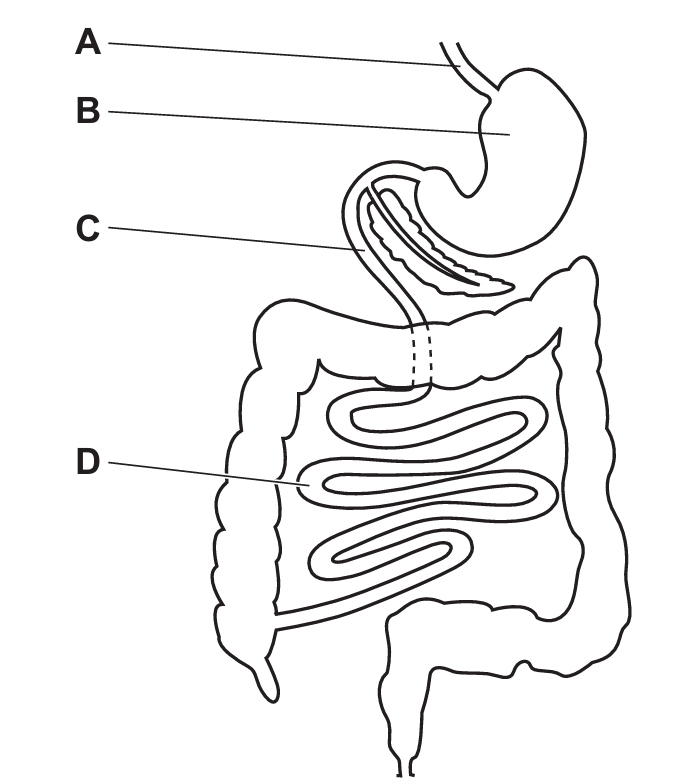
Protein digestion begins in the stomach, which is labeled as B in the diagram. The gastric glands in the stomach lining secrete gastric juice containing hydrochloric acid and the inactive enzyme pepsinogen. The acidic environment (low pH) converts pepsinogen into its active form, pepsin, which starts breaking down proteins into smaller polypeptides. While mechanical digestion happens in the mouth and chemical digestion of carbohydrates begins there via amylase, protein molecules remain intact until they reach the stomach. Subsequent digestion and absorption then continue in the small intestine.
✅ Answer: (B)
✅ Answer: (B)