
▶️ Answer/Explanation
(a)
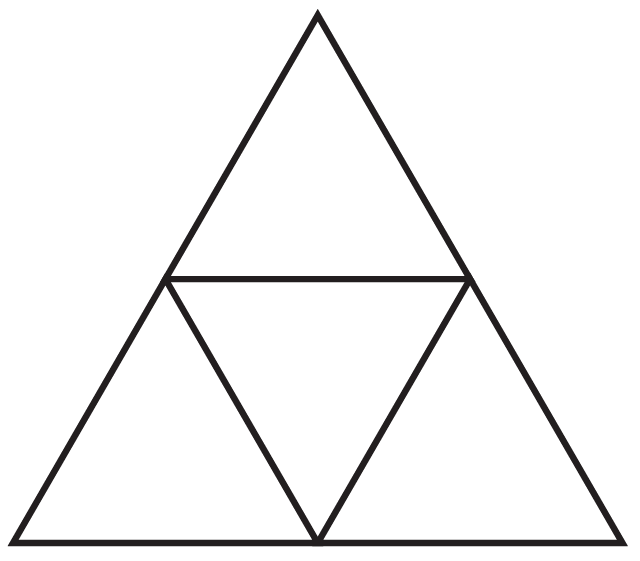
The shape is a larger equilateral triangle made from smaller equilateral triangles, so it inherits the 3-fold symmetry of an equilateral triangle.
There are 3 lines of symmetry: one through each vertex running vertically/diagonally down to the midpoint of the opposite side.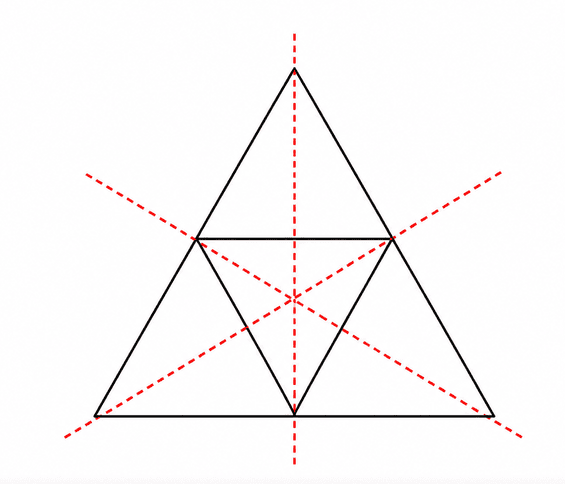
✅ Answer: 3 lines of symmetry drawn correctly on the diagram
(b)
The shape looks identical after rotating by \(120°\), \(240°\) and \(360°\), so it maps onto itself 3 times in a full turn.
✅ Answer: \(3\)
▶️ Answer/Explanation
(a) A square has $4$ equal sides but it has $4$ lines of symmetry. A quadrilateral with $4$ equal sides but only $2$ lines of symmetry and rotational symmetry order $2$ is a rhombus.
(b) Valid properties of a rectangle include: opposite sides are equal in length, opposite sides are parallel, or all four interior angles are exactly equal to $90^\circ$.
(c) The formula for the area of a trapezium is $\text{Area} = \frac{1}{2}(a+b)h$. Substituting the knowns: $15 = \frac{1}{2}(6+4)h \Rightarrow 15 = 5h \Rightarrow h = 3\text{ cm}$. Thus, you need to draw a trapezium with a vertical height of exactly $3$ grid units, with parallel horizontal edges of length $4$ and $6$.
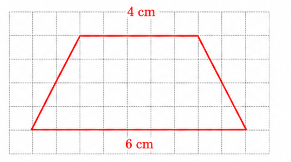
✅ Answer: (a) rhombus (b) Opposite sides equal / All angles $90^\circ$ (c) Trapezium drawn with perpendicular height of 3 cm
(b) Valid properties of a rectangle include: opposite sides are equal in length, opposite sides are parallel, or all four interior angles are exactly equal to $90^\circ$.
(c) The formula for the area of a trapezium is $\text{Area} = \frac{1}{2}(a+b)h$. Substituting the knowns: $15 = \frac{1}{2}(6+4)h \Rightarrow 15 = 5h \Rightarrow h = 3\text{ cm}$. Thus, you need to draw a trapezium with a vertical height of exactly $3$ grid units, with parallel horizontal edges of length $4$ and $6$.
✅ Answer: (a) rhombus (b) Opposite sides equal / All angles $90^\circ$ (c) Trapezium drawn with perpendicular height of 3 cm
▶️ Answer/Explanation
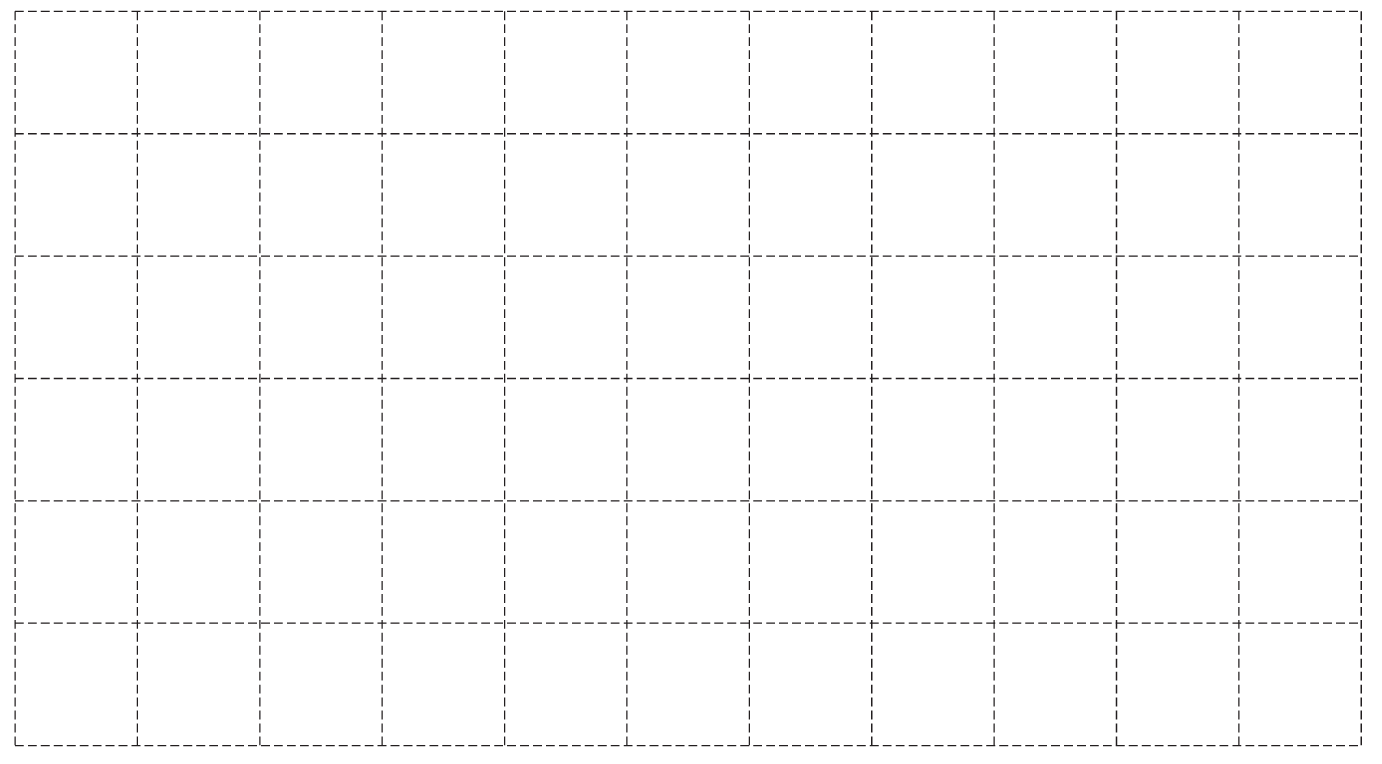
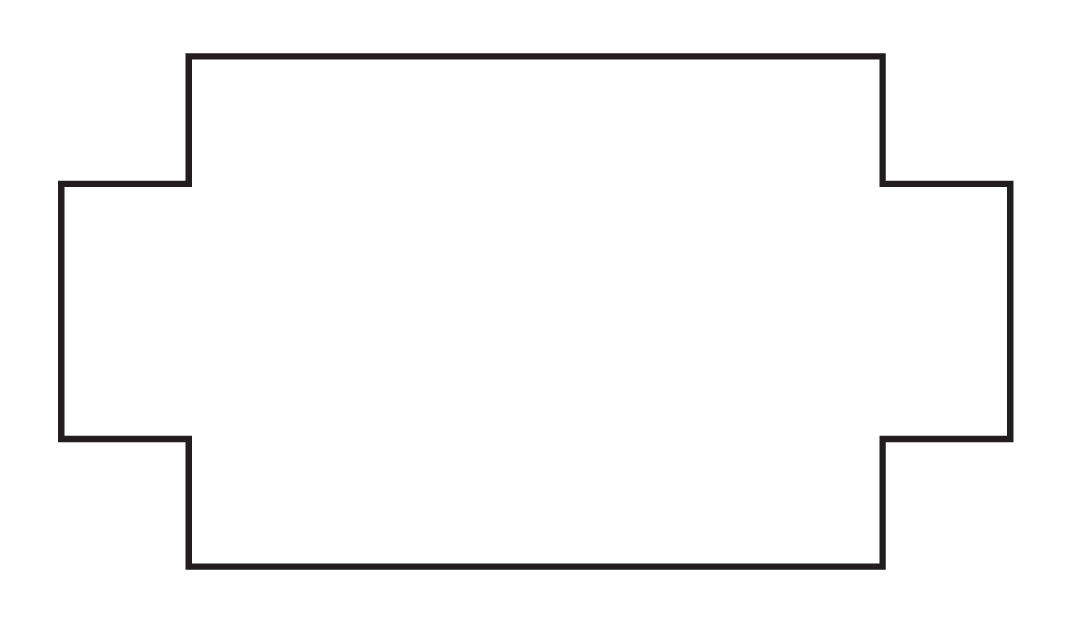
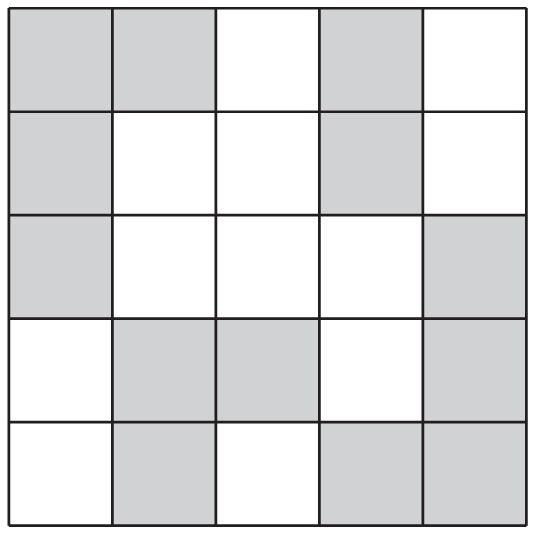
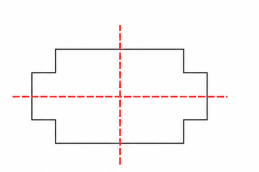
(a) Analyze the symmetry of the given grid pattern to find mirror lines that split it into identical halves. Based on the configuration, you should identify and draw exactly 2 valid lines of symmetry.
(b)
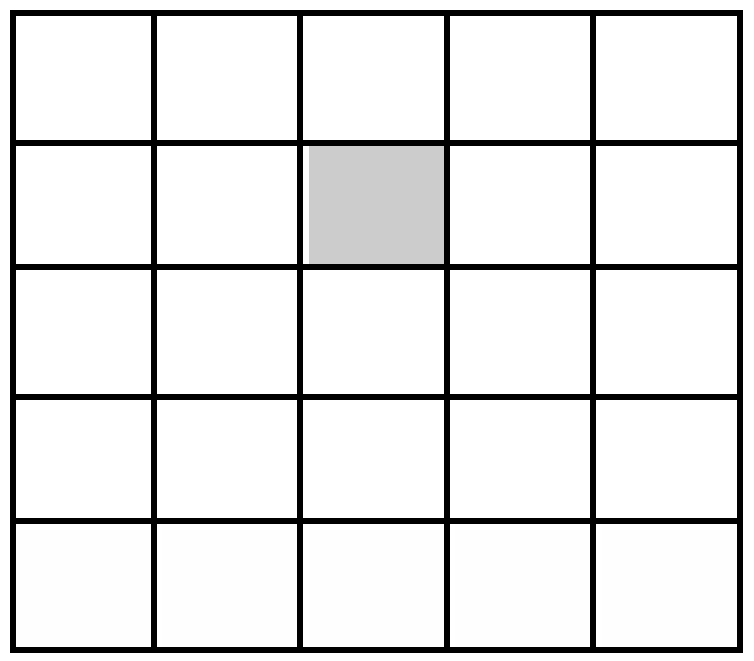
To establish rotational symmetry of order 2, the shape must look exactly the same when rotated by $180^\circ$ around its center. Select and shade the single unique square that satisfies this structural balance across opposite quadrants.
✅ Answer:
(a) 2 correct lines of symmetry drawn
(b) 1 square correctly shaded
(b)
To establish rotational symmetry of order 2, the shape must look exactly the same when rotated by $180^\circ$ around its center. Select and shade the single unique square that satisfies this structural balance across opposite quadrants.
✅ Answer:
(a) 2 correct lines of symmetry drawn
(b) 1 square correctly shaded