
▶️ Answer/Explanation
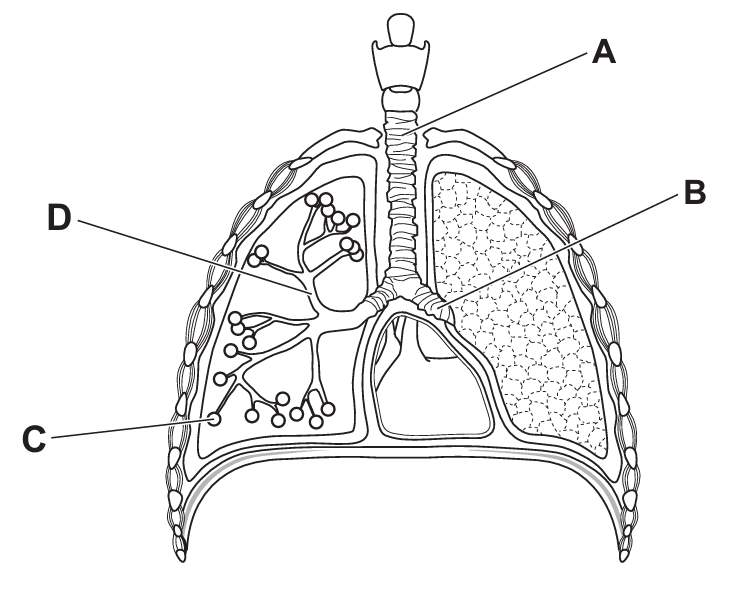
The trachea, commonly called the windpipe, is the main airway that connects the larynx (voice box) to the bronchi. In the diagram, part A is the trachea, which is identifiable by its tubular structure with characteristic C-shaped rings of cartilage. Part B shows the larynx, part C shows the bronchi, and part D shows the bronchioles.
✅ Answer: (A)
✅ Answer: (A)
▶️ Answer/Explanation
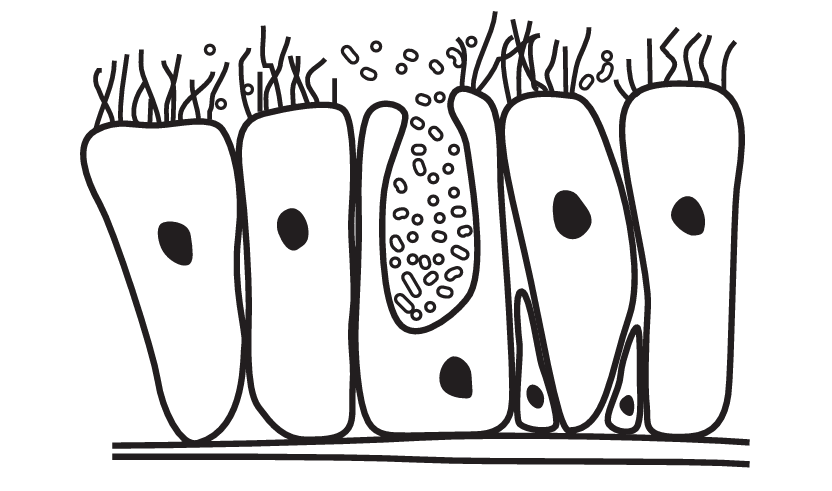
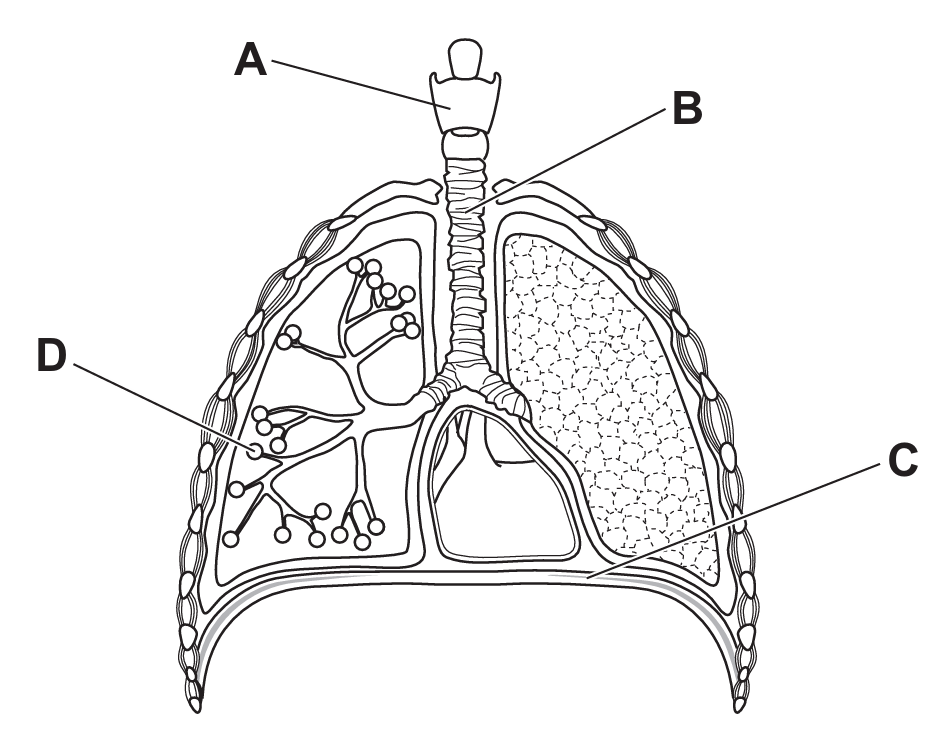
The cells shown are ciliated epithelial cells and goblet cells, which are characteristic of the lining of the trachea and bronchi — they produce and sweep mucus to trap pathogens and particles.
These cells are found in the upper airways (trachea/bronchi), not in the alveoli, so the label pointing to those structures is the correct answer (B).
✅ Answer: (B)
These cells are found in the upper airways (trachea/bronchi), not in the alveoli, so the label pointing to those structures is the correct answer (B).
✅ Answer: (B)
▶️ Answer/Explanation
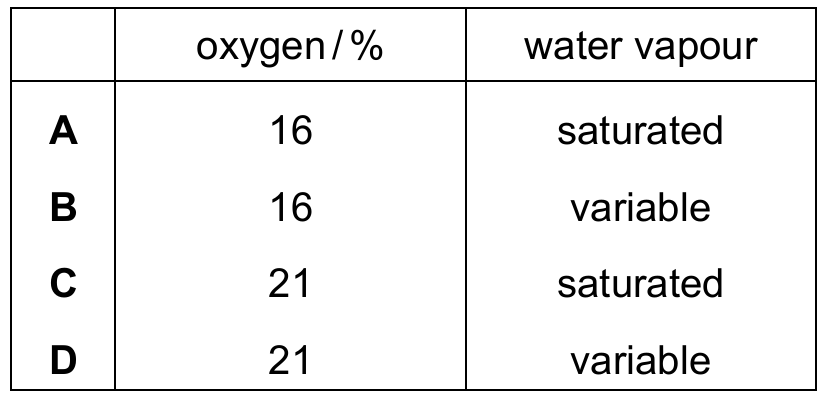
During gas exchange, some of the oxygen in inhaled air (about 21%) is absorbed into the blood, so expired air contains a lower concentration, around 16%.
Air is moistened as it passes through the airways and lungs, so expired air is always saturated with water vapour.
✅ Answer: (A)
Air is moistened as it passes through the airways and lungs, so expired air is always saturated with water vapour.
✅ Answer: (A)
▶️ Answer/Explanation
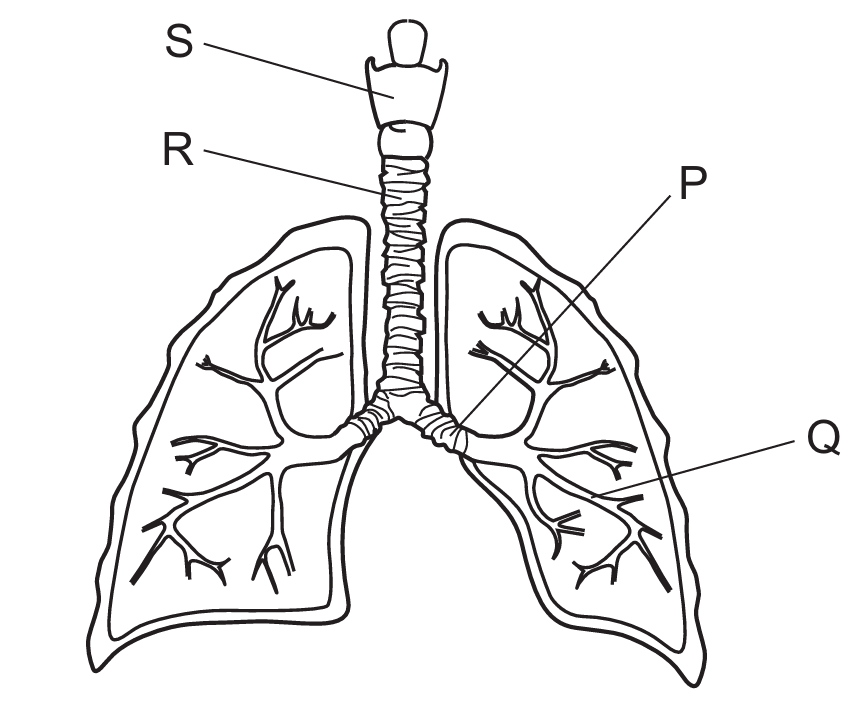
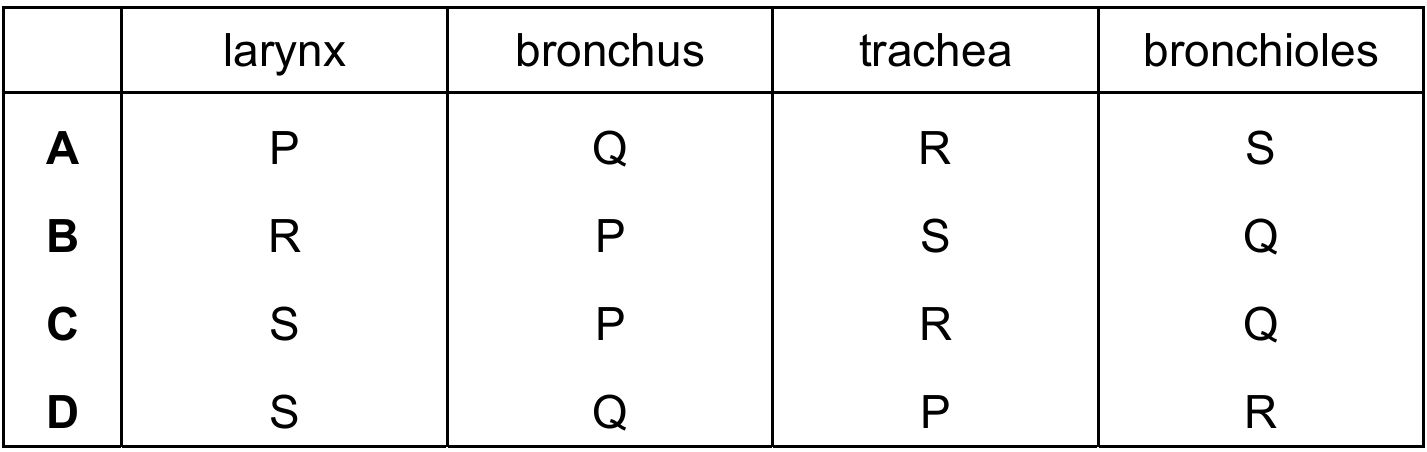
Air passes in sequence from the larynx (S) into the trachea (R), which branches into the bronchus (P), then into the smaller bronchioles (Q).
Matching each label to its correct structure gives larynx = S, bronchus = P, trachea = R, bronchioles = Q.
✅ Answer: (C)
Matching each label to its correct structure gives larynx = S, bronchus = P, trachea = R, bronchioles = Q.
✅ Answer: (C)
Question
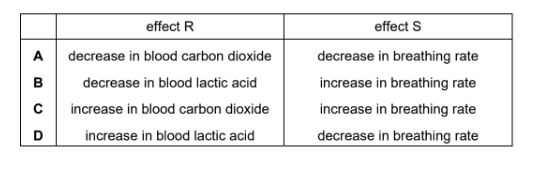
Changes in the body occur as a result of increased physical activity.

What are effects R and S?
▶️Answer/Explanation
Ans: C