
CIE iGCSE Co-Ordinated Science B12. Respiration Exam Style Questions Paper 4
Question
Most-appropriate topic codes (Cambridge IGCSE Co-ordinated Sciences 0654):
• Topic B11.1 — Gas exchange in humans
• Topic B12.1 — Respiration
• Topic B15.4 — Sexual reproduction in humans
▶️ Answer/Explanation
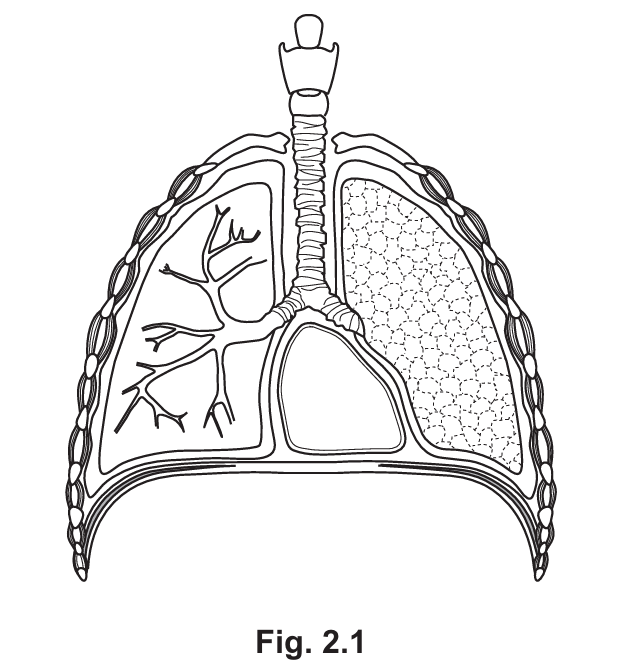
(a)(i) Larynx labelled L or larynx ; bronchus labelled B or bronchus
The larynx is the voice box located at the top of the trachea, while the bronchi are the two main airways that branch off from the trachea into each lung.
(a)(ii) Any two from:
• large surface area
• thin (surface) / thin wall
• good blood supply
• good ventilation (with air)
These features maximise the efficiency of gas exchange. A large surface area allows more gas to diffuse simultaneously, thin surfaces provide a short diffusion distance, good blood supply maintains concentration gradients, and ventilation ensures fresh air is constantly supplied.
(b)(i) C6H12O6 + 6O2 → 6CO2 + 6H2O
This equation shows glucose being oxidised in the presence of oxygen to produce carbon dioxide and water, releasing energy that is used for life processes.
(b)(ii) Any two from:
• anaerobic does not require oxygen / ORA
• anaerobic produces lactic acid / ORA
• anaerobic releases less energy / ORA
• anaerobic does not produce water or carbon dioxide / ORA
Anaerobic respiration is less efficient than aerobic respiration. It occurs when oxygen is in short supply, resulting in the production of lactic acid and a lower energy yield per glucose molecule.
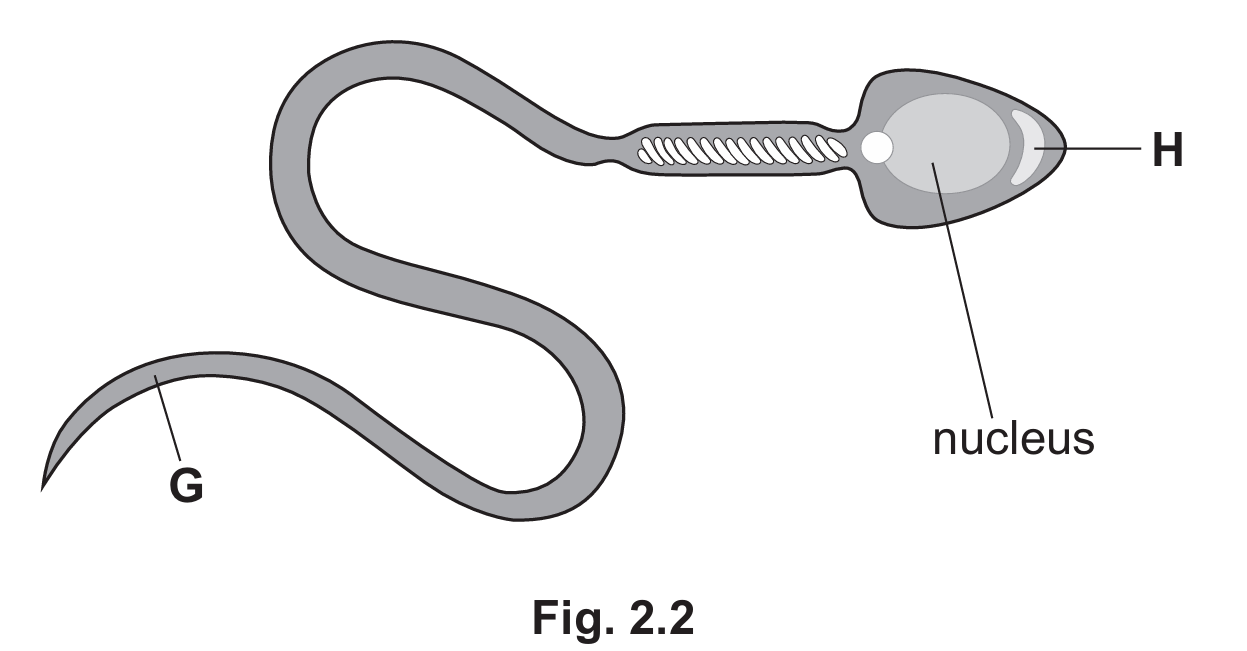
(c)(i) motility / movement / swimming
The tail (flagellum) of the sperm cell allows it to swim through the female reproductive tract to reach the egg for fertilisation.
(c)(ii) name: acrosome ; function: (contains digestive) enzymes to penetrate the egg
The acrosome is a specialised structure at the tip of the sperm head containing hydrolytic enzymes that break down the outer layers of the egg cell, allowing fusion of the sperm and egg membranes.
(c)(iii) contains a single set of chromosomes
A haploid nucleus contains only one set of chromosomes (23 in humans), unlike diploid cells which contain two complete sets (46 chromosomes). This ensures that when the sperm and egg fuse, the resulting zygote has the correct diploid number.
Question
Most-appropriate topic codes (Cambridge IGCSE Co-ordinated Sciences 0654):
• Topic B11.1 — Gas exchange in humans (Part (a), (b), (c))
• Topic B12.1 — Respiration (Part (d))
▶️ Answer/Explanation
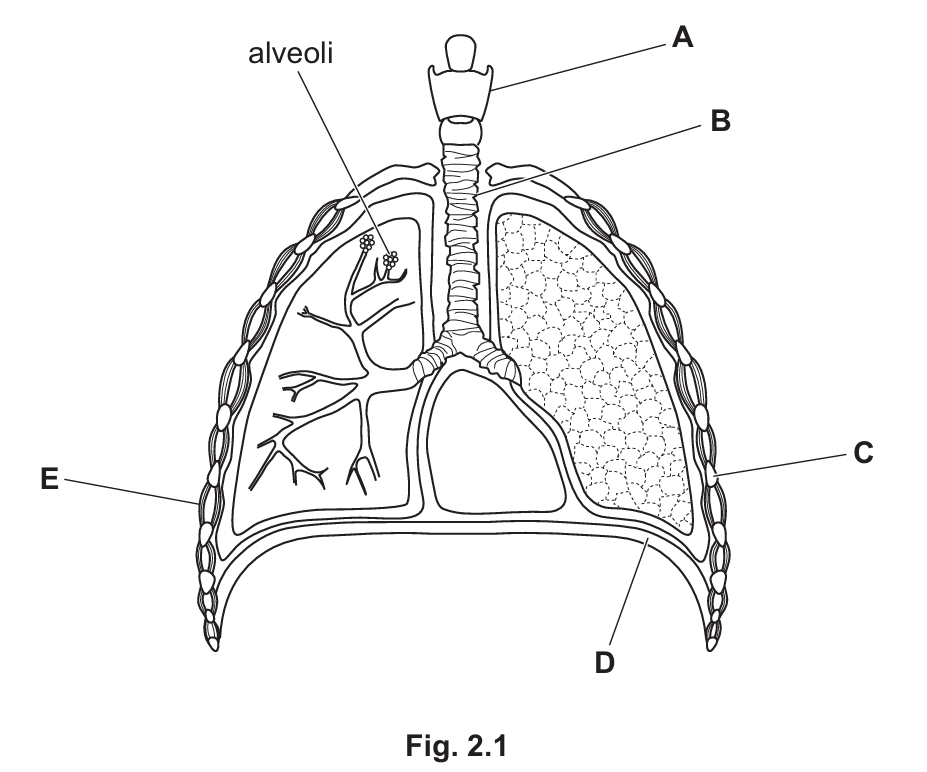
(a)(i) B
The trachea (windpipe) is the tube that carries air from the larynx to the bronchi. It is supported by C-shaped rings of cartilage.
(a)(ii) D
The diaphragm is a dome-shaped sheet of muscle separating the thorax from the abdomen. It contracts and relaxes during breathing to change the volume of the thoracic cavity.
(b) Two features of an efficient gas exchange surface:
1. Large surface area (provided by millions of alveoli)
2. Thin surface (alveolar walls are one cell thick, reducing diffusion distance)
3. Good blood supply (dense capillary network maintains concentration gradient)
4. Good ventilation (ensures fresh air with high oxygen concentration is constantly supplied)
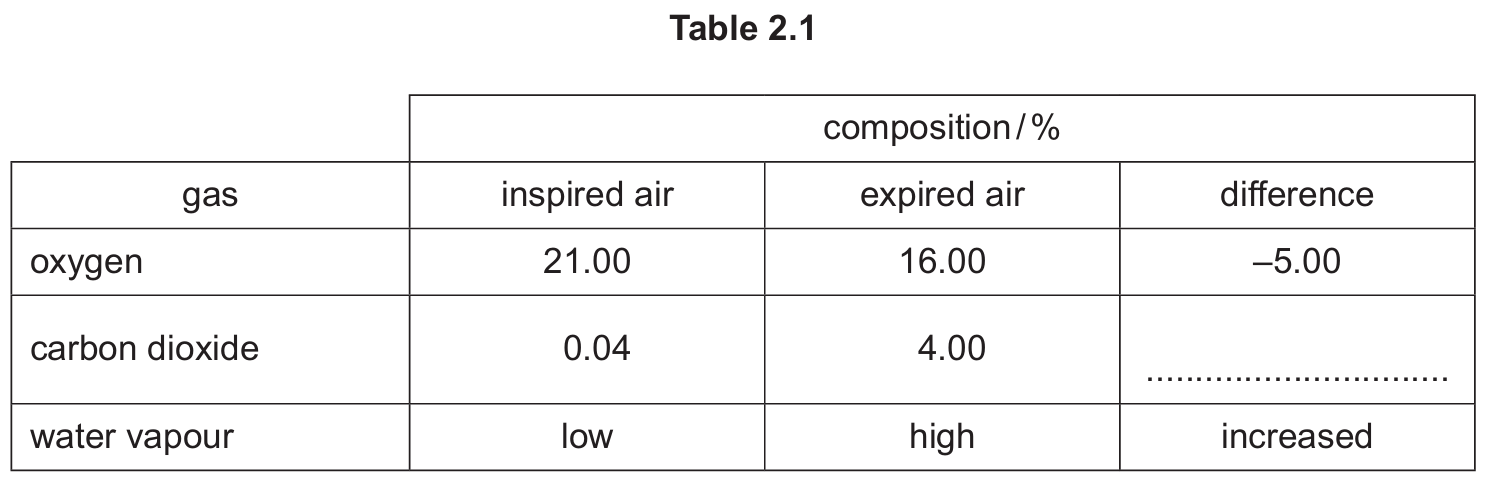
(c)(i) Difference in CO₂ composition:
4.00 – 0.04 = 3.96%
(c)(ii) Explanation of differences:
• Oxygen is used in aerobic respiration by body cells, so its concentration decreases in expired air.
• Carbon dioxide is produced as a waste product of aerobic respiration, so its concentration increases in expired air.
• Water vapour increases because air is warmed and moistened as it passes through the respiratory passages; water evaporates from the surfaces of the alveoli.
(d) Breathing rate and depth stay high after exercise due to oxygen debt:
• During vigorous exercise, muscles respire anaerobically as oxygen supply cannot meet demand.
• This produces lactic acid, which accumulates in muscles and blood.
• The oxygen debt must be repaid to break down the lactic acid.
• Extra oxygen is required to aerobically respire lactic acid in the liver.
• Therefore, the breathing rate and depth remain elevated to supply the additional oxygen needed.