
▶️ Answer/Explanation
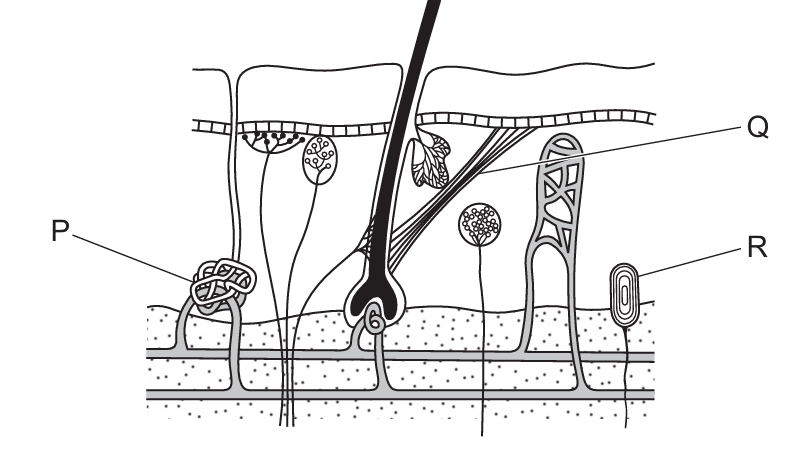
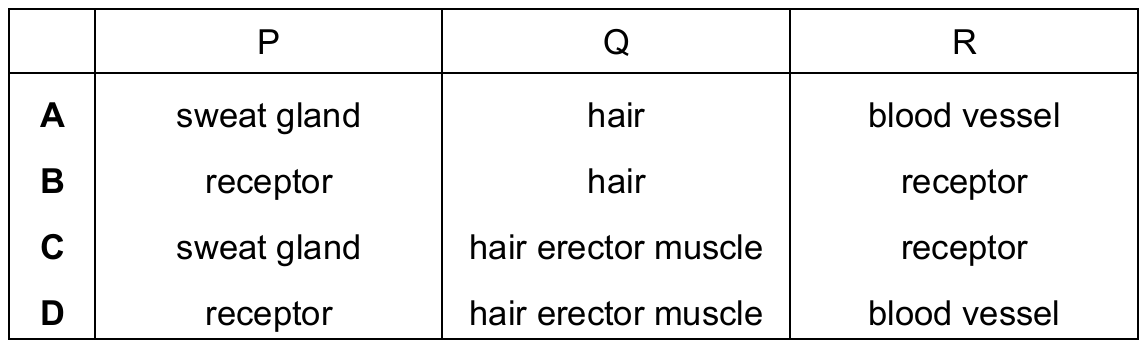
P is a sweat gland, which releases sweat onto the skin surface for evaporative cooling.
Q is a hair, which traps an insulating layer of air close to the skin when erect.
R is an erector muscle, which contracts to pull the hair upright in cold conditions.
✅ Answer: (C)
Q is a hair, which traps an insulating layer of air close to the skin when erect.
R is an erector muscle, which contracts to pull the hair upright in cold conditions.
✅ Answer: (C)
▶️ Answer/Explanation
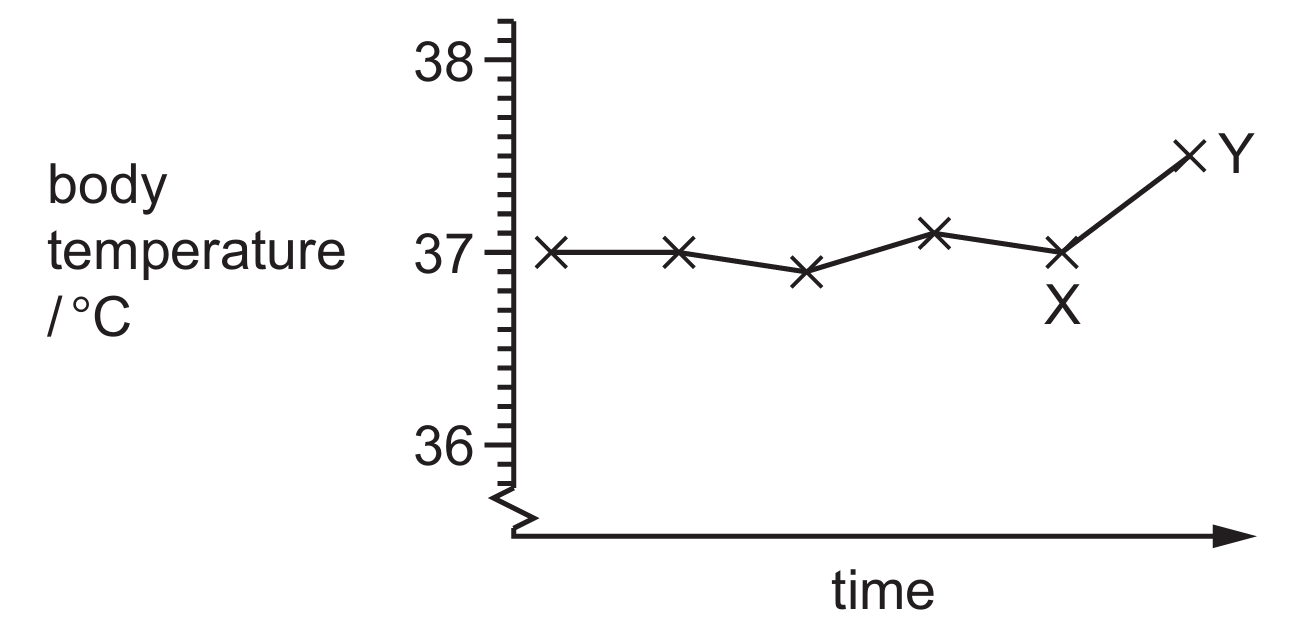
Between X and Y, body temperature rises above the normal set point.
Sweating cools the body because heat is used to evaporate water from the skin surface.
Decreased breathing rate, decreased pulse rate and shivering would not lower body temperature in this way.
✅ Answer: (D)
Sweating cools the body because heat is used to evaporate water from the skin surface.
Decreased breathing rate, decreased pulse rate and shivering would not lower body temperature in this way.
✅ Answer: (D)
▶️ Answer/Explanation
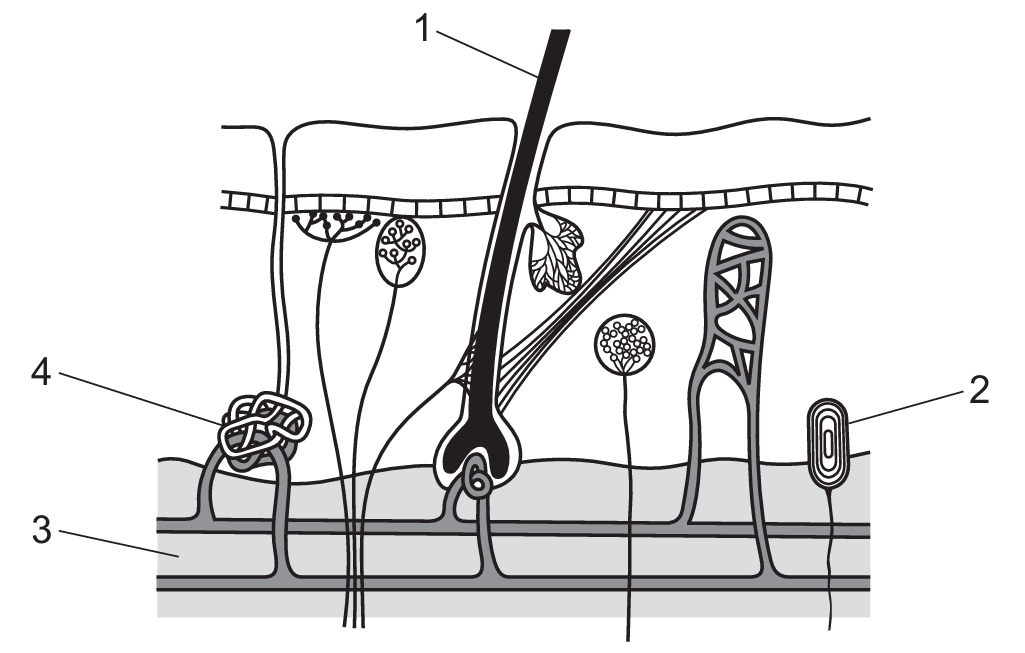
In cold conditions, blood vessels near the skin surface constrict (vasoconstriction) to reduce heat loss by directing blood flow deeper into the body.
Hair erector muscles also contract, pulling hairs upright to trap an insulating layer of air near the skin surface.
The two labelled structures corresponding to a constricted blood vessel and an erected hair are the ones that help retain heat in the cold.
✅ Answer: (A)
Hair erector muscles also contract, pulling hairs upright to trap an insulating layer of air near the skin surface.
The two labelled structures corresponding to a constricted blood vessel and an erected hair are the ones that help retain heat in the cold.
✅ Answer: (A)