
CIE iGCSE Co-Ordinated Science B15.1 Asexual reproduction Exam Style Questions Paper 3
Question
Most-appropriate topic codes (Cambridge IGCSE Co-ordinated Sciences 0654):
• Topic B15.1 — Asexual reproduction (Part (a))
• Topic B15.2 — Sexual reproduction (Part (a))
• Topic B15.4 — Sexual reproduction in humans (Part (b))
• Topic B15.3 — Sexual reproduction in plants (Part (c))
▶️ Answer/Explanation
(a)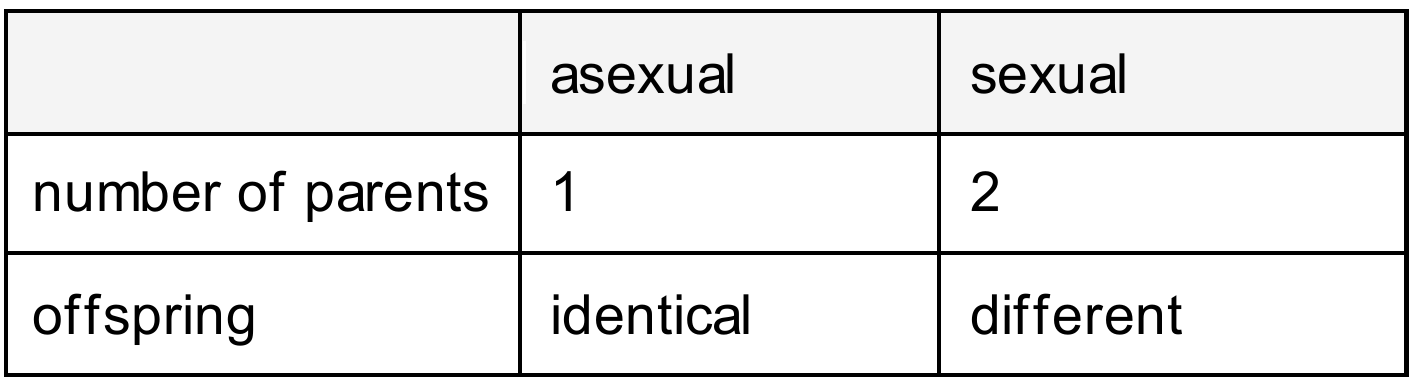
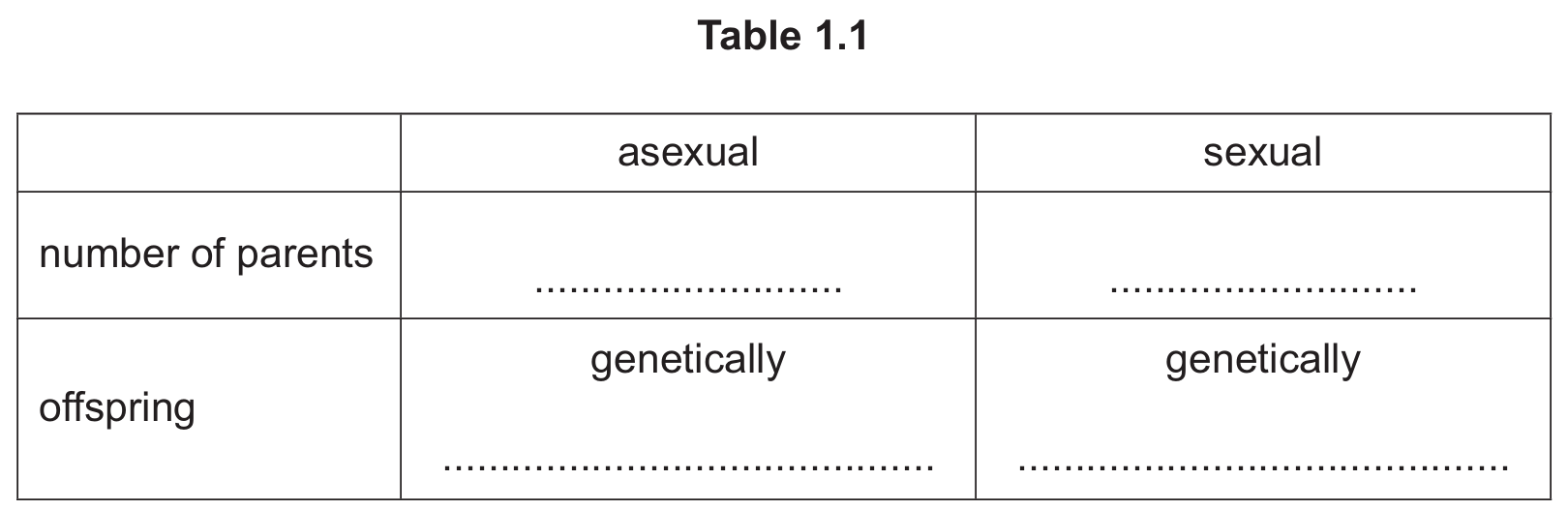
Asexual reproduction involves only one parent and produces offspring that are genetically identical to each other and to the parent (clones). Sexual reproduction involves two parents, each contributing genetic material through gametes, resulting in offspring that are genetically different from one another and from both parents. This genetic variation arises from the fusion of male and female gametes during fertilisation.
(b)
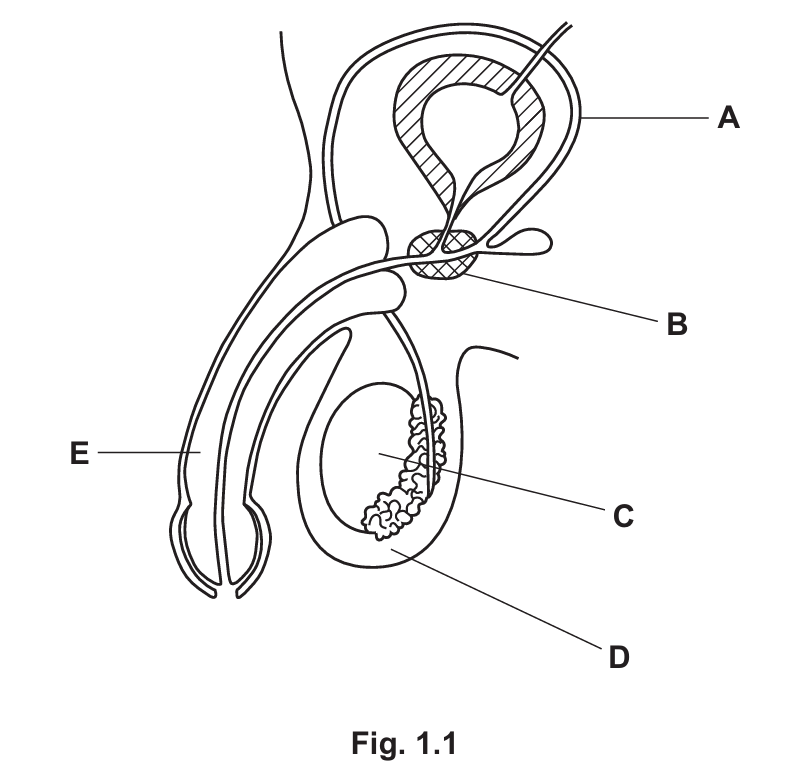
produces sperm = C (testes)
secretes a fluid to make semen = B (prostate gland)
deposits semen into the female = E (penis)
The testes are the male gonads where sperm are produced by meiosis. The prostate gland secretes an alkaline fluid that nourishes and protects sperm, forming part of semen. The penis is the copulatory organ that transfers semen into the female reproductive tract during sexual intercourse.
(c)
Pollination is the transfer of pollen grains from an anther to a stigma.
Fertilisation occurs when a pollen nucleus fuses with a nucleus in an ovule.
Pollination must occur before fertilisation can take place, and it can happen via wind or insects depending on the plant species. Once a pollen grain lands on the stigma, it grows a pollen tube down through the style to reach the ovule, allowing the male nucleus to fuse with the female nucleus inside.
Question

that attracts insects
that produces pollen
where fertilisation occurs.


Calculate the number of bacteria after 4 hours if you start with one bacterium.
Most-appropriate topic codes (Cambridge IGCSE Co-ordinated Sciences 0654):
• Topic B15.3 — Sexual reproduction in plants (Part (a))
• Topic B15.4 — Sexual reproduction in humans (Part (b))
• Topic B15.1 / B15.2 — Asexual and sexual reproduction (Part (c))
• Topic B15.1 — Asexual reproduction (Part (d))
• Topic B1.1 — Characteristics of living organisms (Part (e))
▶️ Answer/Explanation
(a) A ; E ; C
Petal (A) is the large, often brightly coloured part that attracts insects.
Anther (E) produces pollen grains containing the male gametes.
Fertilisation occurs inside the ovary (C), where the ovule is located.
(b) oviduct
In humans, the sperm fertilises the egg in the oviduct (fallopian tube).
This lies between the ovary and the uterus.
(c)

Sexual reproduction involves the fusion of gametes, so “involves gametes” is ticked only for sexual reproduction.
Both types of reproduction pass on genetic information from parent(s) to offspring.
Only asexual reproduction produces offspring genetically identical to the parent, since no fusion of gametes occurs.
(d) 256
In \(4\) hours there are \( \dfrac{4 \times 60}{30} = 8 \) divisions.
Number of bacteria \( = 2^{8} = 256\).
Each division doubles the population, starting from one bacterium.
(e) Any three from: movement, respiration, sensitivity, growth, excretion, nutrition
These are the recognised characteristics shared by all living organisms.
Reproduction, given in the question, is one of these seven characteristics.
Any three others (e.g. movement, respiration, sensitivity) are accepted.