
CIE iGCSE Co-Ordinated Science B15.3 Sexual reproduction in plants Exam Style Questions Paper 3
Question
Most-appropriate topic codes (Cambridge IGCSE Coordinated Sciences 0654):
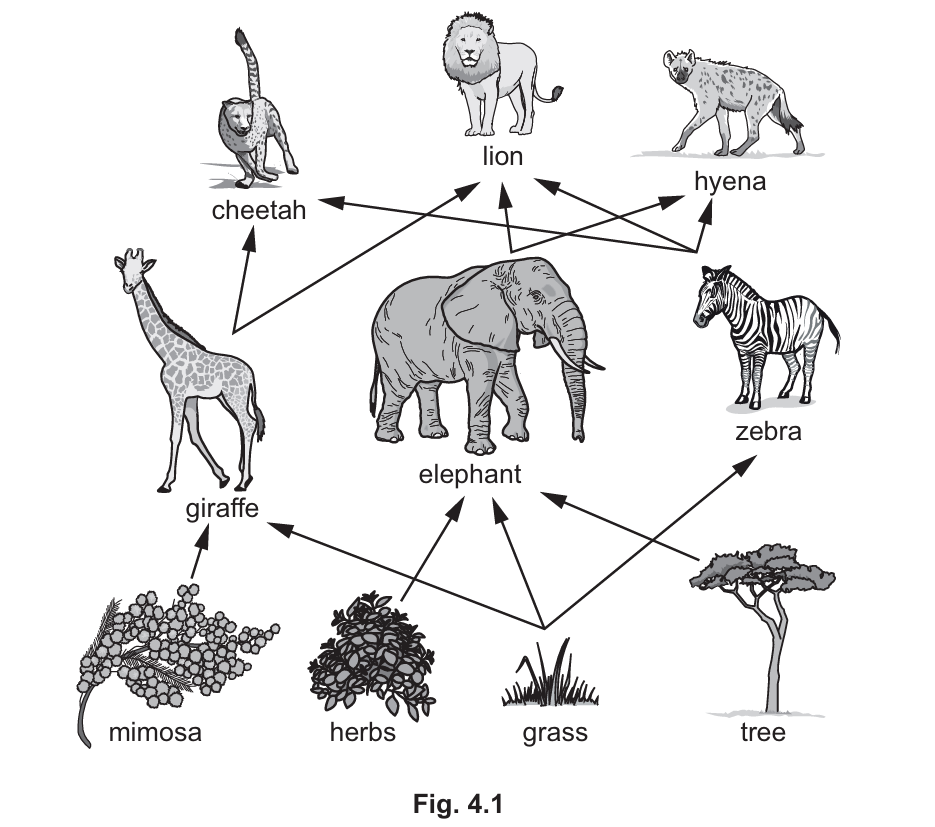
• Topic B18.2 — Food chains and food webs (Part (a)(i), (a)(ii), (a)(iii))
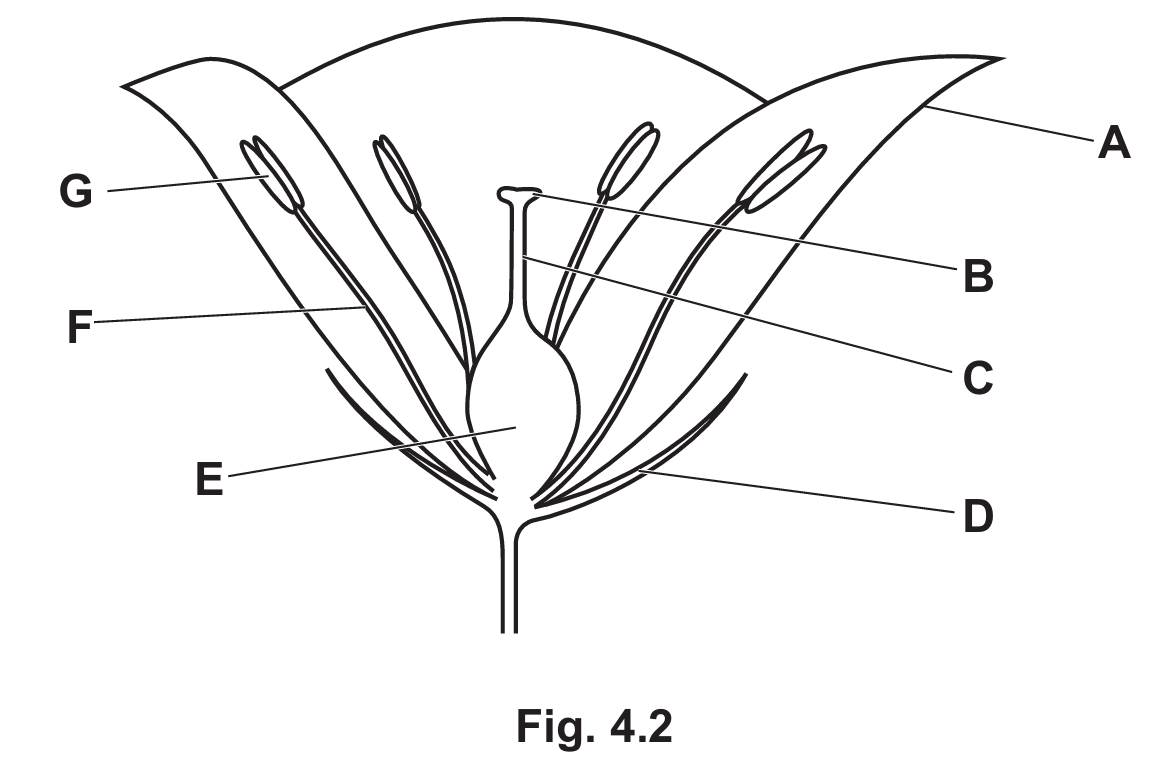
• Topic B15.3 — Sexual reproduction in plants (Part (b))
• Topic B15.3 — Sexual reproduction in plants (Part (c))
▶️ Answer/Explanation
(a)(i) giraffe / elephant / zebra
Herbivores are animals that eat only plants. In the food web, giraffes, elephants, and zebras are all primary consumers that feed directly on producers (plants).
(a)(ii) cheetah / lion / hyena
Secondary consumers eat primary consumers. Cheetahs, lions, and hyenas are predators that feed on herbivores such as zebras and giraffes.
(a)(iii) 4
Producers are organisms that make their own food through photosynthesis. The food web shows four producers: the tree, shrub, grass, and plant.
(b) E; G; B
The ovary (E) contains ovules which produce female gametes. The anther (G) produces pollen grains containing male gametes. Pollination occurs on the stigma (B), where pollen lands and germinates.
(c) oxygen; suitable temperature; water
Seeds require oxygen for aerobic respiration, a suitable temperature for enzyme activity, and water for metabolic processes and to soften the seed coat.
Question
Most-appropriate topic codes (Cambridge IGCSE Co-ordinated Sciences 0654):
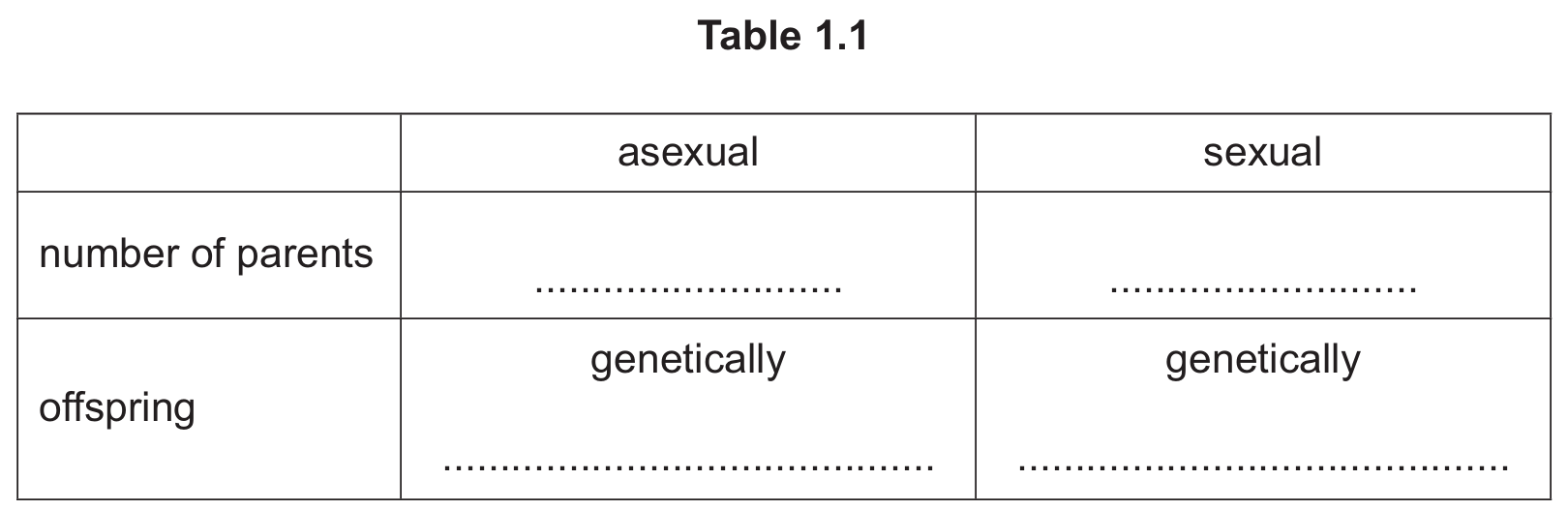
• Topic B15.1 — Asexual reproduction (Part (a))
• Topic B15.2 — Sexual reproduction (Part (a))
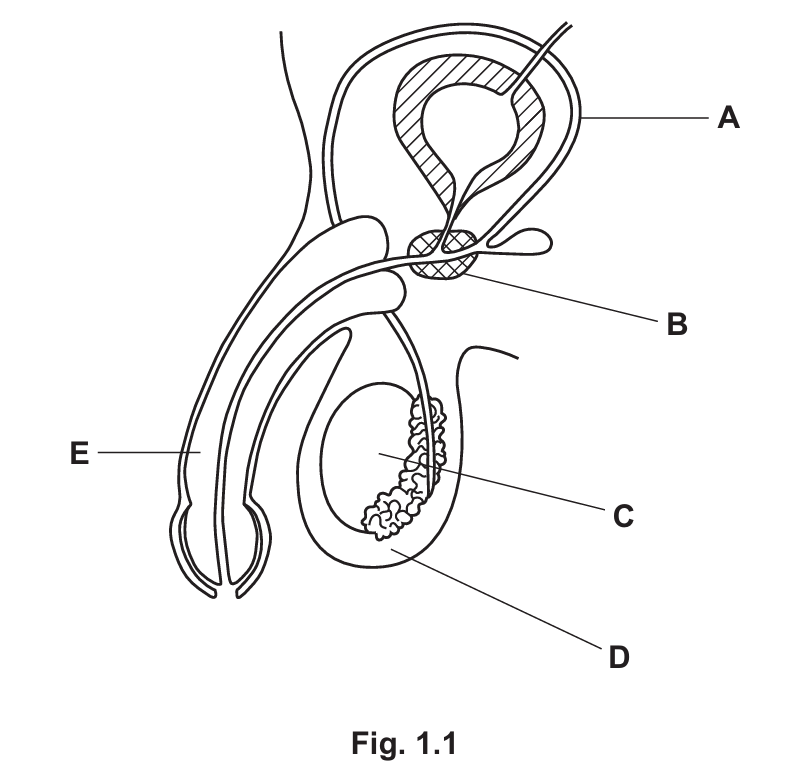
• Topic B15.4 — Sexual reproduction in humans (Part (b))
• Topic B15.3 — Sexual reproduction in plants (Part (c))
▶️ Answer/Explanation
(a)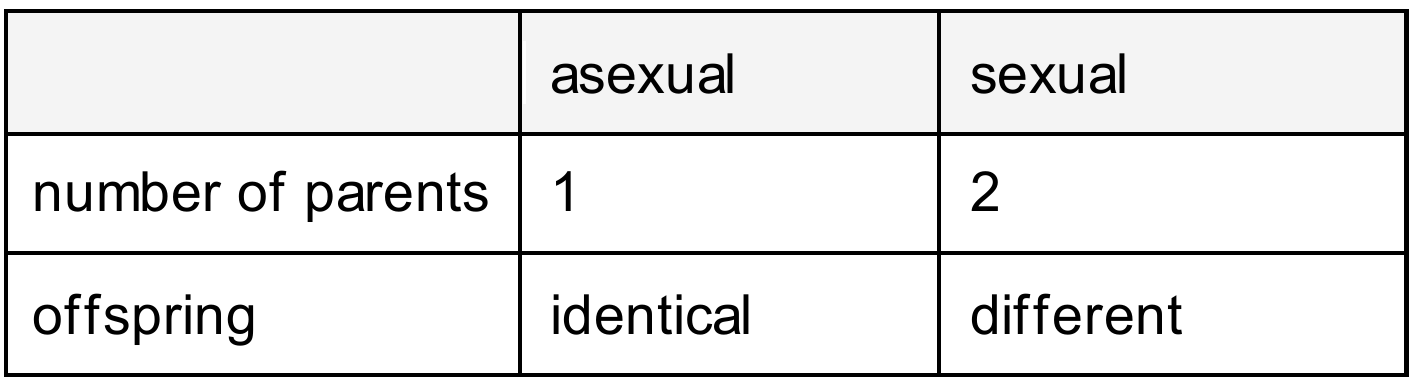
Asexual reproduction involves only one parent and produces offspring that are genetically identical to each other and to the parent (clones). Sexual reproduction involves two parents, each contributing genetic material through gametes, resulting in offspring that are genetically different from one another and from both parents. This genetic variation arises from the fusion of male and female gametes during fertilisation.
(b)
produces sperm = C (testes)
secretes a fluid to make semen = B (prostate gland)
deposits semen into the female = E (penis)
The testes are the male gonads where sperm are produced by meiosis. The prostate gland secretes an alkaline fluid that nourishes and protects sperm, forming part of semen. The penis is the copulatory organ that transfers semen into the female reproductive tract during sexual intercourse.
(c)
Pollination is the transfer of pollen grains from an anther to a stigma.
Fertilisation occurs when a pollen nucleus fuses with a nucleus in an ovule.
Pollination must occur before fertilisation can take place, and it can happen via wind or insects depending on the plant species. Once a pollen grain lands on the stigma, it grows a pollen tube down through the style to reach the ovule, allowing the male nucleus to fuse with the female nucleus inside.