
▶️ Answer/Explanation
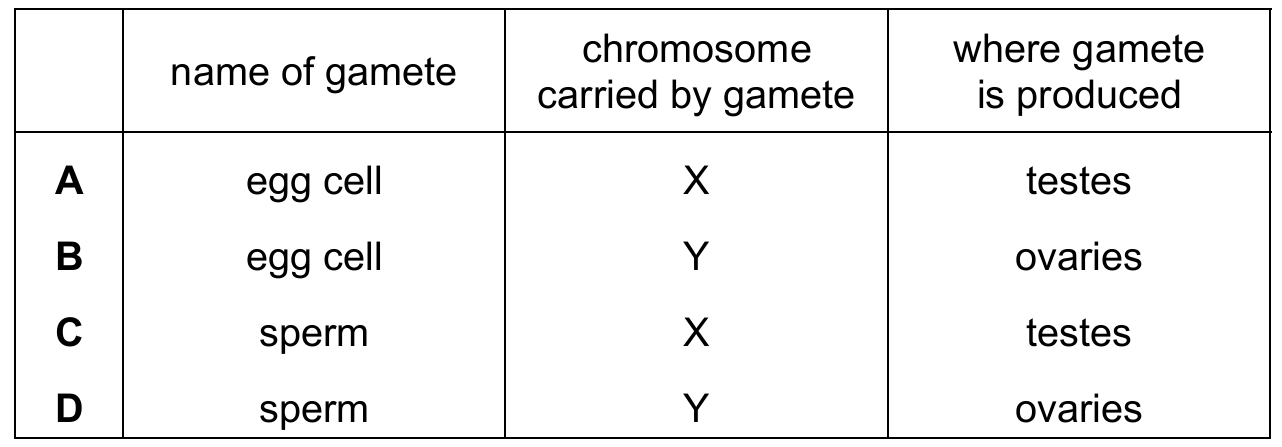
Human sperm cells are produced in the testes and can carry either an X or a Y chromosome. Egg cells are produced in the ovaries and always carry an X chromosome. Therefore, row C correctly identifies sperm as the gamete that carries an X chromosome and is produced in the testes.
✅ Answer: (C)
✅ Answer: (C)
▶️ Answer/Explanation
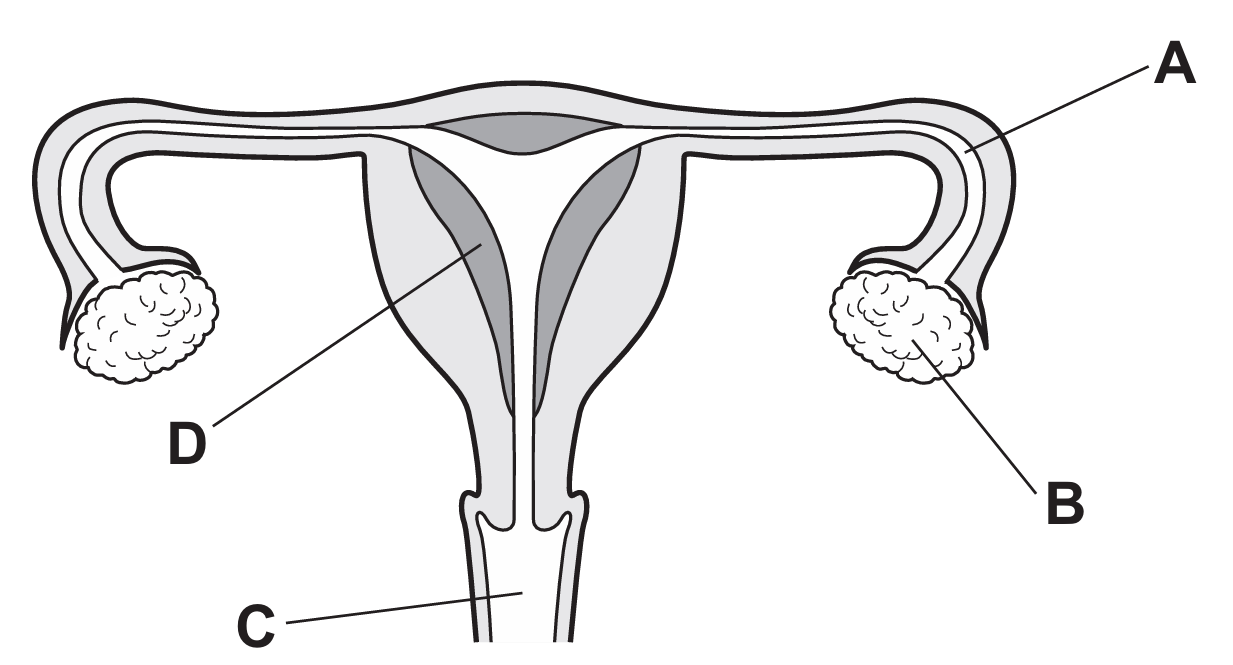
Fertilisation usually occurs in the oviduct, and the resulting embryo then travels towards the uterus.
Normal implantation occurs in the lining (endometrium) of the uterus wall, which is thick and well supplied with blood vessels.
This lining provides nutrients and support needed for the embryo to develop into a healthy fetus.
✅ Answer: (D)
Normal implantation occurs in the lining (endometrium) of the uterus wall, which is thick and well supplied with blood vessels.
This lining provides nutrients and support needed for the embryo to develop into a healthy fetus.
✅ Answer: (D)
▶️ Answer/Explanation
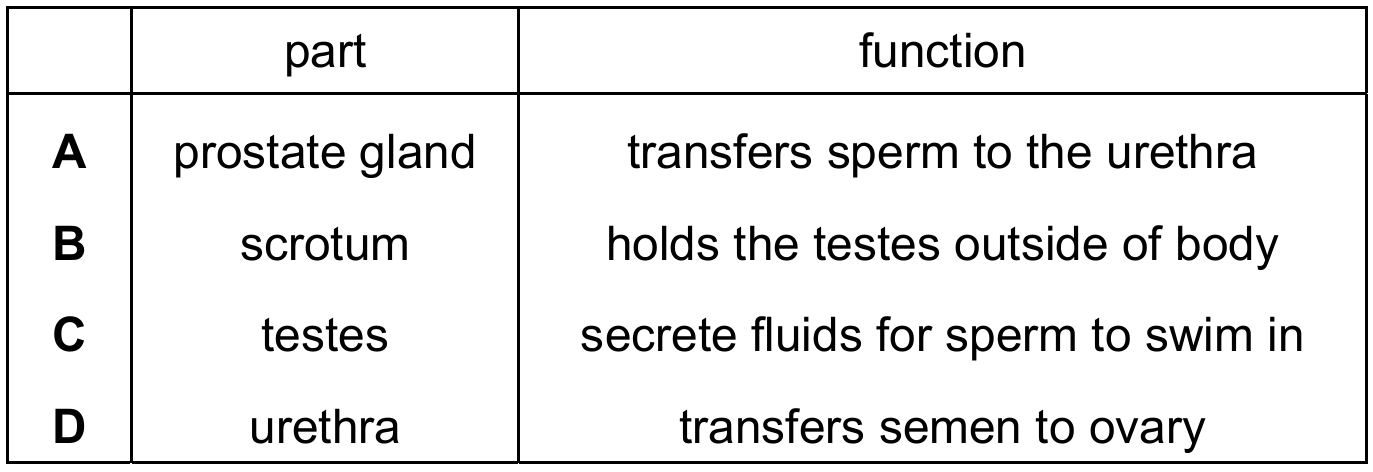
The scrotum is the sac that holds the testes outside the main body cavity, where the temperature is slightly lower and more suitable for sperm production.
The prostate gland (not sperm ducts) adds fluid to semen, the testes produce sperm and testosterone (fluid is from other glands), and the urethra carries semen out through the penis, not to an ovary.
Only row B correctly matches a structure with its true function.
✅ Answer: (B)
The prostate gland (not sperm ducts) adds fluid to semen, the testes produce sperm and testosterone (fluid is from other glands), and the urethra carries semen out through the penis, not to an ovary.
Only row B correctly matches a structure with its true function.
✅ Answer: (B)
▶️ Answer/Explanation
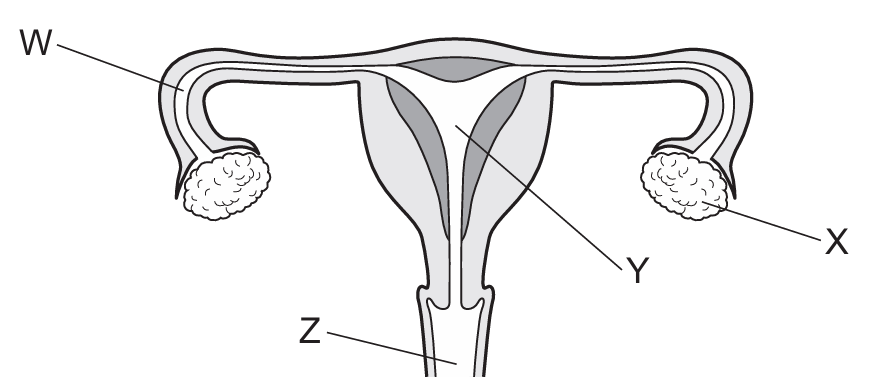
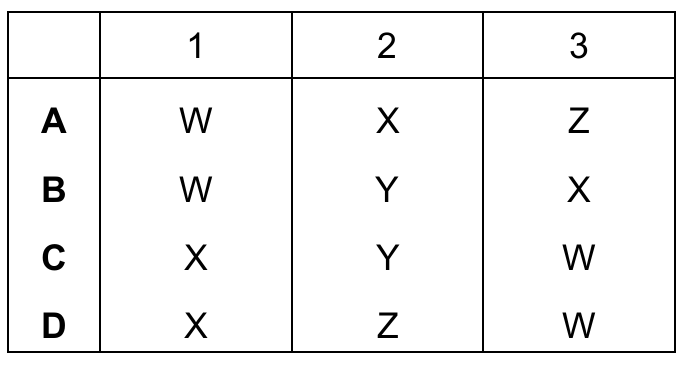
Ovulation happens at the ovary, so failure of ovulation relates to location X.
Implantation occurs in the lining of the uterus, so failure to implant relates to location Y.
Fertilisation normally occurs in the oviduct, so a blockage there relates to location W.
✅ Answer: (C)
Implantation occurs in the lining of the uterus, so failure to implant relates to location Y.
Fertilisation normally occurs in the oviduct, so a blockage there relates to location W.
✅ Answer: (C)
▶️ Answer/Explanation
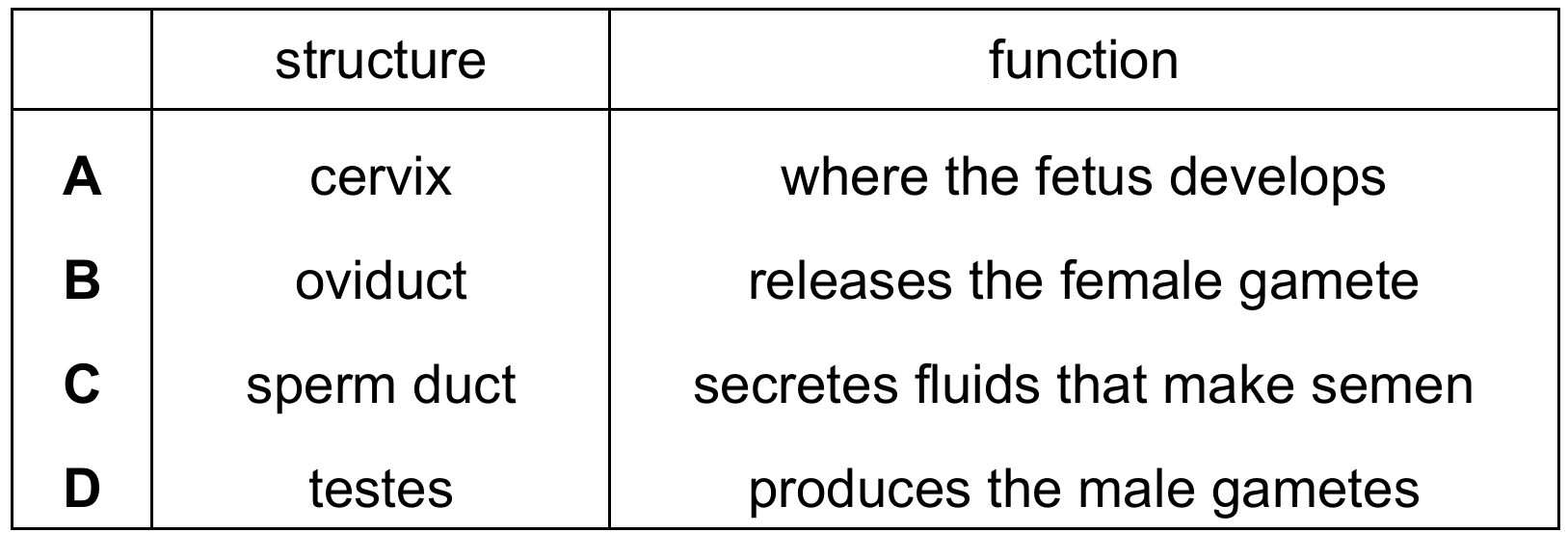
The testes are the site of sperm (male gamete) production.
The fetus develops in the uterus (not the cervix), the ovary releases the female gamete (not the oviduct), and it is glands such as the prostate — not the sperm duct itself — that secrete the fluids of semen.
Only the testes-function pairing is correct.
✅ Answer: (D)
The fetus develops in the uterus (not the cervix), the ovary releases the female gamete (not the oviduct), and it is glands such as the prostate — not the sperm duct itself — that secrete the fluids of semen.
Only the testes-function pairing is correct.
✅ Answer: (D)