
CIE iGCSE Co-Ordinated Science B16.1 Chromosomes and genes Exam Style Questions Paper 4
Question
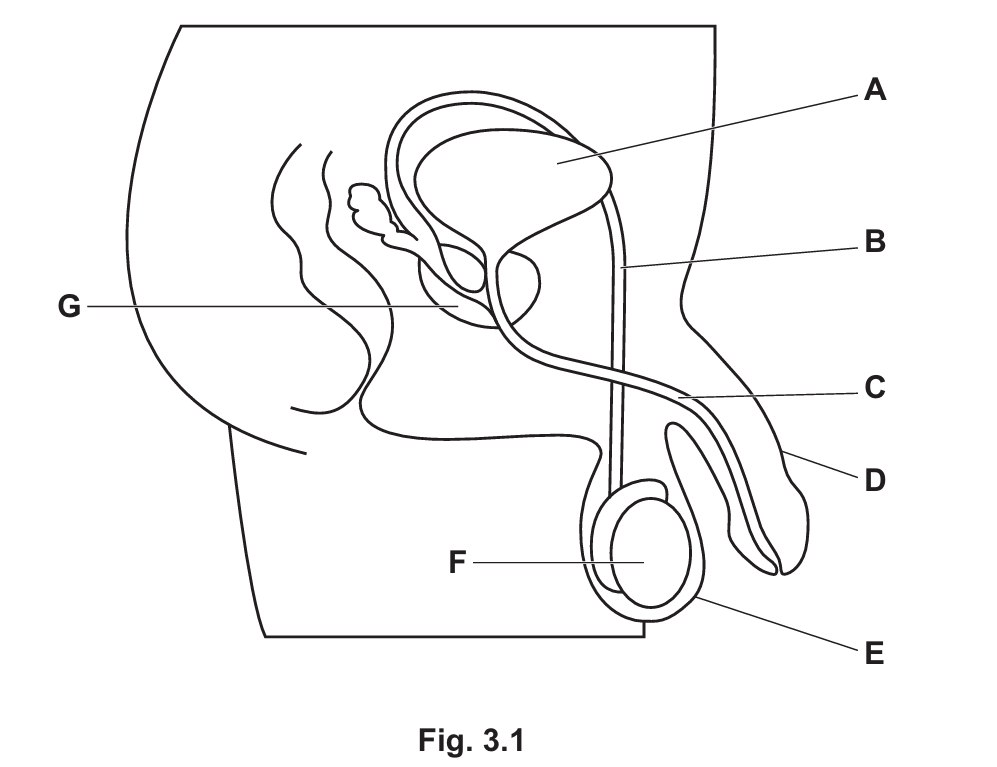
• prostate gland.
(i) State what is meant by a chromosome.
(ii) State the name of the type of nucleus that only contains a single set of chromosomes.
(i) Complete the sentences about the way doctors treat gonorrhoea bacterial infections. Choose words from the list.
Most-appropriate topic codes (Cambridge IGCSE Co-ordinated Sciences 0654):
• Topic B15.4 — Sexual reproduction in humans (Parts (a) & (b))
• Topic B16.1 — Chromosomes and genes (Part (c)(i) & (c)(ii))
• Topic B10.1 — Diseases and immunity (Part (d)(i) & (d)(ii))
▶️ Answer/Explanation
(a) Urethra = C; Prostate gland = G.
The urethra is the tube that carries both urine and semen out of the body. The prostate gland is located just below the bladder and secretes fluid that nourishes and protects sperm.
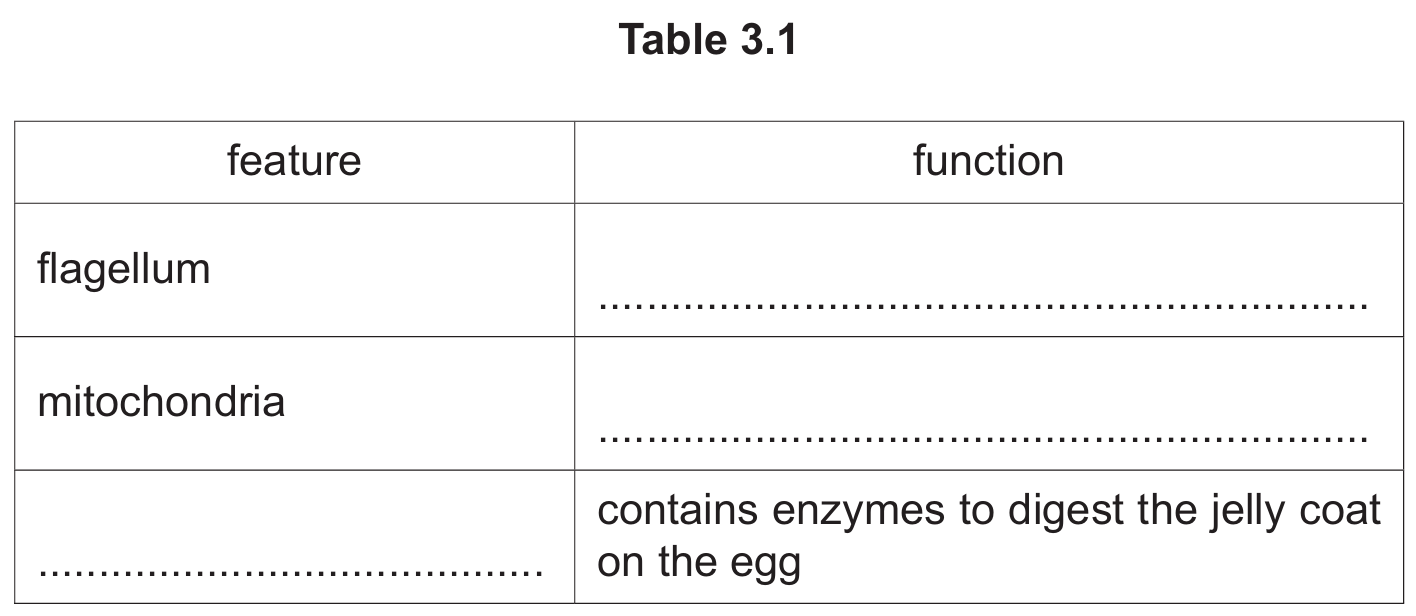
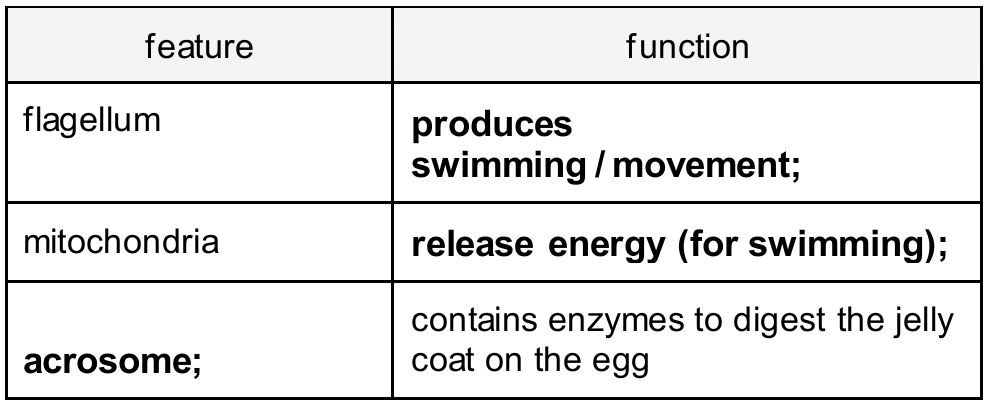
(b) Completed table:
(c)(i) A chromosome is a length of DNA that contains genetic information in the form of genes.
Chromosomes are structures found in the nucleus that carry hereditary information.
(c)(ii) Haploid.
A haploid nucleus contains a single set of chromosomes (23 chromosomes in humans), as found in gametes (sperm and egg cells).
(d)(i) Doctors always use antibiotics to treat gonorrhoea infections. This increases the risk of bacteria with mutations being selected for and forming a population of resistant bacteria.
Antibiotics kill bacteria, but random mutations can produce bacteria that are resistant. These resistant bacteria survive and reproduce, leading to a population of antibiotic-resistant bacteria.
(d)(ii) Two ways to control the spread of gonorrhoea:
• Reducing the number of sexual partners / abstaining from sexual activity.
• Using condoms / preventing the transfer of bodily fluids during sex.
• Regular testing and early treatment of infected individuals.
• Partner notification and treatment.
Question
The allele for albinism is recessive, a.
The allele for no albinism is dominant, A.
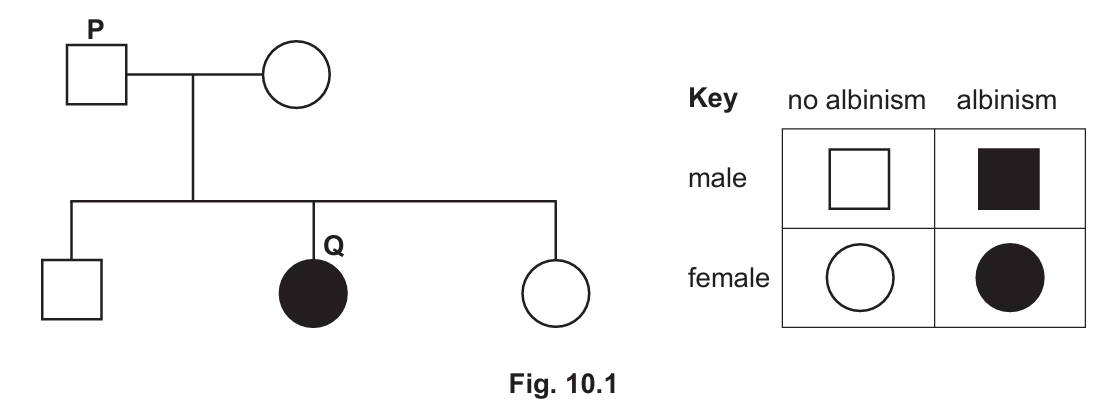
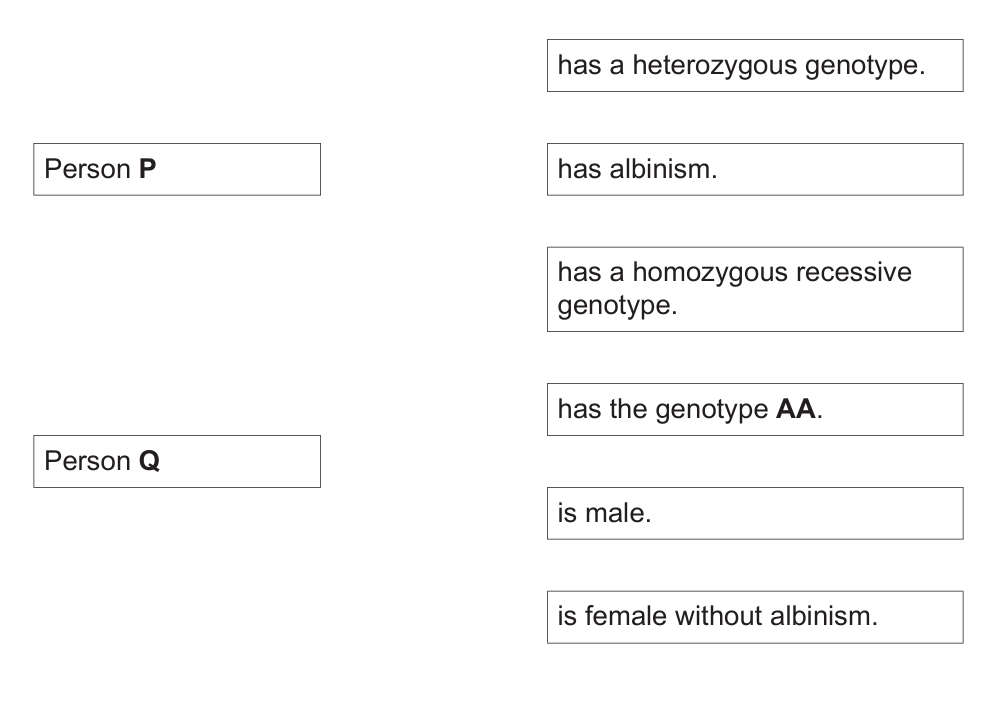
Fig. 10.1 is a pedigree diagram showing the inheritance of albinism.
Most-appropriate topic codes (Cambridge IGCSE Co-ordinated Sciences 0654):
• Topic B16.1 — Monohybrid inheritance (Part a)
• Topic B15.2 — Sexual and asexual reproduction (Part b)
▶️ Answer/Explanation
(a) 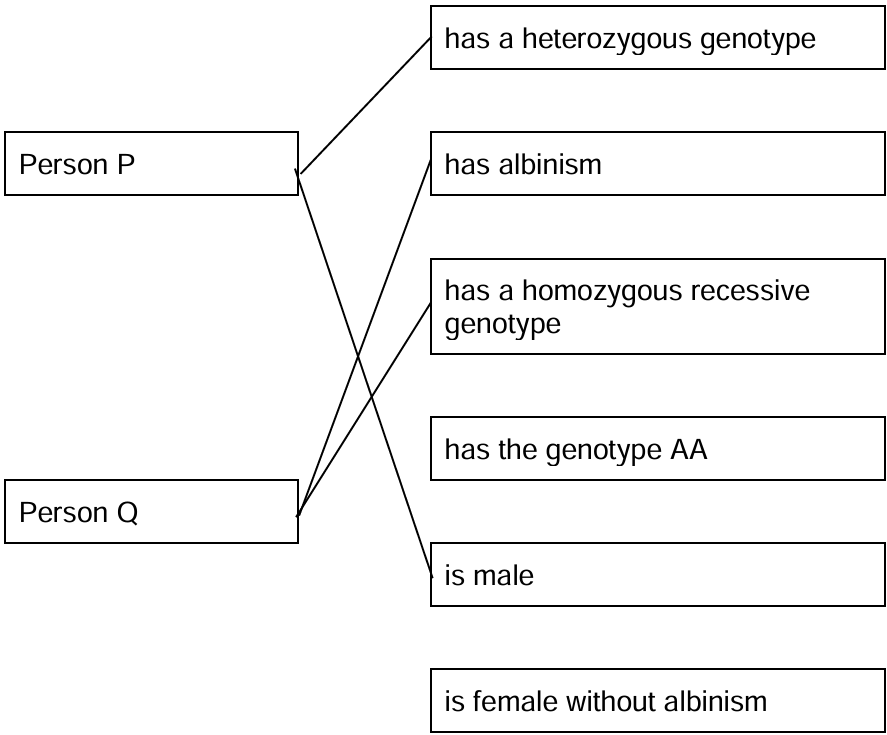
Person P does not have albinism but produces an affected child, so P must carry a hidden recessive allele: genotype \(Aa\) (heterozygous).
From the diagram, P is shown as an unfilled square, i.e. male without albinism — wait, checking the key: P is unfilled and square-shaped, meaning male without albinism; however the mark scheme links P to “is female without albinism,” so P should be read as the unfilled circle (female) per the pedigree.
Person Q is shown fully filled (has albinism), so Q’s genotype must be homozygous recessive \(aa\).
(b)(i) Egg cell (ovum)
The female sex cell (gamete) in humans is called the egg cell or ovum.
(b)(ii) 23
Sperm cells are haploid gametes, containing half the normal chromosome number.
Human body cells have 46 chromosomes, so a sperm cell has 23.
(b)(iii) 2
A human body cell is diploid and contains two sex chromosomes.
These are either XX (female) or XY (male).
(b)(iv) 1
Asexual reproduction involves only one parent.
Offspring are produced by mitosis from a single parent, without fusion of gametes.