
CIE iGCSE Co-Ordinated Science B16.2 Cell division Exam Style Questions Paper 4
Question
Most-appropriate topic codes (Cambridge IGCSE Co-ordinated Sciences 0654):
• Topic B2.1 — Cell structure (Part (a))
• Topic B16.2 — Cell division / Mitosis (Part (b)(i))
• Topic B15.2 — Sexual reproduction (Part (b)(ii))
• Topic B15.3 — Sexual reproduction in plants (Part (c)(i) & (c)(ii))
• Topic B16.2 — Cell division / Meiosis (Part (d))
▶️ Answer/Explanation
(a) Similar:
1. Both have a cell wall surrounding the cell membrane.
2. Both contain ribosomes for protein synthesis and DNA as genetic material.
Both plant and bacterial cells share basic structural features like a cell wall, cell membrane, cytoplasm, and ribosomes.
(a) Different:
1. Plant cell wall is made of cellulose; bacterial cell wall is made of peptidoglycan (sugars and amino acids).
2. Plant cells have chloroplasts and a vacuole; bacterial cells lack these organelles.
Plant cells have membrane-bound organelles like chloroplasts and a nucleus, whereas bacterial cells have circular DNA and plasmids without a nucleus.
(b)(i) chromosomes
DNA replication occurs before mitosis to ensure each daughter cell receives an identical set of chromosomes.
(b)(ii) Advantage: Produces genetic variation in offspring.
Disadvantage: Takes longer than asexual reproduction as offspring develop from fertilised eggs.
Sexual reproduction promotes diversity through gamete fusion, but requires more time and energy compared to asexual methods.
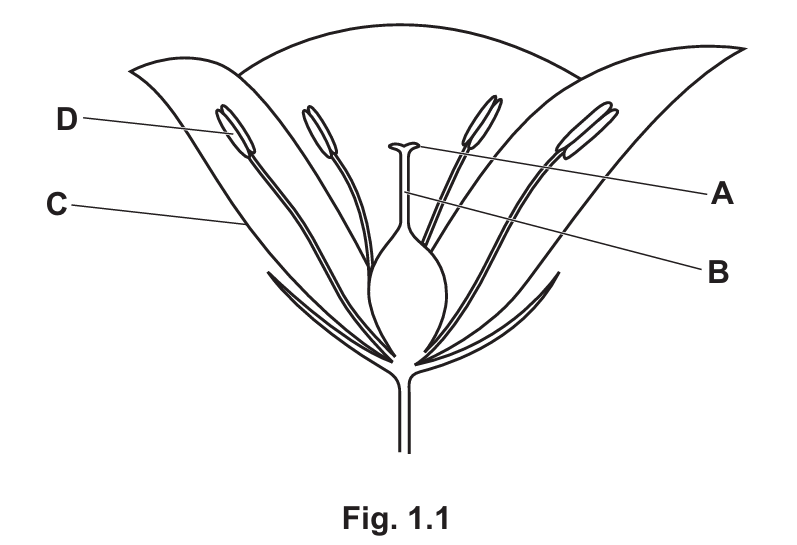
(c)(i) A – stigma ; B – style
The stigma is the receptive surface for pollen grains, and the style is the stalk connecting the stigma to the ovary.
(c)(ii) C: In wind-pollinated flowers, petals are dull/small/absent and have no scent.
D: Anthers are hanging outside the flower to release pollen easily into the wind.
Wind-pollinated flowers lack bright colours and nectar, and their anthers are exposed for efficient pollen dispersal by air currents.
(d) meiosis
Meiosis is the reduction division that produces haploid gametes from diploid cells, halving the chromosome number.
Question
Most-appropriate topic codes (Cambridge IGCSE Co-ordinated Sciences 0654):
• Topic B16.2 — Cell division
• Topic B16.3 — Monohybrid inheritance
• Topic B10.1 — Diseases and immunity
▶️ Answer/Explanation
(a)(i) Any two from:
- growth
- repair of damaged tissues / repair of damaged organs
- replacement of cells
Mitosis produces genetically identical daughter cells for growth, repair, and replacement of worn-out cells. It ensures that each new cell receives an exact copy of the genetic material.
(a)(ii) replication (of chromosomes) / replication (of DNA)
Before mitosis begins, DNA replication occurs so that each chromosome is duplicated and consists of two identical chromatids. This ensures each daughter cell receives a complete set of genetic material.
(b)
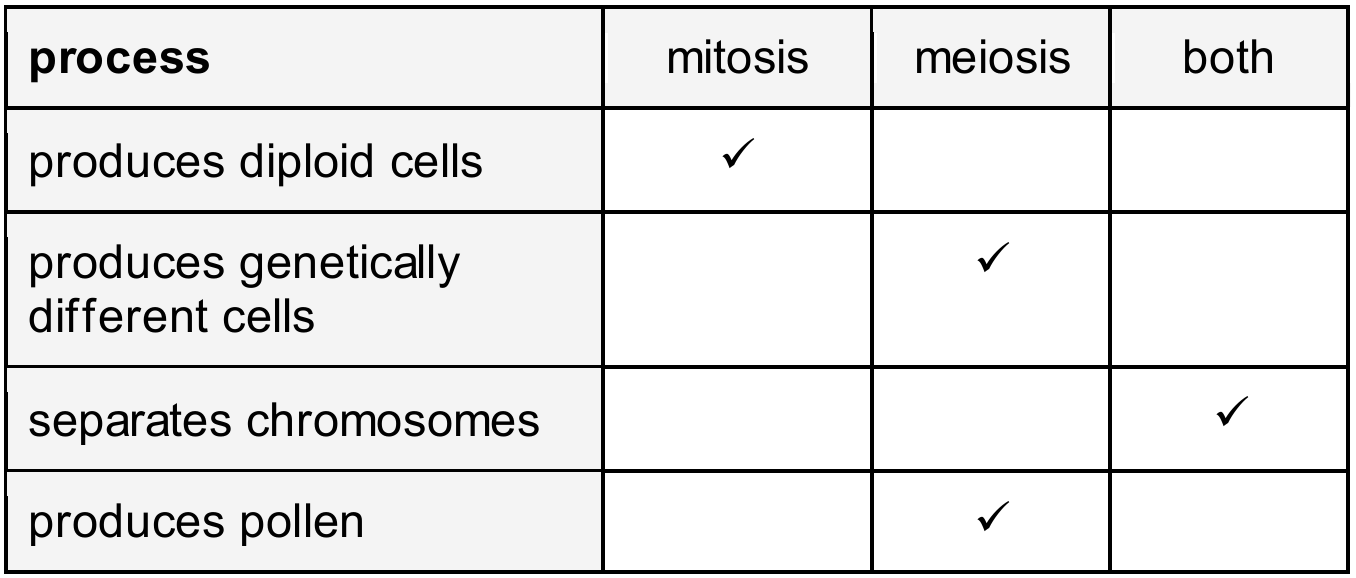
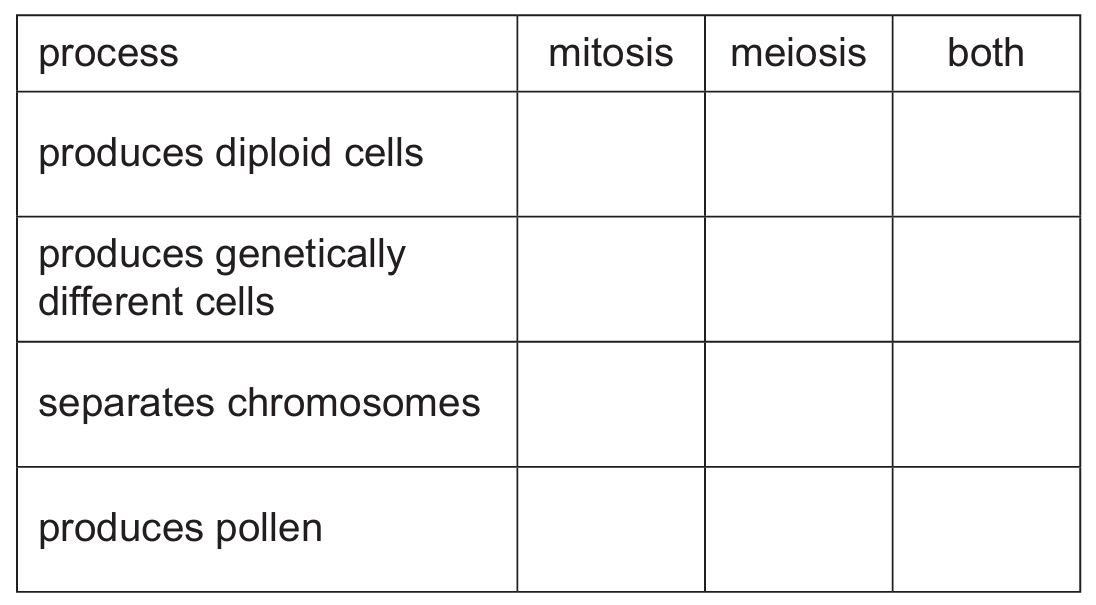
Mitosis produces identical diploid daughter cells for growth and repair. Meiosis produces genetically different haploid cells (gametes) for sexual reproduction. Both processes involve chromosome separation. Pollen is produced by meiosis in plants.
(c) Any one from:
- antigens on the pathogen stimulate lymphocytes to produce antibodies
- antibodies bind to antigens leading to direct destruction of pathogens
- antibodies mark pathogens for destruction by phagocytes
AND memory cells are produced that give long-term active immunity.
When a pathogen infects the body, its antigens trigger an immune response. Specific lymphocytes produce antibodies that bind to antigens. After infection, memory cells remain in the body, allowing a rapid response to future infections by the same pathogen.