
CIE iGCSE Co-Ordinated Science B16.3 Monohybrid inheritance Exam Style Questions Paper 3
Question
Most-appropriate topic codes (Cambridge IGCSE Coordinated Sciences 0654):
• Topic B11.1 — Gas exchange in humans (Part (a)(i), (a)(ii), (b)(i))
• Topic B12.1 — Respiration (Part (a)(iii), (a)(iv))
• Topic B16.3 — Monohybrid inheritance (Part (b)(ii), (b)(iii))
▶️ Answer/Explanation
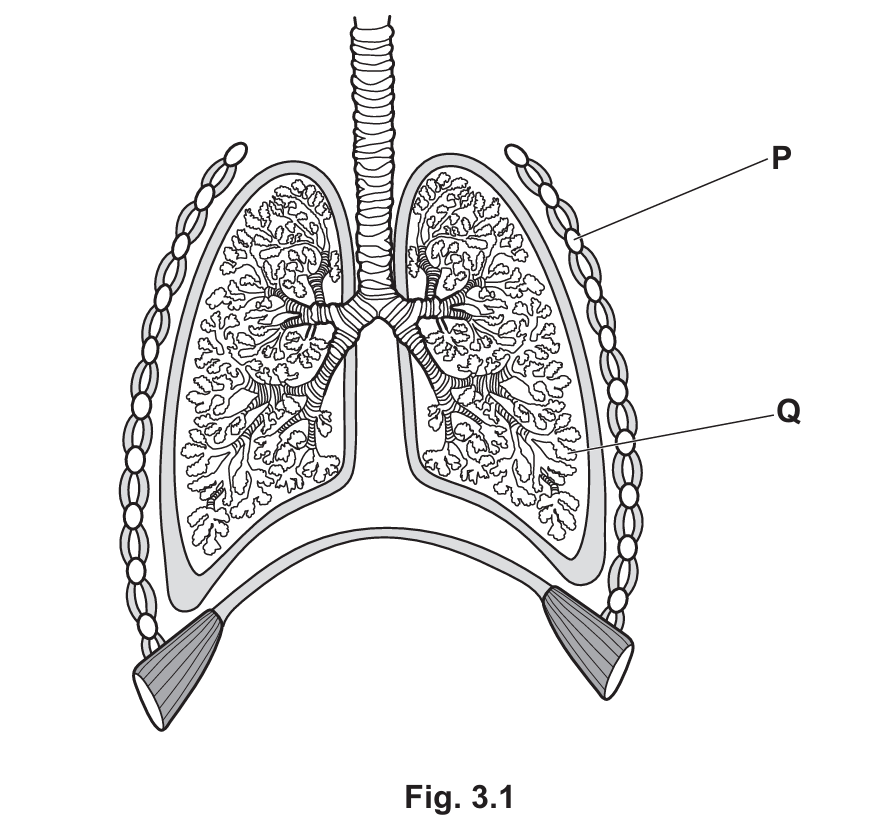
(a)(i) P – rib; Q – alveolus / alveoli
The ribs (P) protect the lungs and move during breathing. Alveoli (Q) are tiny air sacs where gas exchange occurs between air and blood.
(a)(ii) Diaphragm labelled D
The diaphragm is a dome-shaped muscle at the base of the chest cavity that contracts and relaxes to change the volume of the thorax during breathing.
(a)(iii) oxygen
Aerobic respiration requires oxygen as the final electron acceptor in the electron transport chain, allowing complete breakdown of glucose to carbon dioxide and water.
(a)(iv) Any two from: muscle contraction; protein synthesis; cell division; growth; the passage of nerve impulses; the maintenance of a constant body temperature
Energy from respiration is used for many cellular processes including mechanical work, biosynthesis, and maintaining homeostasis.
(b)(i) trachea / bronchi
Ciliated cells line the airways (trachea and bronchi). Their cilia beat to move mucus upwards, removing trapped particles and pathogens.
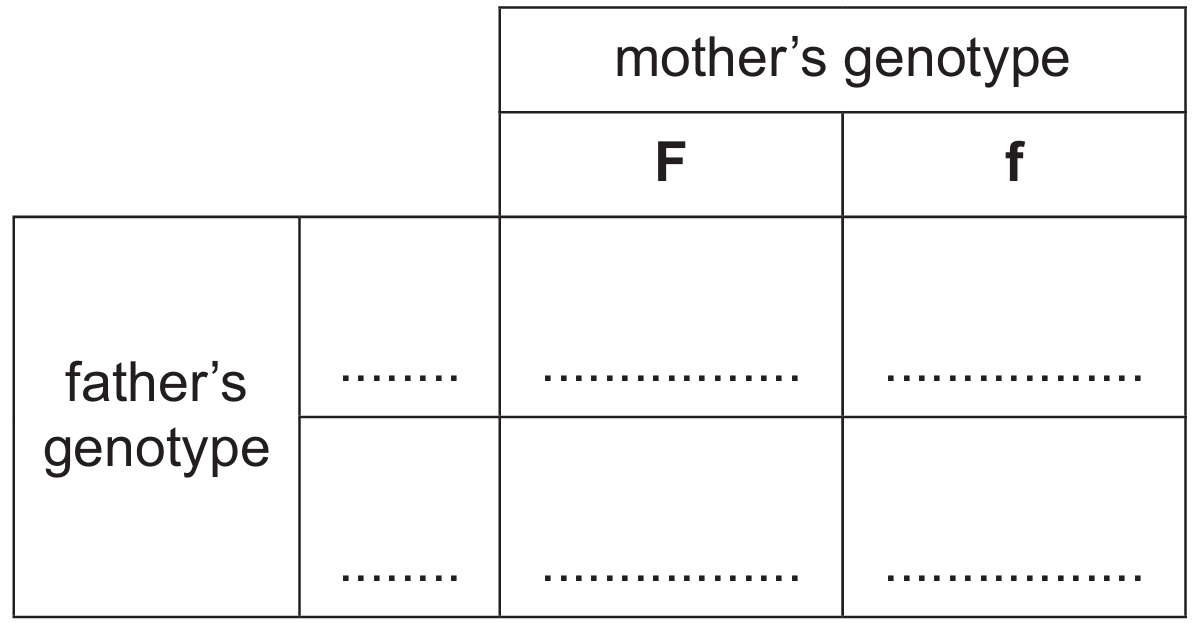
(b)(ii) Father’s genotype: Ff; Offspring genotypes: FF, Ff, Ff, ff
Both parents must be carriers (Ff) to have a child with cystic fibrosis (ff). The Punnett square shows a 1 in 4 chance of the child inheriting two recessive alleles.
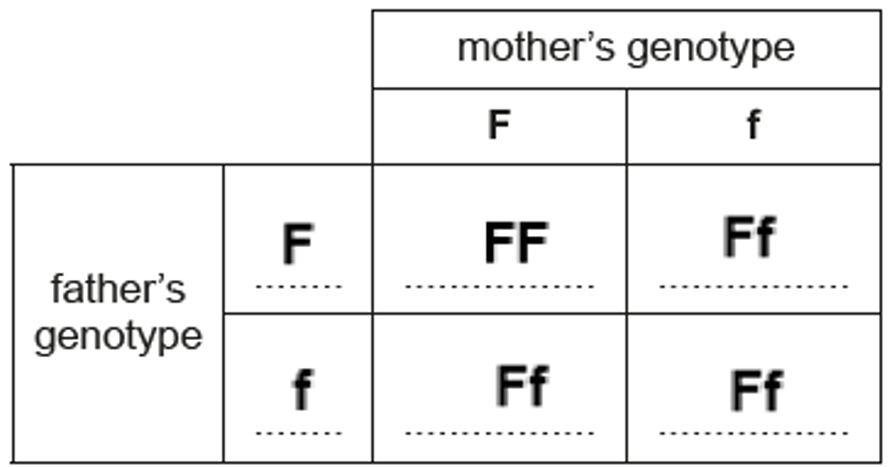
(b)(iii) heterozygous and has two different alleles
The mother’s genotype is Ff, meaning she has one dominant allele (F) and one recessive allele (f), which is the definition of heterozygous.
Question
sepal
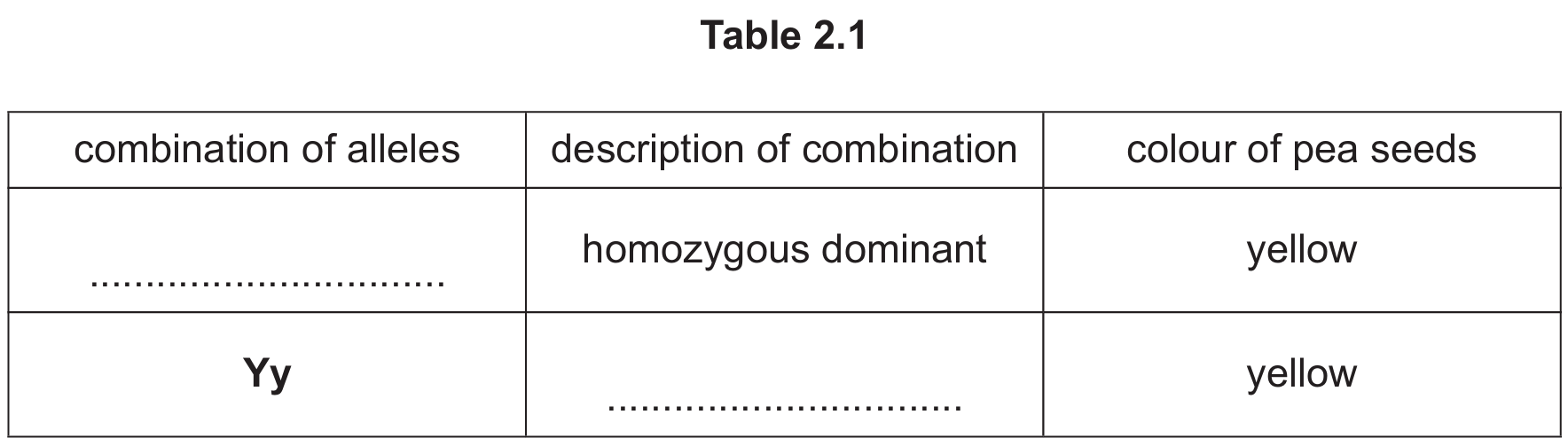
- The allele for yellow pea seeds is Y.
- The allele for green pea seeds is y.
Topic codes:
• Topic B16.3 — Monohybrid inheritance (All parts)
• Topic B17.1 — Variation (Part (a))
▶️ Answer/Explanation
(a) discontinuous ; phenotypes
Seed colour in pea plants shows discontinuous variation because there are only two distinct categories (green or yellow) with no intermediate forms. Discontinuous variation is controlled by genes and results in a limited number of phenotypes.
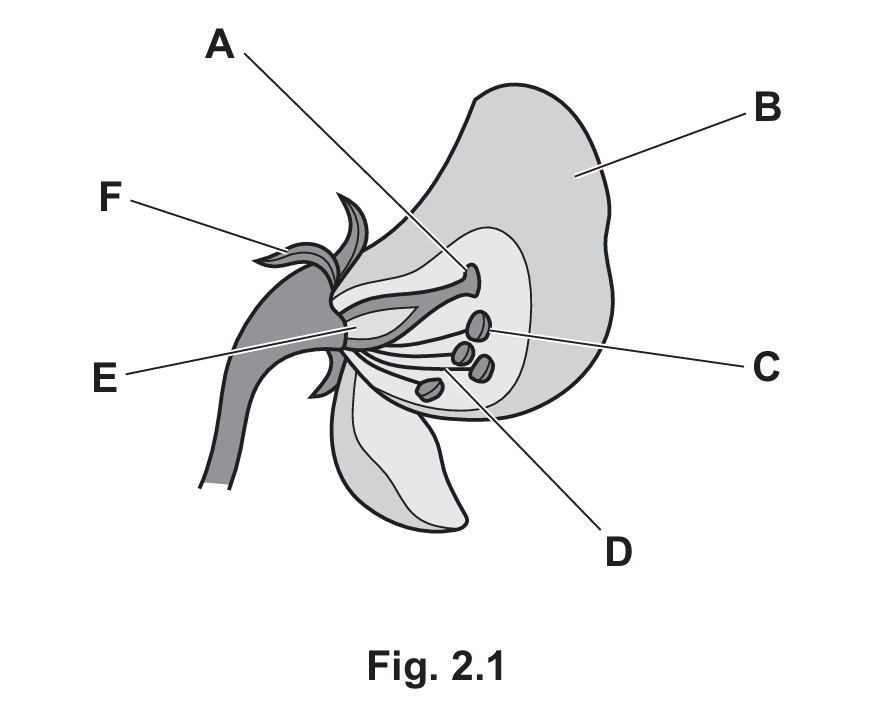
(b)(i) ovary = E ; sepal = F
The ovary is the swollen base of the carpel containing ovules. The sepal is the small green leaf-like structure at the base of the flower that protects the flower bud.
(b)(ii) from C (anther) to A (stigma)
Pollen grains are transferred from the anther (part C) to the stigma (part A) during pollination. The anther produces pollen, while the stigma is the receptive surface where pollen grains land and germinate.
(c)(i) Table completed:
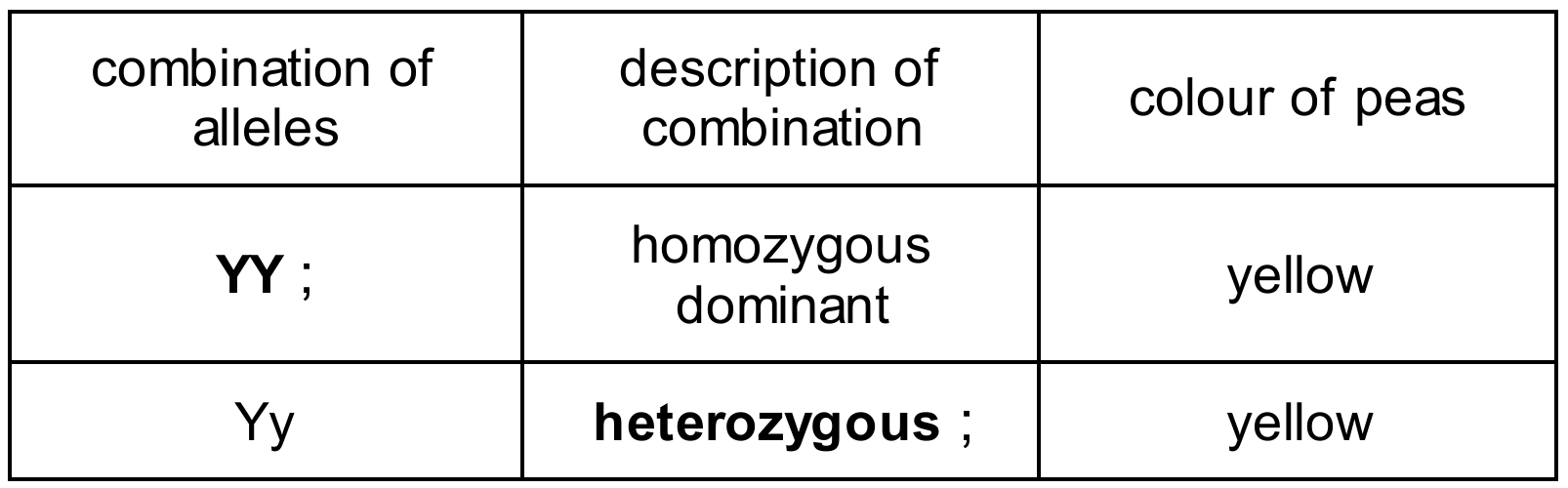
YY is homozygous dominant because both alleles are dominant (Y). Yy is heterozygous because the alleles are different (one dominant Y and one recessive y).
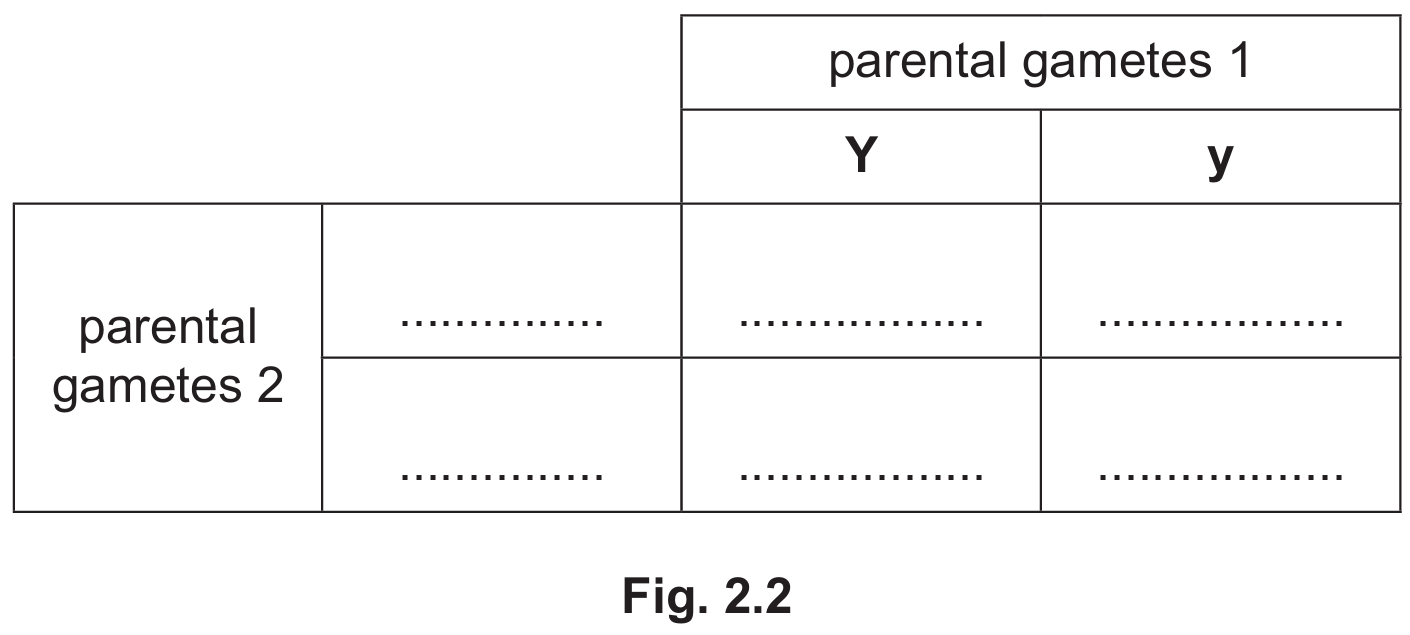
(c)(ii) Punnett square completed:
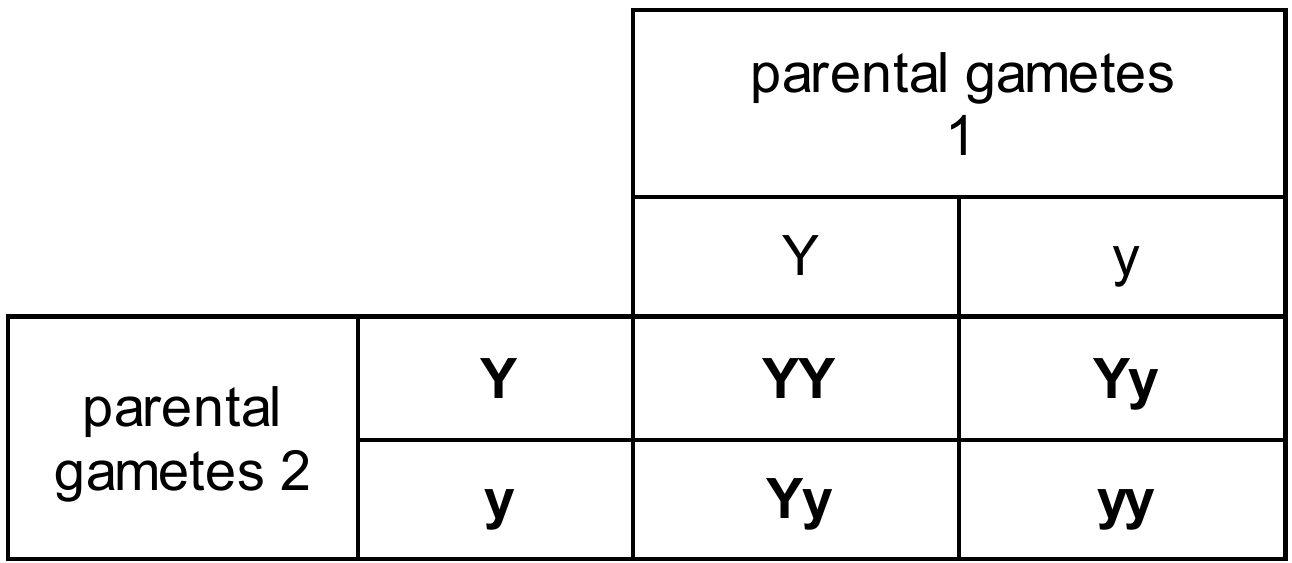
Both parent plants are heterozygous (Yy). Their gametes each contain either Y or y. The offspring genotypes are YY (yellow), Yy (yellow), Yy (yellow), and yy (green).
(c)(iii) yellow : green = 3 : 1
From the Punnett square, 3 out of 4 offspring have the dominant allele Y (YY or Yy) and are yellow. 1 out of 4 offspring is homozygous recessive (yy) and is green. The expected phenotypic ratio is therefore 3 yellow : 1 green.