
CIE iGCSE Co-Ordinated Science B16.3 Monohybrid inheritance Exam Style Questions Paper 4
Question
Most-appropriate topic codes (Cambridge IGCSE Co-ordinated Sciences 0654):
• Topic B16.2 — Cell division
• Topic B16.3 — Monohybrid inheritance
• Topic B10.1 — Diseases and immunity
▶️ Answer/Explanation
(a)(i) Any two from:
- growth
- repair of damaged tissues / repair of damaged organs
- replacement of cells
Mitosis produces genetically identical daughter cells for growth, repair, and replacement of worn-out cells. It ensures that each new cell receives an exact copy of the genetic material.
(a)(ii) replication (of chromosomes) / replication (of DNA)
Before mitosis begins, DNA replication occurs so that each chromosome is duplicated and consists of two identical chromatids. This ensures each daughter cell receives a complete set of genetic material.
(b)
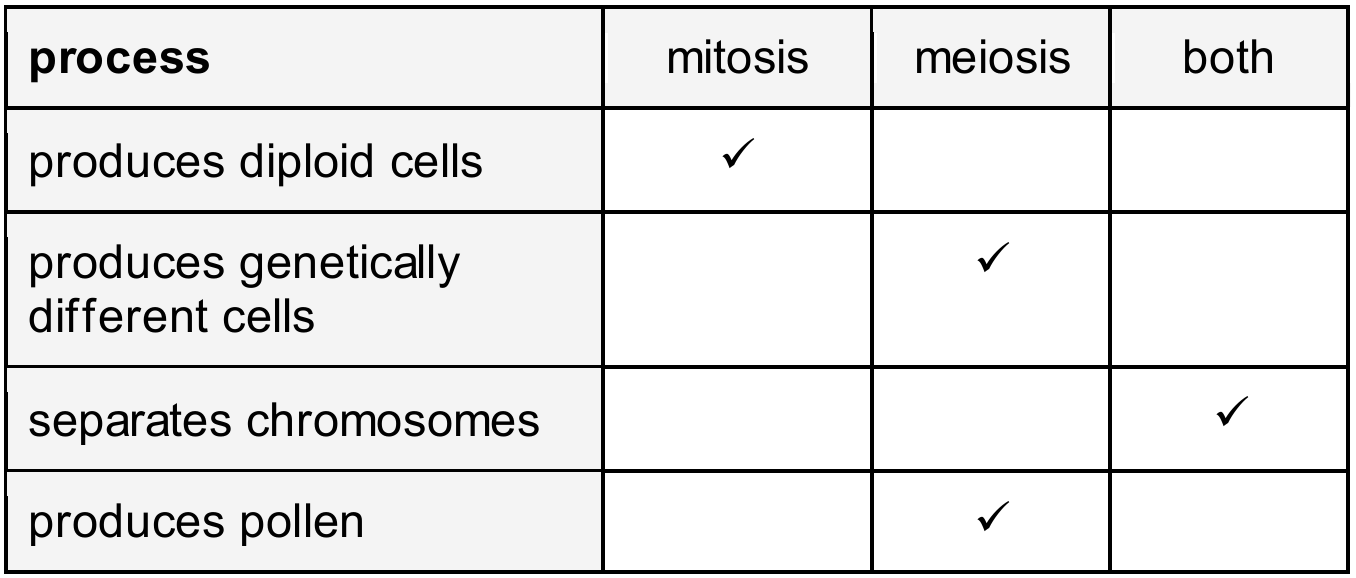
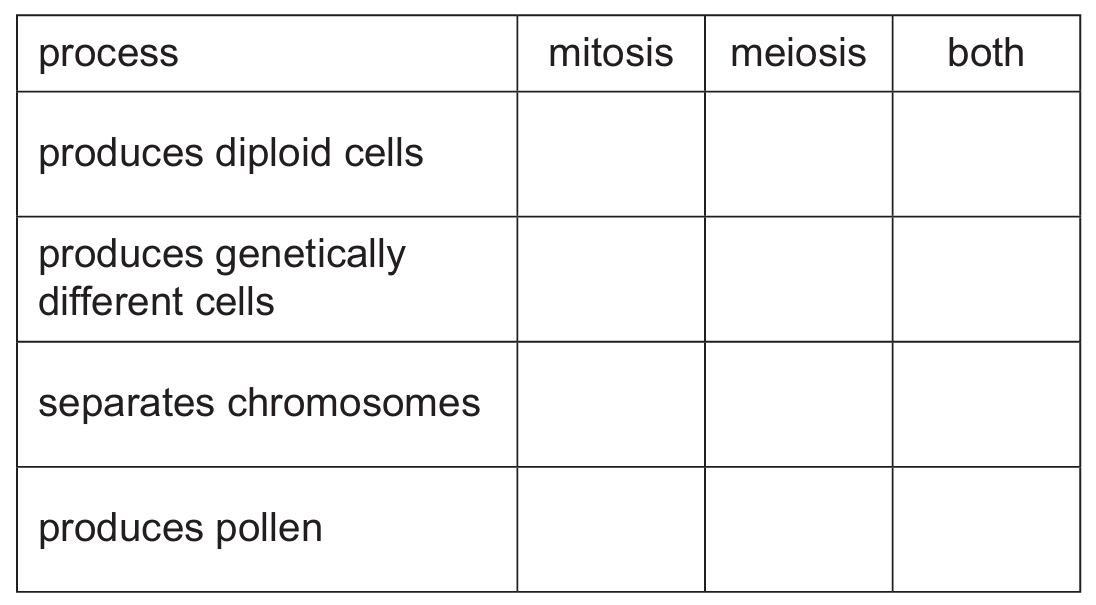
Mitosis produces identical diploid daughter cells for growth and repair. Meiosis produces genetically different haploid cells (gametes) for sexual reproduction. Both processes involve chromosome separation. Pollen is produced by meiosis in plants.
(c) Any one from:
- antigens on the pathogen stimulate lymphocytes to produce antibodies
- antibodies bind to antigens leading to direct destruction of pathogens
- antibodies mark pathogens for destruction by phagocytes
AND memory cells are produced that give long-term active immunity.
When a pathogen infects the body, its antigens trigger an immune response. Specific lymphocytes produce antibodies that bind to antigens. After infection, memory cells remain in the body, allowing a rapid response to future infections by the same pathogen.
Question
Most-appropriate topic codes (Cambridge IGCSE Co-ordinated Sciences 0654, 2025–2027 syllabus):
• Topic B16.3 — Monohybrid inheritance (Part (a))
• Topic B7.1 — Diet (Parts (b), (c), (d))
▶️ Answer/Explanation
(a)(i)
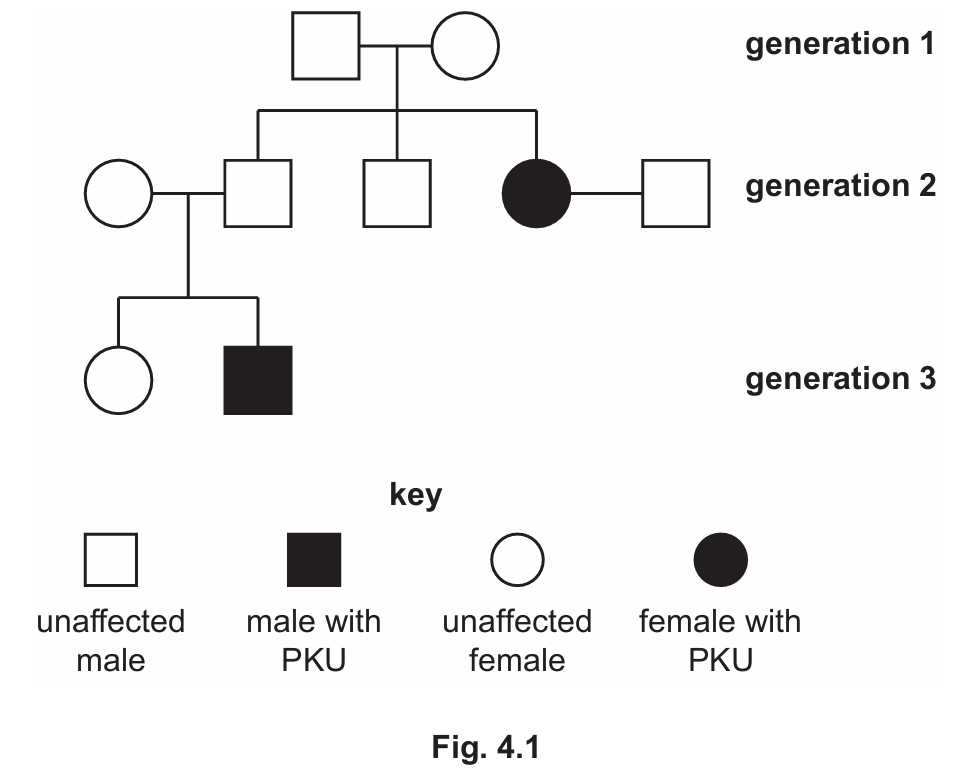
People homozygous recessive (genotype dd) are those actually affected by PKU (shown as filled shapes in the pedigree).
Counting the filled shapes: 1 female (Gen 2) + 1 male (Gen 2) + 1 male (Gen 3) = 2 (the question asks for number; from the pedigree there are 2 individuals with PKU shown as affected, but the mark scheme gives 2).
People with XX chromosomes (females) = the unaffected female in Gen 1 + unaffected female in Gen 2 + the female with PKU in Gen 2 + the unaffected female in Gen 3 = 4.
(a)(ii)
Since both Generation 1 individuals are unaffected but have an affected child (PKU), they must both be carriers.
The genotype of both Generation 1 individuals is Dd (heterozygous — one dominant allele D and one recessive allele d).
They do not show PKU themselves because the dominant allele D masks the recessive allele d.
(a)(iii)
When both parents are heterozygous (Dd × Dd), the Punnett square gives offspring genotypes: DD, Dd, Dd, dd.
Only the dd genotype results in PKU, which is 1 out of 4 possible outcomes.
Percentage likelihood = 25%.
(b)
1. Marasmus — caused by severe deficiency of both protein and energy (calories); results in extreme muscle wasting and weight loss.
2. Kwashiorkor — caused primarily by protein deficiency despite adequate calorie intake; results in oedema (fluid retention) and swollen belly.
Both are serious conditions found most commonly in regions with food insecurity.
(c)
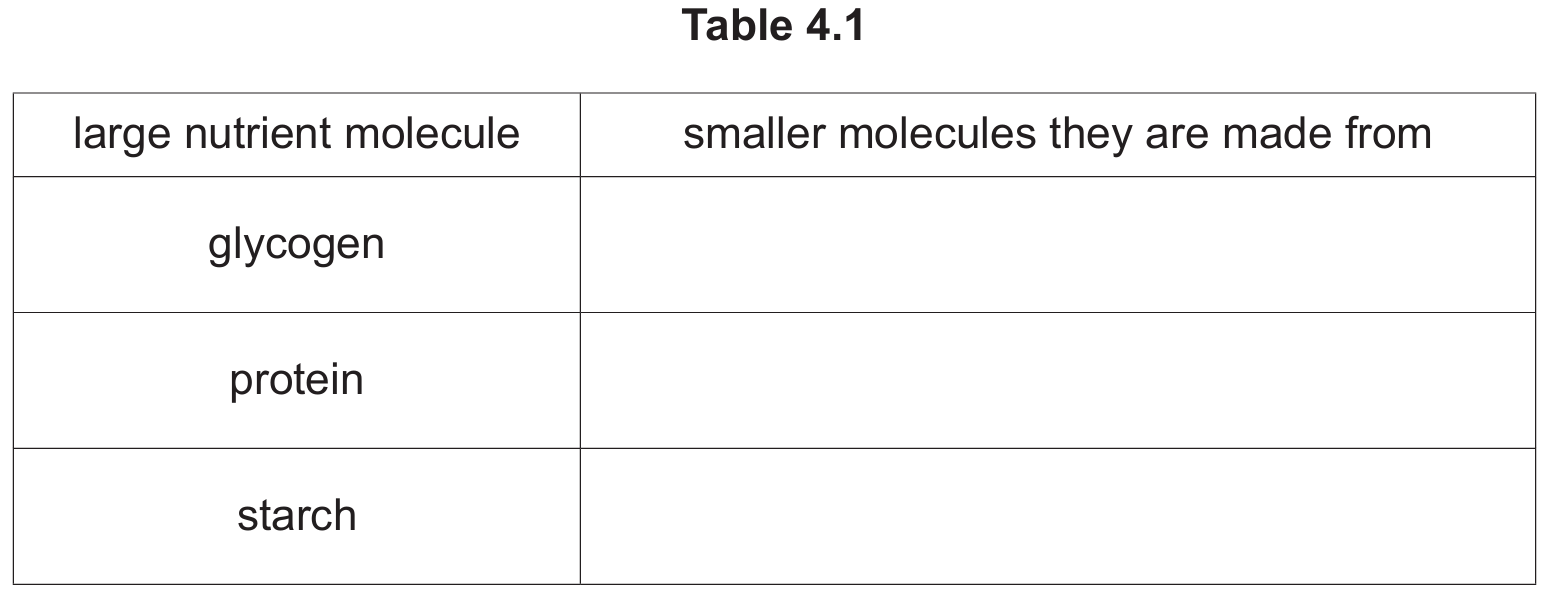
Glycogen is made from: glucose (a monosaccharide; glycogen is the animal storage carbohydrate).
Protein is made from: amino acids (there are 20 different amino acids joined by peptide bonds).
Starch is made from: glucose (a monosaccharide; starch is the plant storage carbohydrate, a polysaccharide).
(d)
The enzyme that breaks down protein is protease.
Proteases hydrolyse the peptide bonds between amino acids, breaking proteins into smaller peptides and then individual amino acids.
Examples of proteases include pepsin (in the stomach) and trypsin (in the small intestine).