
CIE iGCSE Co-Ordinated Science B19.2 Conservation Exam Style Questions Paper 3
Question
Most-appropriate topic codes (Cambridge IGCSE Coordinated Sciences 0654):
• Topic B17.2 — Selection (Part (a))
• Topic B19.1 — Habitat destruction (Part (b)(i), (b)(ii))
• Topic B19.2 — Conservation (Part (b)(iii))
▶️ Answer/Explanation
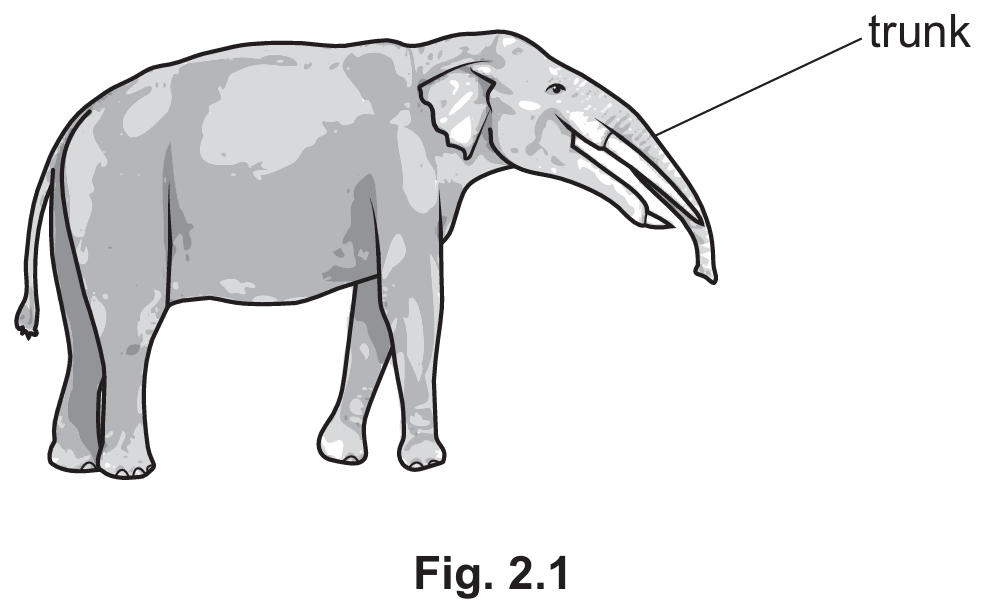
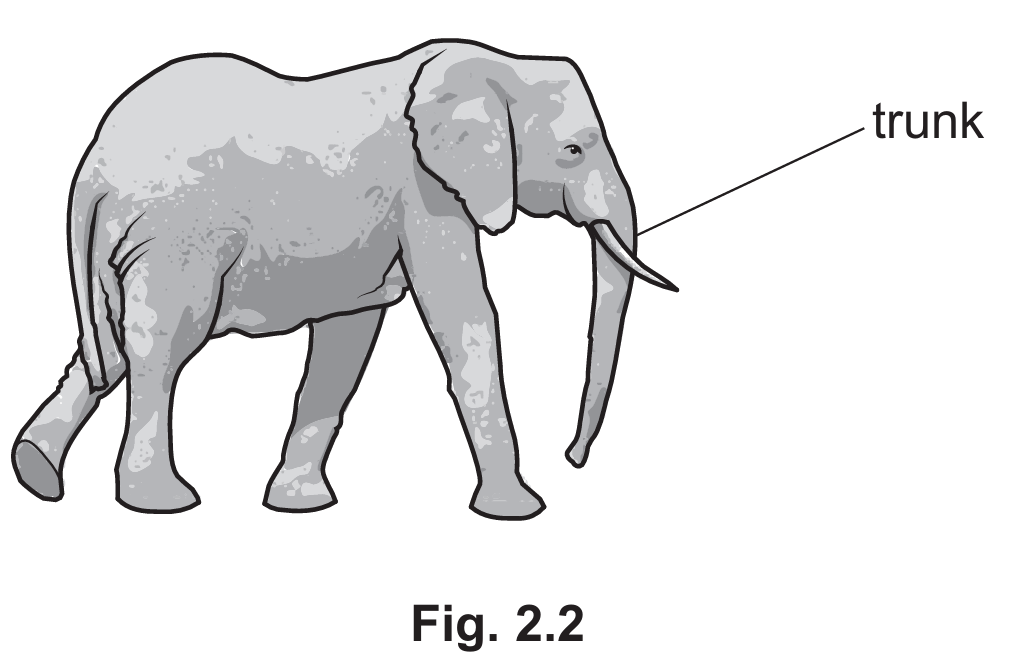
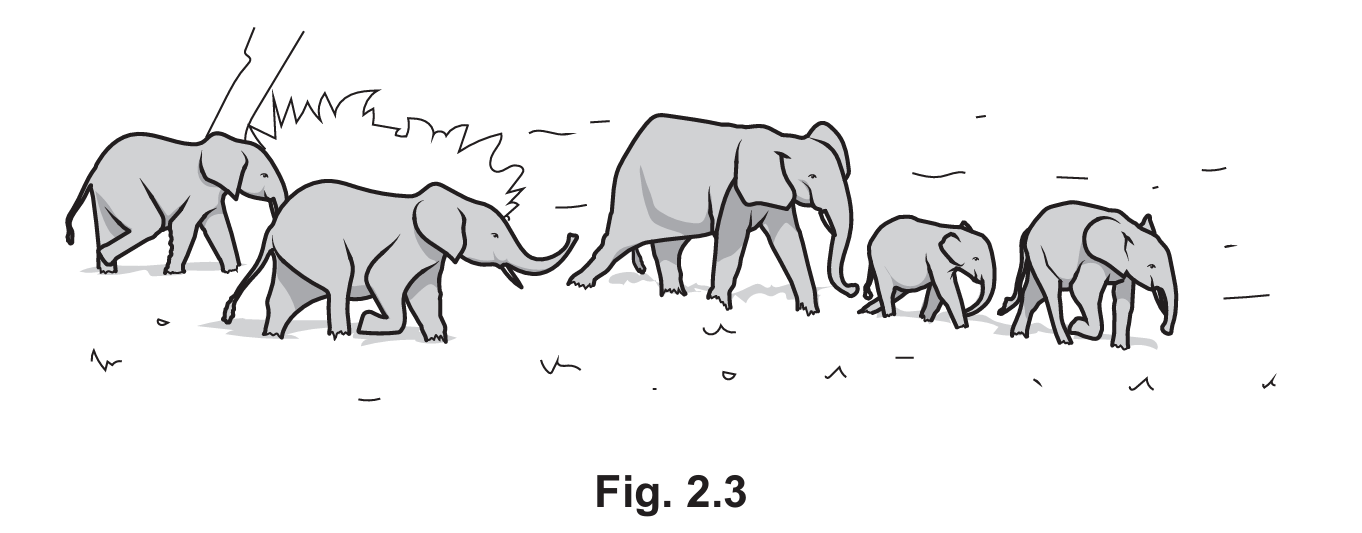
(a) competition; survived; alleles
In natural selection, individuals within a population show variation. They compete for limited resources such as food. Those with advantageous characteristics (like longer trunks) are more likely to survive and reproduce. They pass on their advantageous alleles to their offspring, increasing the frequency of those alleles in the next generation.
(b)(i) Any one from: increased area for housing; crop plant production; livestock production; extraction of natural resources; freshwater and marine pollution
Habitat destruction occurs when natural environments are converted for human use. This includes building houses, farming, mining, and pollution of water sources.
(b)(ii) Any two from: reducing biodiversity; extinction; loss of soil; flooding; increase of carbon dioxide in the atmosphere
Deforestation removes trees that provide habitats, hold soil together with their roots, and absorb carbon dioxide. This leads to loss of species, soil erosion, increased flood risk, and greater greenhouse gas levels.
(b)(iii) Any two from: monitoring and protecting species; education; captive breeding programmes; seed banks
Conservation strategies include protecting remaining populations, educating local communities, breeding endangered species in captivity, and preserving genetic material in seed banks for future reintroduction.
Question
Most-appropriate topic codes (Cambridge IGCSE Co-ordinated Sciences 0654):
• Topic B19.1 — Habitat destruction (Part (a)(i))
• Topic B19.2 — Conservation (Part (a)(ii))
• Topic B18.2 — Food chains and food webs (Part (b)(i) & (b)(ii))
▶️ Answer/Explanation
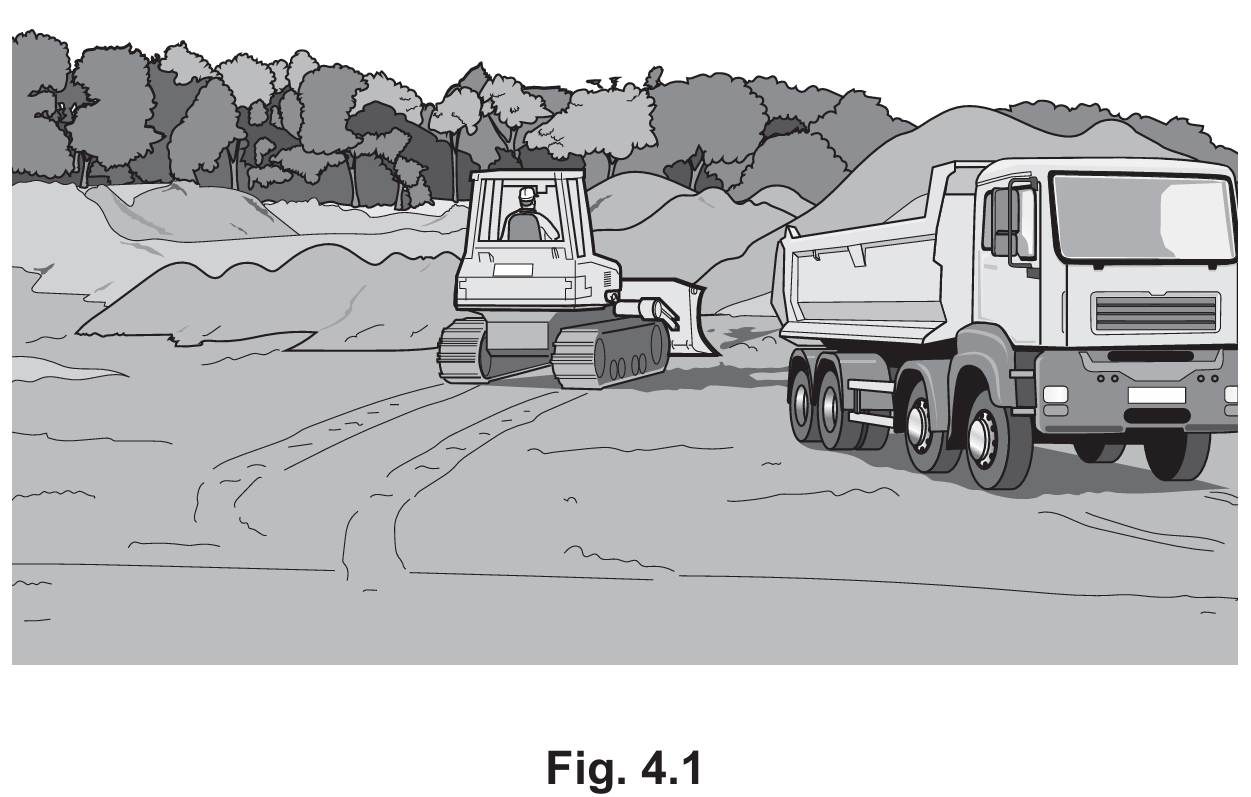
(a)(i)
1. Clearing land for agriculture / crop production
2. Extraction of natural resources (e.g. mining, quarrying, or logging for timber)
Other acceptable answers: livestock farming, building roads or factories, urban expansion.
Human activities that convert natural land for food production or resource extraction destroy the structural complexity of habitats, removing shelter and food sources that many species depend upon for survival and reproduction.
(a)(ii)
1. Captive breeding programmes — breeding endangered species in zoos or sanctuaries and reintroducing them into protected habitats.
2. Protecting habitats — establishing nature reserves or national parks where species and their environments are legally protected.
Captive breeding helps increase population numbers and maintain genetic diversity when wild populations are critically low. Habitat protection addresses the root cause of endangerment by ensuring that suitable environments remain available for species to survive and reproduce naturally.
(b)(i)
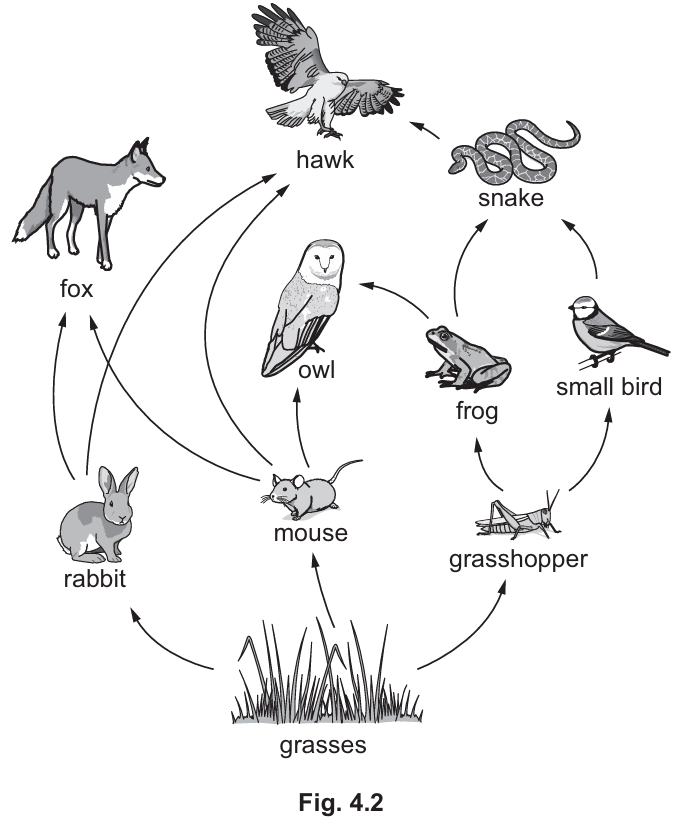
grass $\rightarrow$ grasshopper $\rightarrow$ frog $\rightarrow$ snake $\rightarrow$ hawk
(Also acceptable: grass $\rightarrow$ grasshopper $\rightarrow$ frog $\rightarrow$ owl)
Each arrow in a food chain represents the transfer of energy from the organism being eaten to the organism eating it. The chain must begin with a producer (grass) and include the frog as an intermediate consumer, with at least one organism feeding on it above.
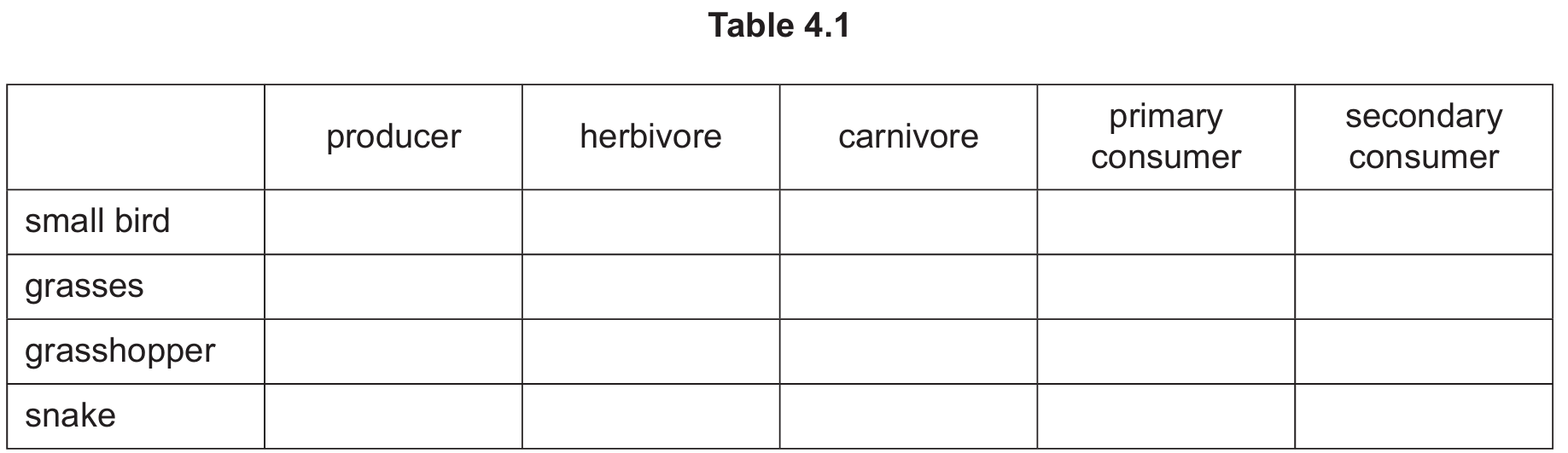
(b)(ii)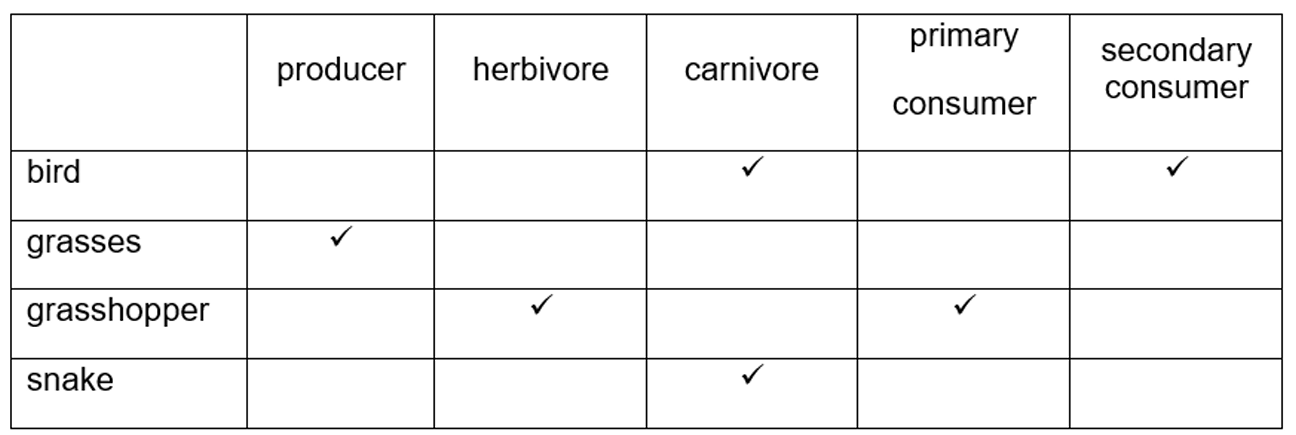
Producers make their own food via photosynthesis (grass); herbivores eat only plants (grasshopper); carnivores eat only animals (snake). Primary consumers feed directly on producers, secondary consumers feed on primary consumers, and tertiary consumers feed on secondary consumers — each level representing a step up the food chain.