
CIE iGCSE Co-Ordinated Science B2.1 Cell structure Exam Style Questions Paper 4
Question
Most-appropriate topic codes (Cambridge IGCSE Co-ordinated Sciences 0654):
• Topic B2.1 — Cell structure (Part (a))
• Topic B16.2 — Cell division / Mitosis (Part (b)(i))
• Topic B15.2 — Sexual reproduction (Part (b)(ii))
• Topic B15.3 — Sexual reproduction in plants (Part (c)(i) & (c)(ii))
• Topic B16.2 — Cell division / Meiosis (Part (d))
▶️ Answer/Explanation
(a) Similar:
1. Both have a cell wall surrounding the cell membrane.
2. Both contain ribosomes for protein synthesis and DNA as genetic material.
Both plant and bacterial cells share basic structural features like a cell wall, cell membrane, cytoplasm, and ribosomes.
(a) Different:
1. Plant cell wall is made of cellulose; bacterial cell wall is made of peptidoglycan (sugars and amino acids).
2. Plant cells have chloroplasts and a vacuole; bacterial cells lack these organelles.
Plant cells have membrane-bound organelles like chloroplasts and a nucleus, whereas bacterial cells have circular DNA and plasmids without a nucleus.
(b)(i) chromosomes
DNA replication occurs before mitosis to ensure each daughter cell receives an identical set of chromosomes.
(b)(ii) Advantage: Produces genetic variation in offspring.
Disadvantage: Takes longer than asexual reproduction as offspring develop from fertilised eggs.
Sexual reproduction promotes diversity through gamete fusion, but requires more time and energy compared to asexual methods.
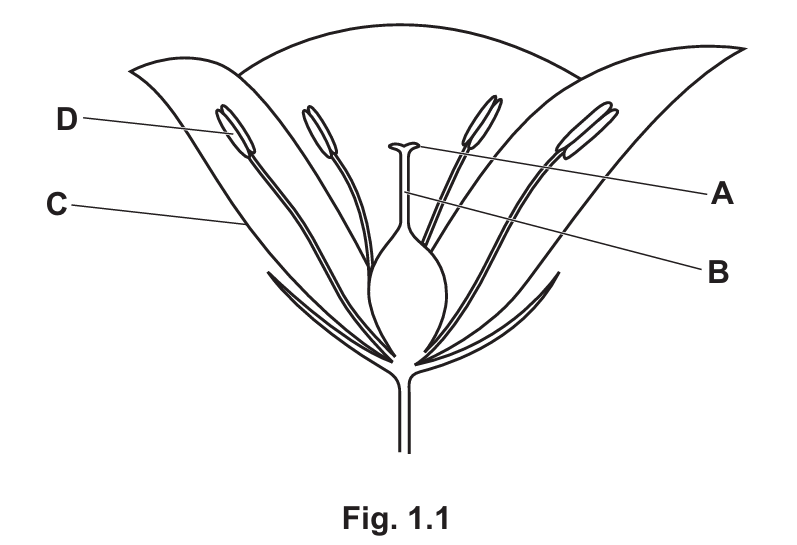
(c)(i) A – stigma ; B – style
The stigma is the receptive surface for pollen grains, and the style is the stalk connecting the stigma to the ovary.
(c)(ii) C: In wind-pollinated flowers, petals are dull/small/absent and have no scent.
D: Anthers are hanging outside the flower to release pollen easily into the wind.
Wind-pollinated flowers lack bright colours and nectar, and their anthers are exposed for efficient pollen dispersal by air currents.
(d) meiosis
Meiosis is the reduction division that produces haploid gametes from diploid cells, halving the chromosome number.
Question
Most-appropriate topic codes (Cambridge IGCSE Co-ordinated Sciences 0654):
• Topic B2.1 — Cell structure (Part (a), (b)(i), (b)(ii), (c)(i), (c)(ii))
• Topic B15.4 — Sexual reproduction in humans (Part (d))
▶️ Answer/Explanation
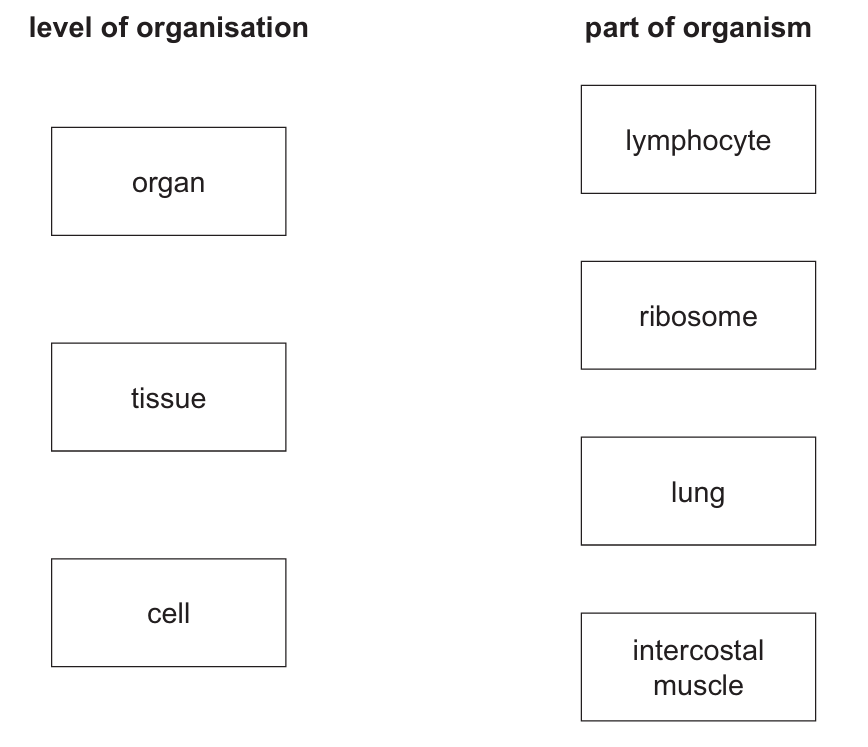
(a) Correct matching:
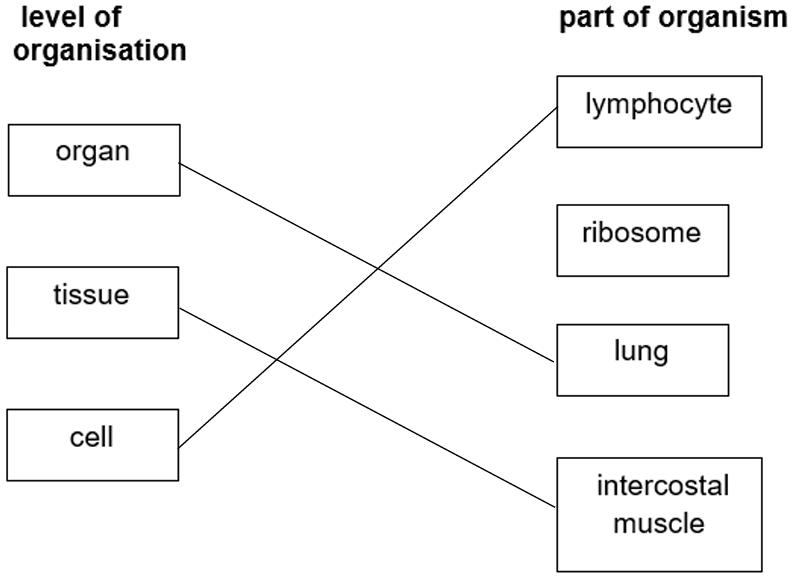
This question tests understanding of biological organisation levels. A lymphocyte is a type of white blood cell, so it is a cell. A ribosome is an organelle found within cells. The lung is a whole organ made of multiple tissues. Intercostal muscles are a type of muscle tissue found between the ribs.
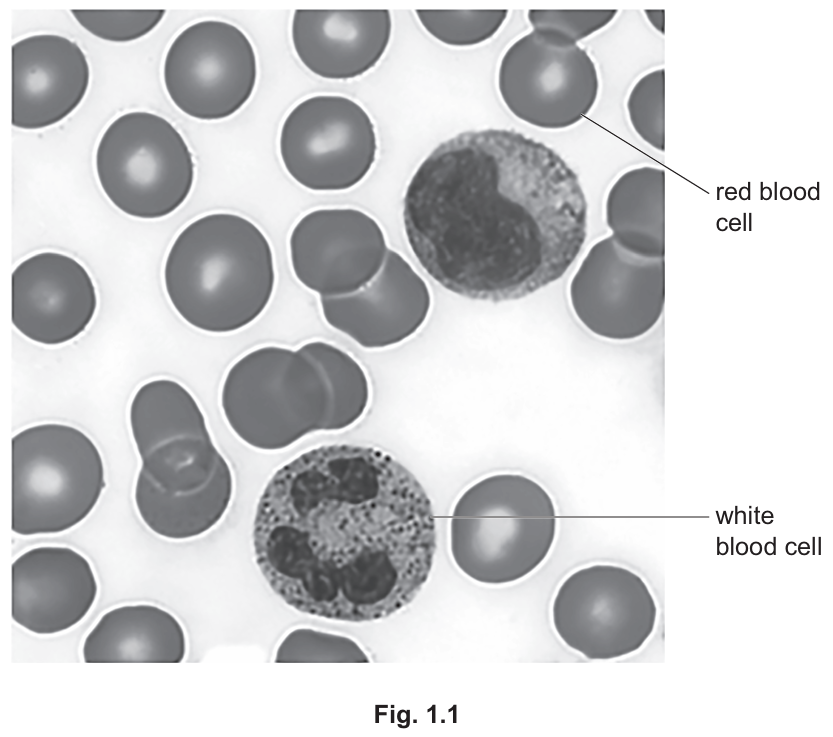
(b)(i) Engulfing pathogens / phagocytosis.
White blood cells (phagocytes) are specialised to engulf and digest pathogens through a process called phagocytosis, helping to defend the body against infection.
(b)(ii) Haemoglobin.
Red blood cells contain haemoglobin, a red pigment containing iron that binds reversibly to oxygen molecules for transport around the body.
(c)(i) Chlorophyll.
Chlorophyll is the green pigment found in chloroplasts that absorbs light energy for photosynthesis.
(c)(ii) Any two from:
- Red blood cell has no cell wall (plant leaf cell has a cell wall)
- Red blood cell has no vacuole (plant leaf cell has a large vacuole)
- Red blood cell has no nucleus (plant leaf cell has a nucleus)
Red blood cells are highly specialised for oxygen transport. They lack a nucleus and most organelles to maximise space for haemoglobin, and they are biconcave discs to increase surface area. Plant leaf cells (palisade mesophyll cells) are specialised for photosynthesis, containing chloroplasts, a cell wall for support, and a large vacuole for maintaining turgidity.
(d) Sperm cell specialisations:
- Flagellum (tail) to swim to the egg.
- Enzymes in the acrosome to penetrate the egg.
Sperm cells have a flagellum (tail) containing mitochondria for energy production to enable swimming to the egg. The acrosome at the tip of the sperm head contains digestive enzymes that break down the outer layers of the egg cell, allowing the sperm to penetrate and fertilise it.