
▶️ Answer/Explanation
Magnification is calculated using the formula: \(\text{Magnification} = \frac{\text{image size}}{\text{actual size}}\).
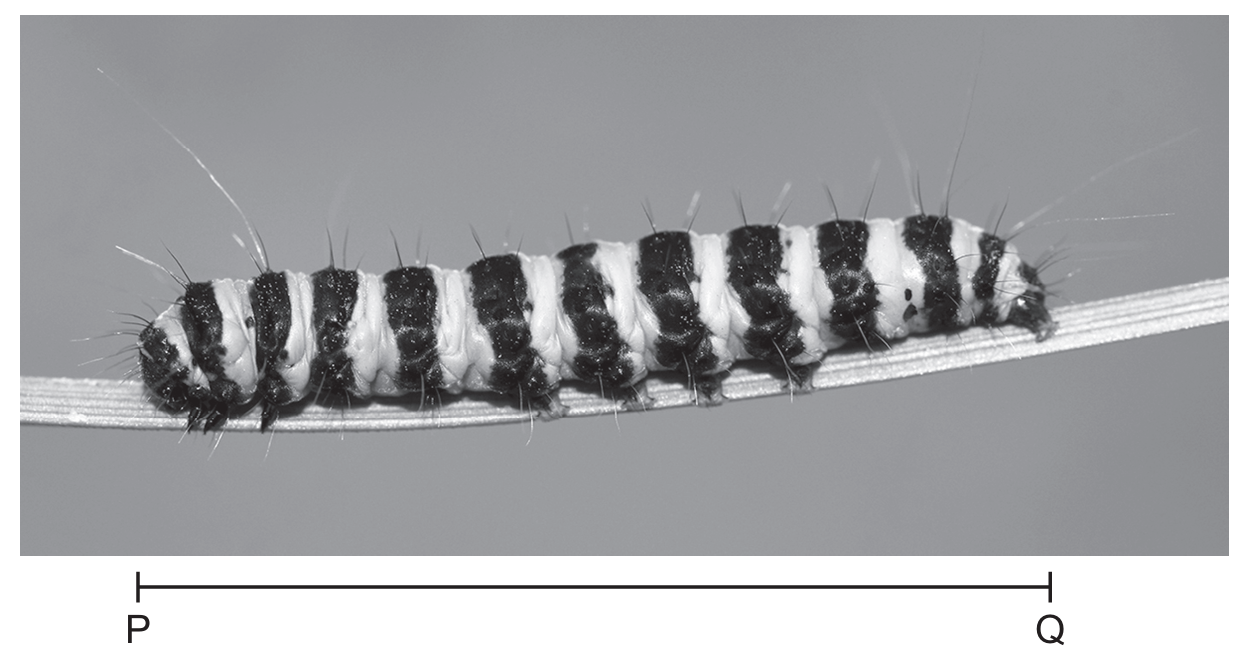
The image size is 90 mm and the actual size is 30 mm. So, \(\frac{90}{30} = 3\). The photograph has a magnification of × 3.0.
✅ Answer: (B)
The image size is 90 mm and the actual size is 30 mm. So, \(\frac{90}{30} = 3\). The photograph has a magnification of × 3.0.
✅ Answer: (B)
▶️ Answer/Explanation
Magnification is calculated using the formula: \(\text{Magnification} = \dfrac{\text{image size}}{\text{actual size}}\).
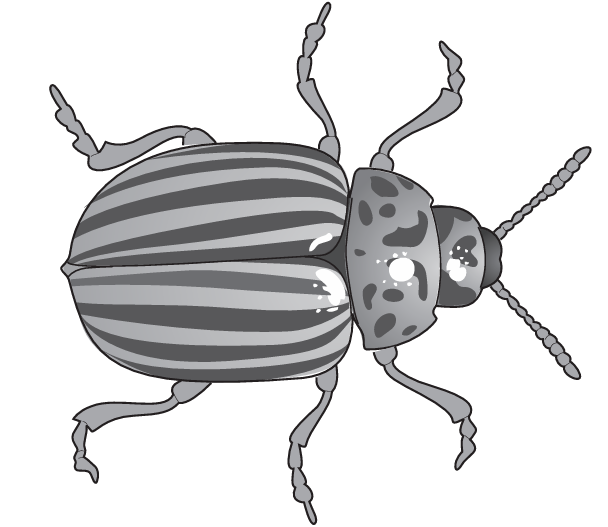
The image (diagram) length is 75 mm and the actual length of the beetle is 5 mm.
So, \(\dfrac{75}{5} = 15\).
✅ Answer: (B)
The image (diagram) length is 75 mm and the actual length of the beetle is 5 mm.
So, \(\dfrac{75}{5} = 15\).
✅ Answer: (B)
▶️ Answer/Explanation
Actual size is found using \( \text{actual size} = \dfrac{\text{image size}}{\text{magnification}} \).
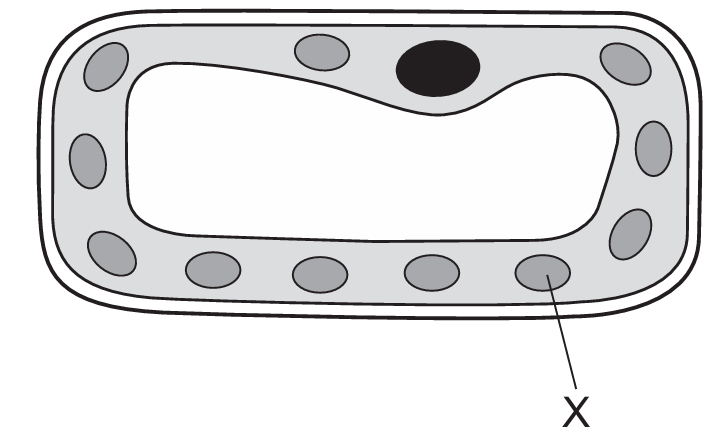
Here, image size = 5 mm and magnification = 250.
So \( \dfrac{5}{250} = 0.02 \) mm.
✅ Answer: (C)
Here, image size = 5 mm and magnification = 250.
So \( \dfrac{5}{250} = 0.02 \) mm.
✅ Answer: (C)