
CIE iGCSE Co-Ordinated Science B2.2 Size of specimens Exam Style Questions Paper 3
Question
Most-appropriate topic codes (Cambridge IGCSE Co-ordinated Sciences 0654):
• Topic B10.1 — Diseases and immunity (Part (a))
• Topic B2.2 — Size of specimens (Part (b))
▶️ Answer/Explanation
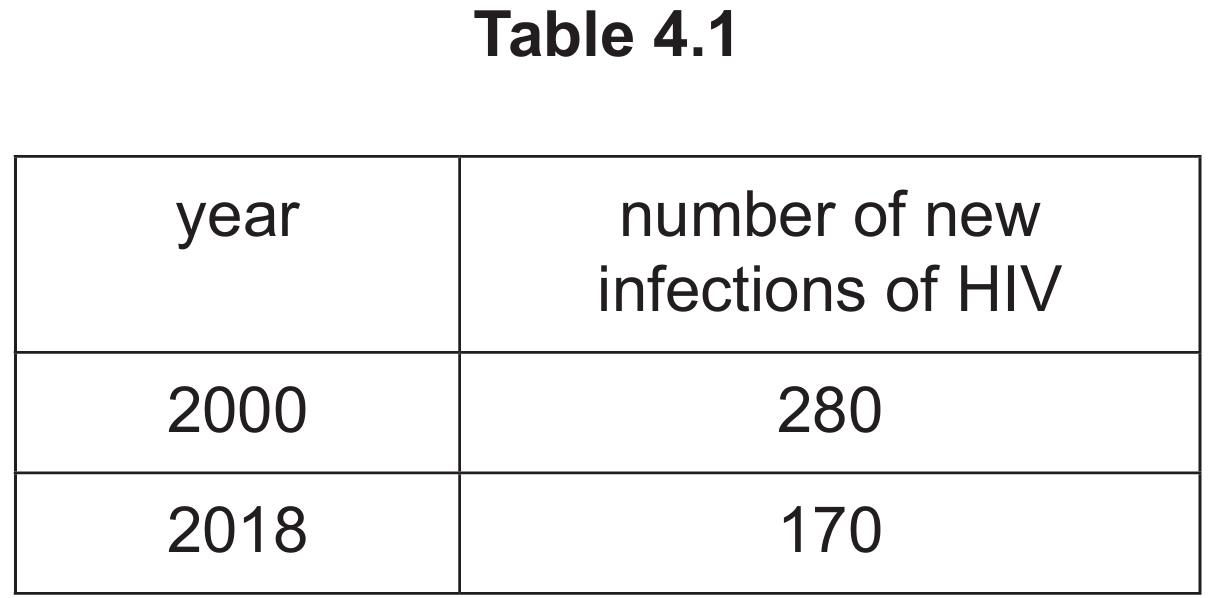
(a)(i) 39.3%
Decrease = \(280 – 170 = 110\)
\(\% \text{ decrease} = \dfrac{110}{280} \times 100 = 39.3\%\)
(a)(ii) Any three from:
1. Education and awareness campaigns about how HIV is transmitted.
2. Increased use of condoms / barrier contraception to prevent transmission.
3. Screening of blood transfusions to prevent spread through contaminated blood.
(Other valid answers: increased testing and monitoring; provision of clean needles; reduced needle-sharing; reduced breastfeeding by infected mothers.)
(a)(iii) Virus
HIV (Human Immunodeficiency Virus) is caused by a virus.
Viruses are non-cellular pathogens that invade host cells and use them to replicate.
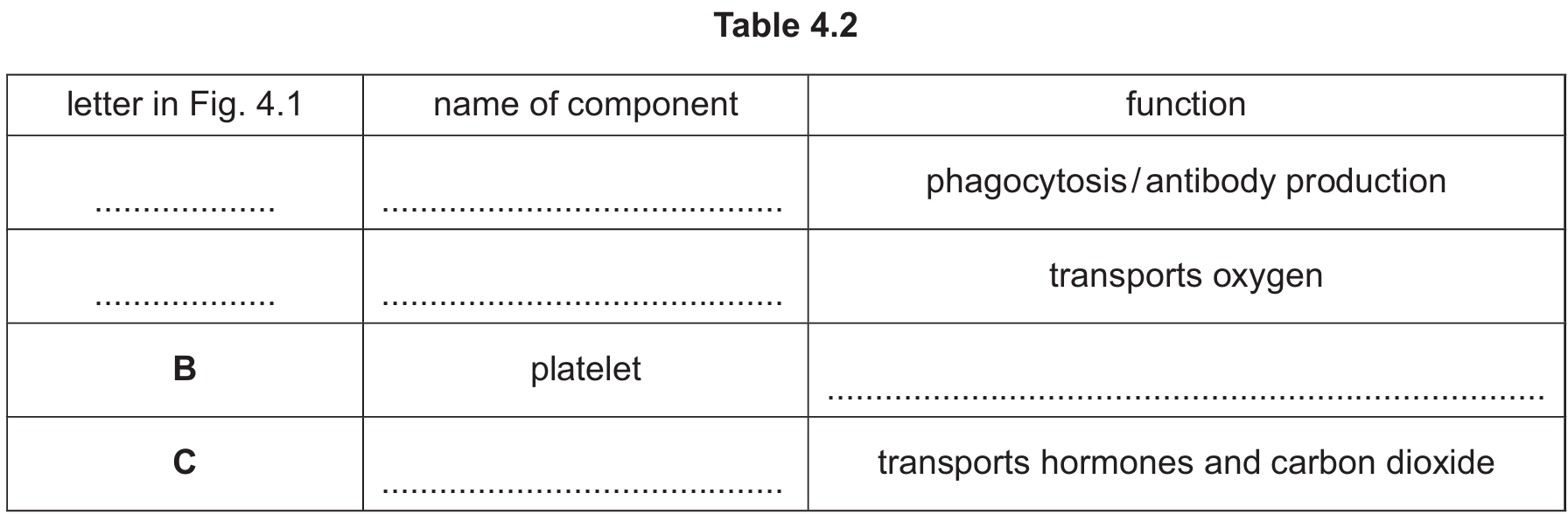
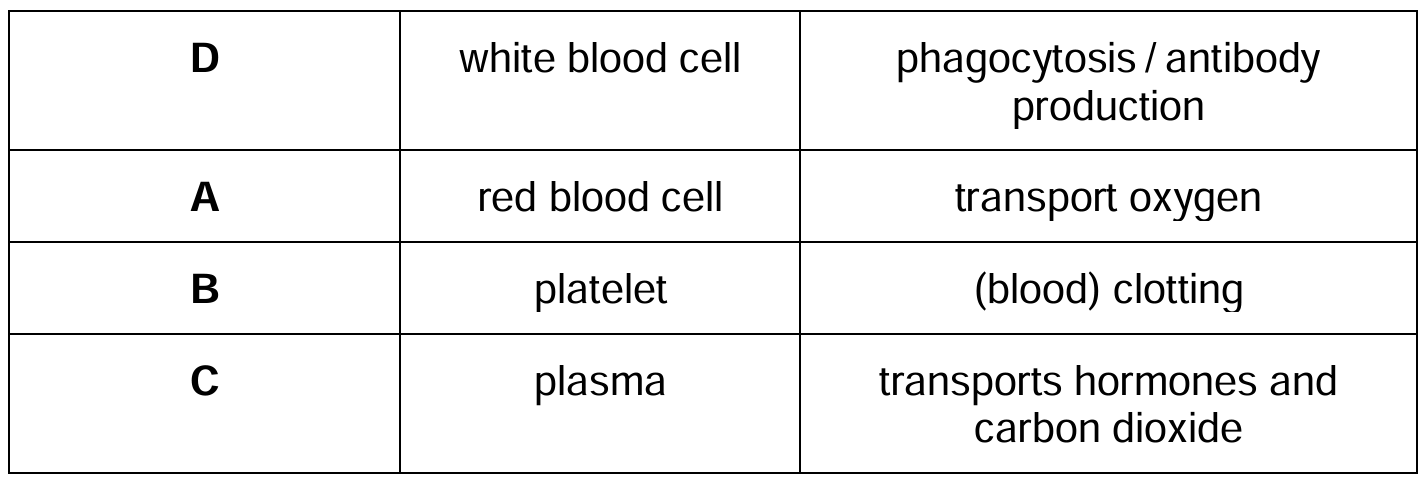
(b)(i)
(b)(ii)
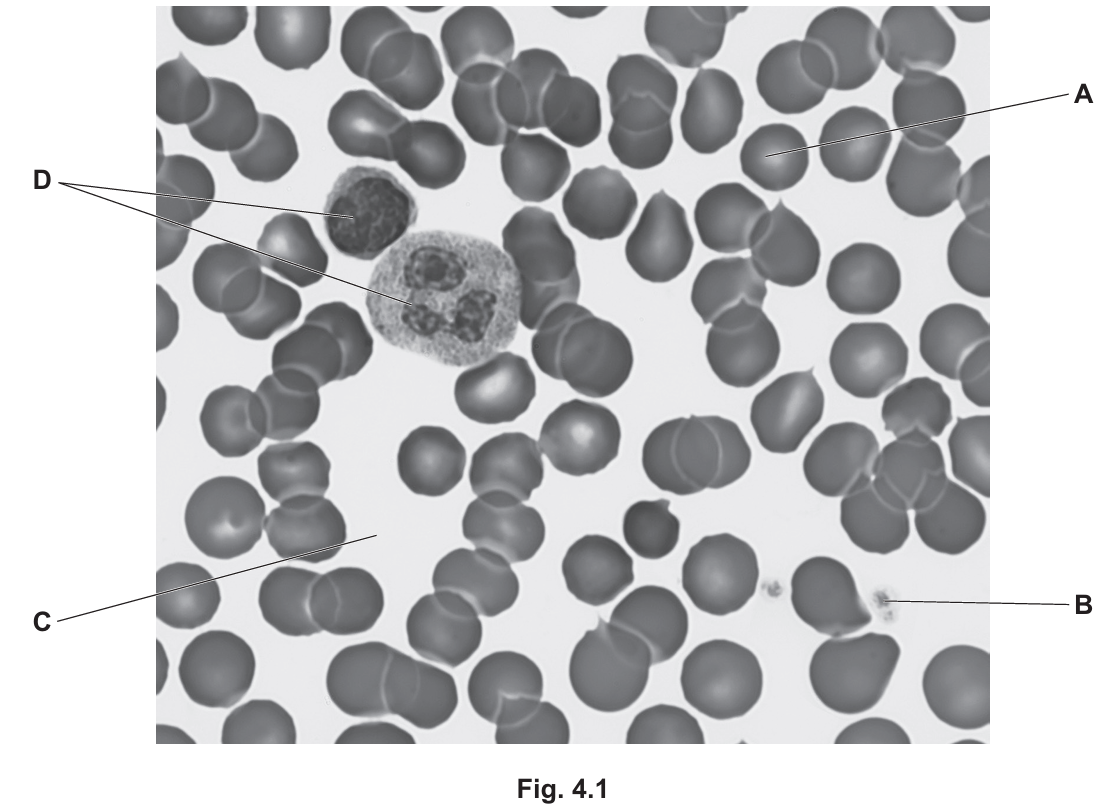
Measure the image length of component A in the photomicrograph using a ruler.
Divide this measured image size by the actual (known) size of component A: \(\text{magnification} = \dfrac{\text{image size}}{\text{actual size}}\)
Question
Most-appropriate topic codes:
• Topic B10.1 — Diseases and immunity (Part (a))
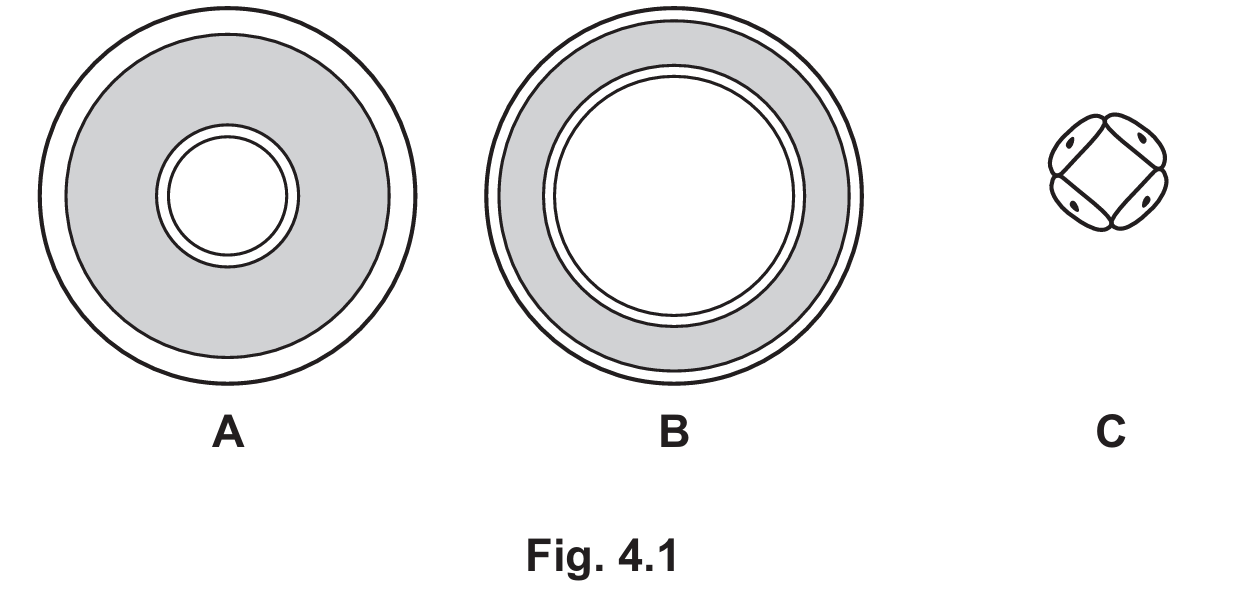
• Topic B9.3 — Blood vessels (Part (b)(i))
• Topic B2.2 — Size of specimens (Part (b)(ii))
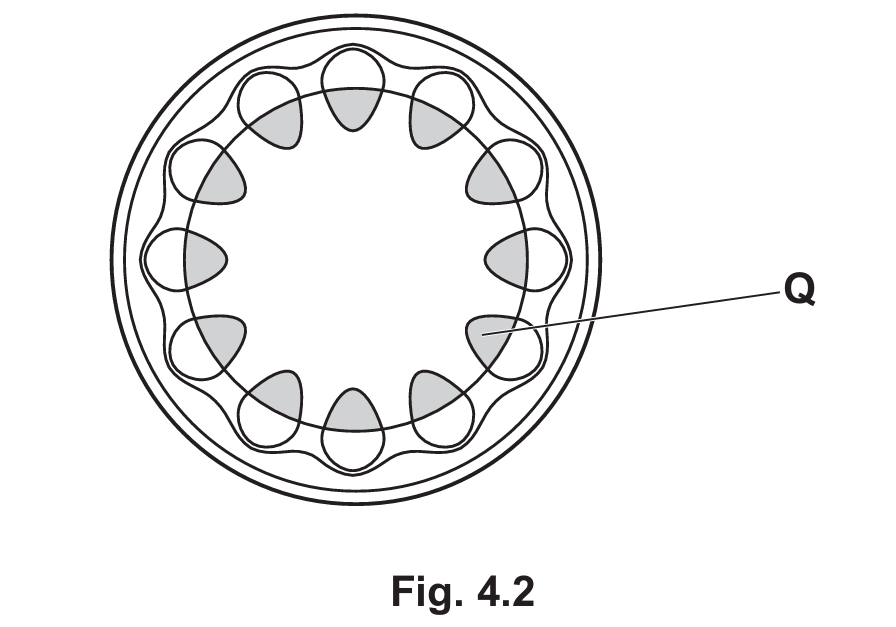
• Topic B8.1 — Xylem and phloem (Part (c))
▶️ Answer/Explanation
(a)(i) The word that describes a disease-causing organism is a pathogen.
A pathogen is a biological agent that causes disease or illness in its host. Common examples include viruses, bacteria, fungi, and parasites.
(a)(ii) HIV may lead to AIDS (Acquired Immune Deficiency Syndrome).
HIV (Human Immunodeficiency Virus) attacks and weakens the immune system. If left untreated, it can progress to AIDS, which is a condition where the immune system is severely damaged, making the individual vulnerable to opportunistic infections.
(a)(iii) Two ways HIV is transmitted:
1. Unprotected sexual intercourse (with an infected person).
2. Sharing of needles (contaminated with infected blood).
HIV is present in certain body fluids like blood, semen, vaginal fluids, and breast milk. Transmission occurs when these fluids from an infected person enter the body of another. Common modes include sexual contact, sharing needles for drug use, blood transfusions with contaminated blood, and from mother to child during pregnancy or breastfeeding.
(b)(i) Blood vessel B. Evidence
1: Thin wall. Evidence
2: Large lumen.
Blood vessel B is a vein. Veins transport deoxygenated blood from the body back to the heart (with the exception of the pulmonary vein). They have thinner walls compared to arteries because blood is at lower pressure, and they have a larger lumen to facilitate blood flow. In contrast, vessel A is an artery (thick wall, small lumen) and C is a capillary (very thin wall, very small lumen).
(b)(ii) Magnification = image size / actual size = 10 / 0.008 = 1250
The formula for magnification is: \( \text{Magnification} = \frac{\text{Image Size}}{\text{Actual Size}} \).
The image size is 10 mm, and the actual size is 0.008 mm.
Therefore, \( \text{Magnification} = \frac{10}{0.008} = 1250 \).
(c) Two functions of part Q (xylem):
1. Transport of water (from roots to leaves).
2. Transport of mineral ions (from roots to leaves).
Part Q is the xylem tissue. Xylem is a vascular tissue in plants. Its main functions are to transport water and dissolved mineral ions from the roots to the rest of the plant. It also provides mechanical support to the plant stem.