
▶️ Answer/Explanation
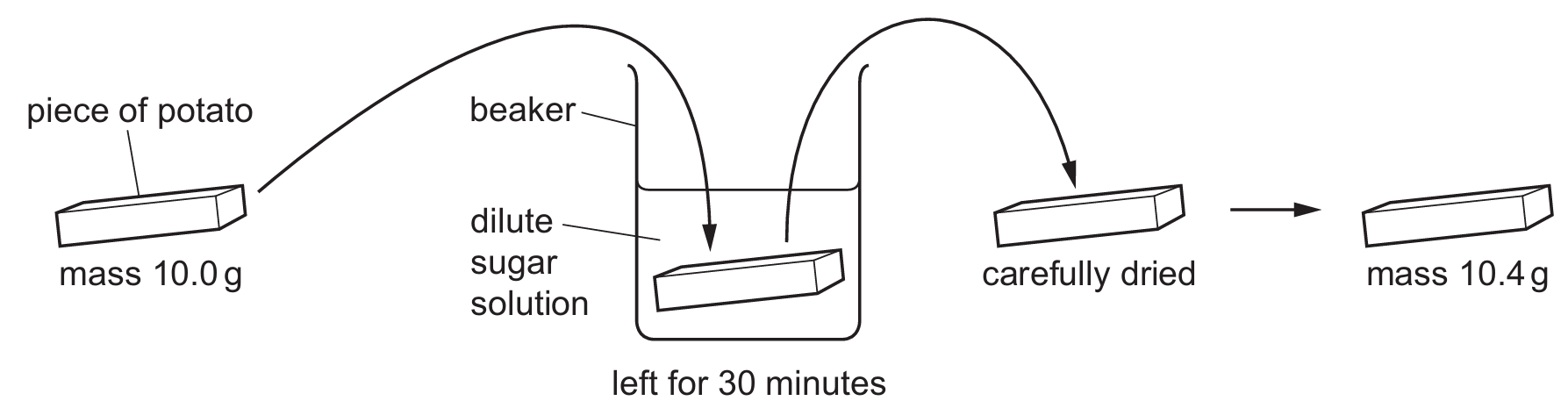
The dilute sugar solution has a higher water potential (more water molecules) than the potato cells. Through osmosis, water moves from the dilute solution into the cells of the potato across the partially permeable cell membrane. This causes the potato pieces to gain mass. Osmosis only involves the movement of water molecules, not sugar molecules.
✅ Answer: (C)
✅ Answer: (C)
▶️ Answer/Explanation
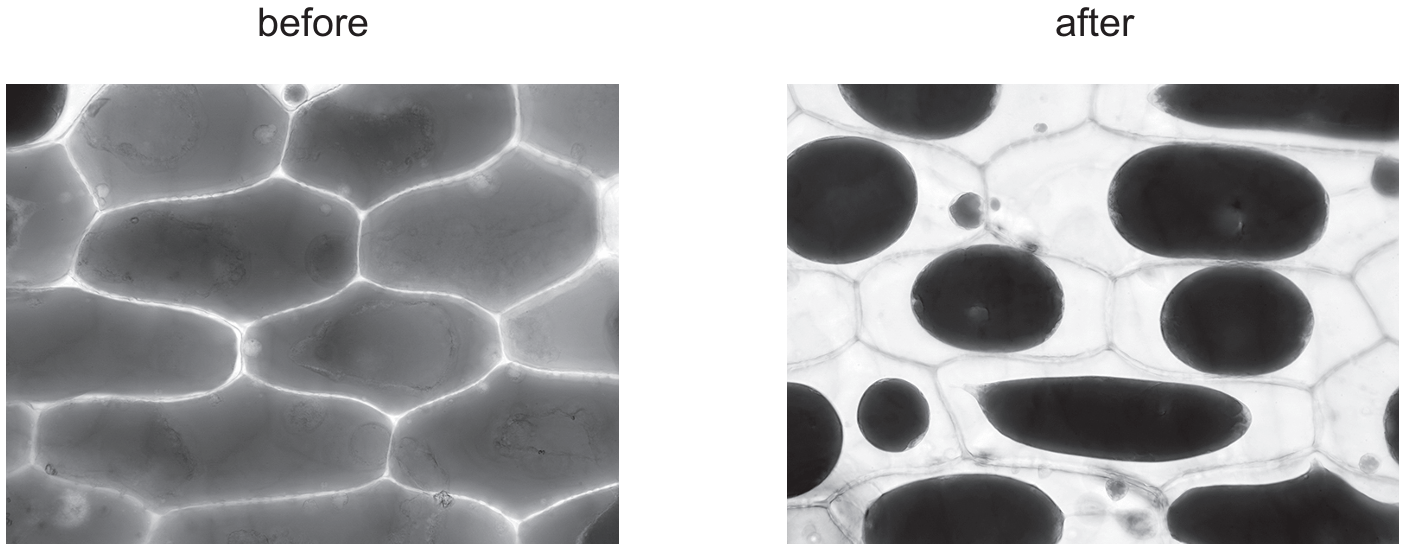
The concentrated glucose solution has a lower water potential than the onion cell’s cytoplasm, so water moves out of the cells by osmosis through the partially permeable cell membrane.
This loss of water causes the cell contents (cytoplasm and vacuole) to shrink away from the cell wall — a process called plasmolysis — which is what the “after” photograph shows.
✅ Answer: (D)
This loss of water causes the cell contents (cytoplasm and vacuole) to shrink away from the cell wall — a process called plasmolysis — which is what the “after” photograph shows.
✅ Answer: (D)
▶️ Answer/Explanation
Osmosis is the net movement of water molecules through a partially permeable membrane.
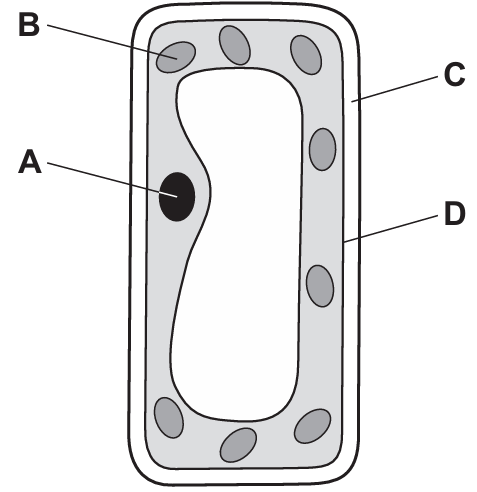
In a plant cell, the cell membrane is the partially permeable structure that allows this movement of water into and out of the cell.
The cell wall is fully permeable and the nucleus and chloroplasts do not control water movement in this way.
✅ Answer: (D)
In a plant cell, the cell membrane is the partially permeable structure that allows this movement of water into and out of the cell.
The cell wall is fully permeable and the nucleus and chloroplasts do not control water movement in this way.
✅ Answer: (D)