Home / iGCSE / Coordinated Sciences / B3.2 Osmosis Paper 2

CIE iGCSE Co-Ordinated Science B3.2 Osmosis Exam Style Questions Paper 2

Question

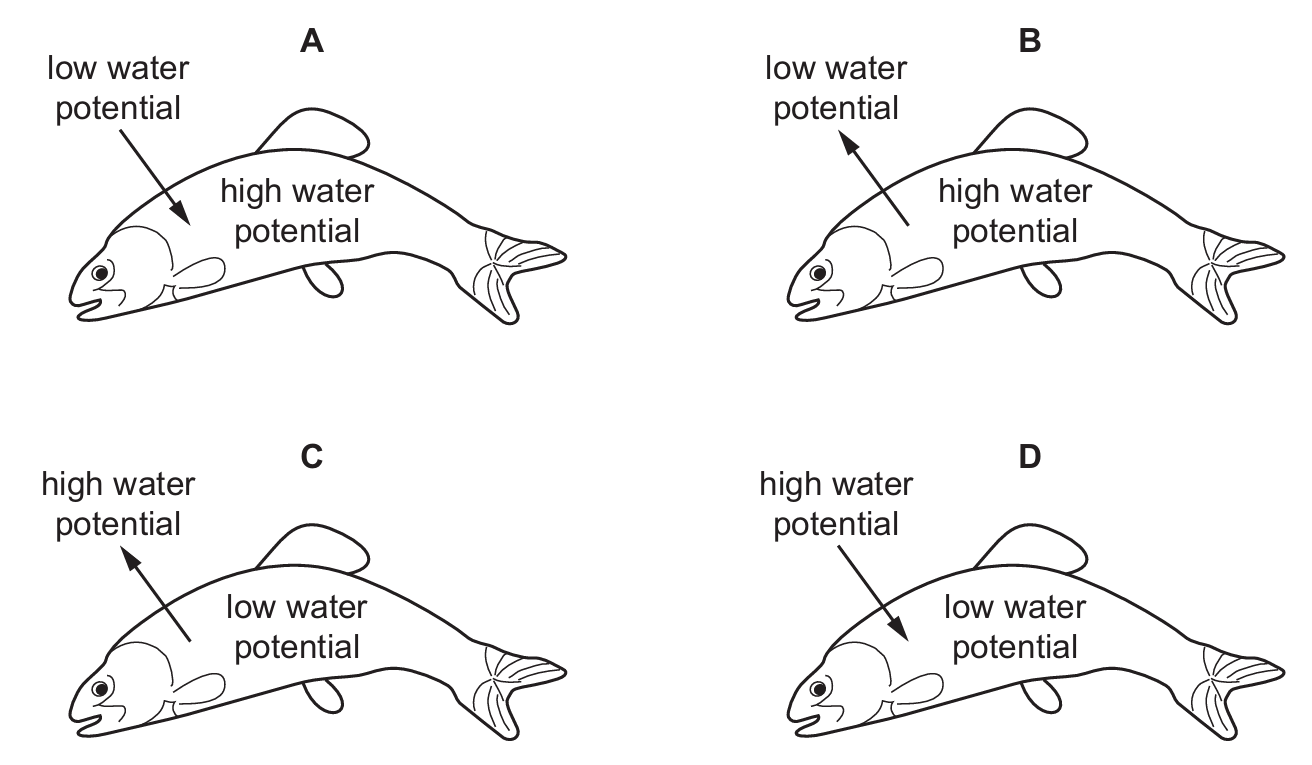
A salmon is a fish that can live in both fresh and salt water. Salmon are affected by water movement when the environment changes.

Which diagram shows the internal and external water potential and the movement of water when a salmon is in fresh water?

▶️ Answer/Explanation
In fresh water, the external environment has a higher water potential (more dilute) than the internal environment of the fish. Water therefore moves into the salmon by osmosis. The correct diagram must show external water potential as higher (or less negative) and an arrow indicating water movement into the fish.
Answer: (D)

Question

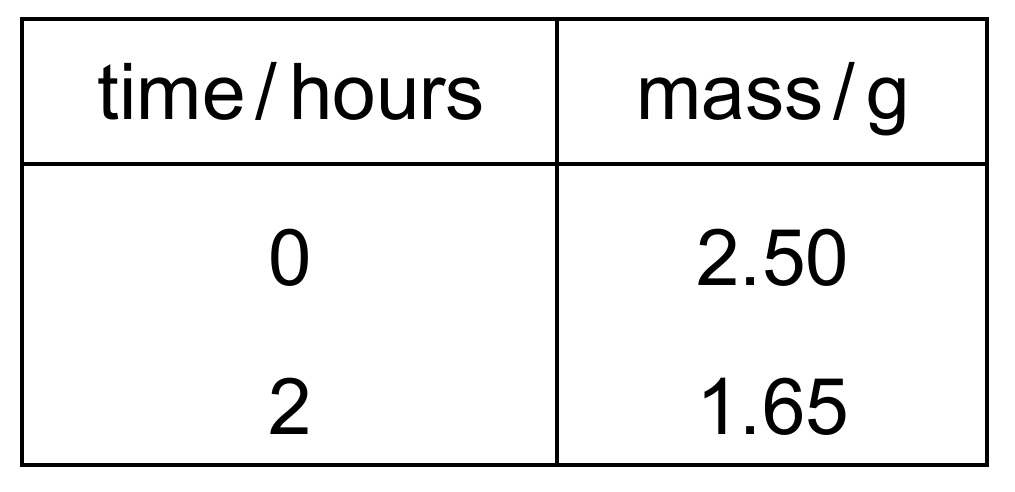
The mass of a potato cylinder is recorded. The potato cylinder is then placed into concentrated sucrose solution.

After 2 hours, the potato cylinder is removed from the solution and the mass recorded.

The results are shown.

Which statement explains the change in mass of the potato?

A. Sucrose moves out of the potato cells because the solution has a higher water potential than the cells.
B. Sucrose moves out of the potato cells because the solution has a lower water potential than the cells.
C. Water moves out of the potato cells because the solution has a higher water potential than the cells.
D. Water moves out of the potato cells because the solution has a lower water potential than the cells.

▶️ Answer/Explanation
The potato cylinder loses mass from 2.50 g to 1.65 g, indicating that water has moved out of the cells. Water moves by osmosis from a region of higher water potential to a region of lower water potential. The concentrated sucrose solution has a lower water potential than the potato cells, so water leaves the cells.
Answer: (D)

Question

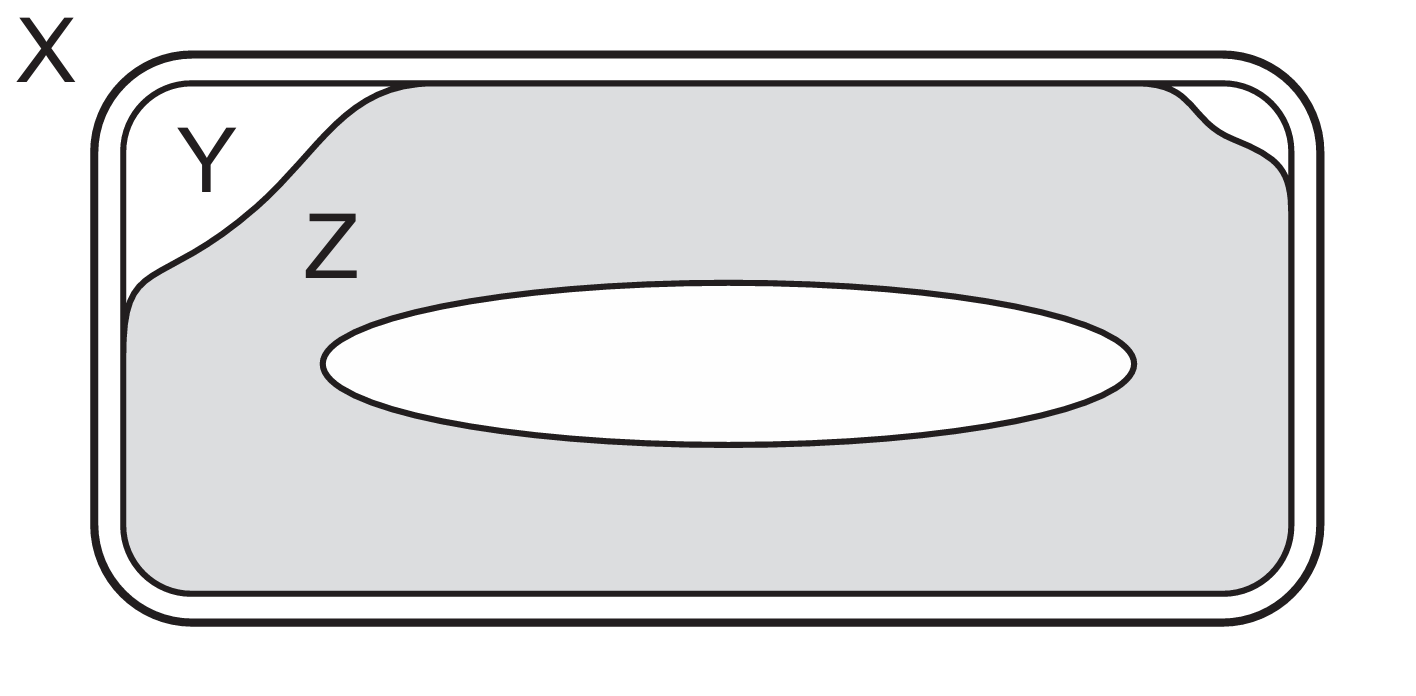
The diagram shows a cell starting to plasmolyse.

In which direction is osmosis occurring?

A. X to Y
B. Y to X
C. Y to Z
D. Z to Y

▶️ Answer/Explanation
As the cell plasmolyses, water is leaving the cell and moving out towards the surrounding solution.
Water moves by osmosis from a region of higher water potential (inside the cell, Z) to a region of lower water potential (outside, Y).
Answer: (D)

Question

When a plant cell is put into a solution that has a lower water potential than the cell, the cytoplasm can pull away from the cell wall.

What is the term for this?

A. flaccid
B. plasmolysis
C. turgid
D. turgor pressure

▶️ Answer/Explanation
Water leaves the cell by osmosis when the external solution has a lower (more negative) water potential than the cell.
As water is lost, the cytoplasm shrinks and pulls away from the rigid cell wall — this is plasmolysis.
Flaccid, turgid, and turgor pressure describe cell firmness states, not this specific separation event.
Answer: (B)

Question

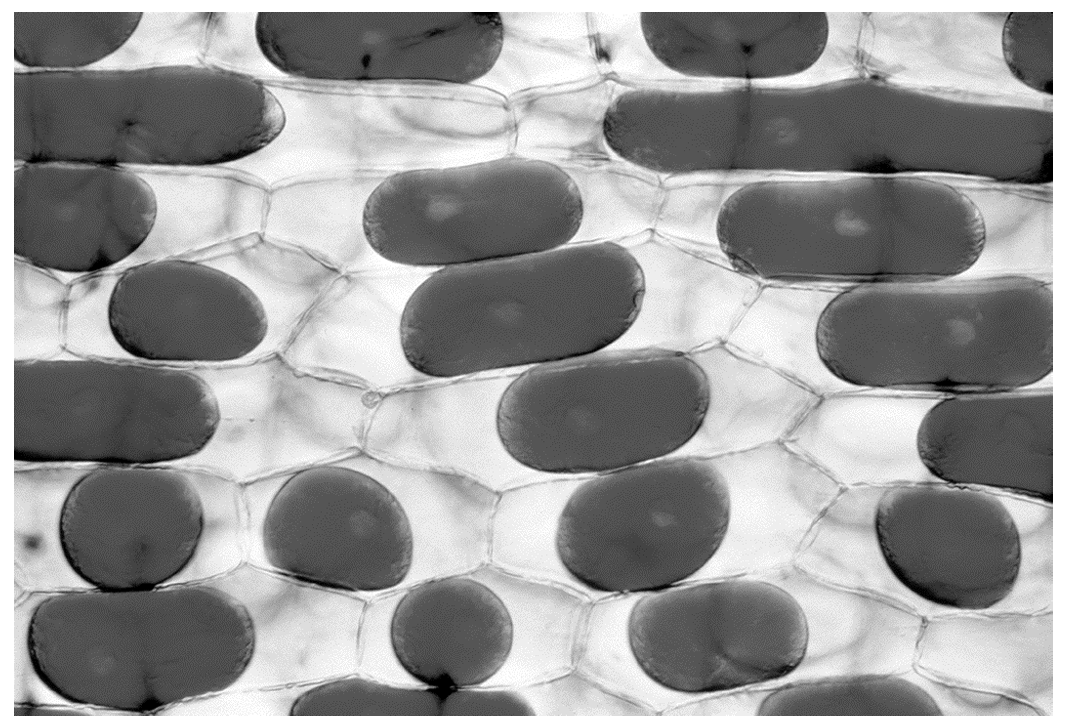
The photograph shows red onion cells placed in a concentrated salt solution.

Which statement explains their appearance?

A. Water has moved into the cells against a water potential gradient.
B. Water has moved out of the cells down a water potential gradient.
C. Water has moved out of the cells against a water potential gradient.
D. Water has moved into the cells down a water potential gradient.

▶️ Answer/Explanation
The concentrated salt solution has a lower (more negative) water potential than the cell contents.
Water always moves down a water potential gradient, from a region of higher water potential to lower water potential.
So water moves out of the cells, causing them to plasmolyse (shrink away from the cell wall).
Answer: (B)
Scroll to Top