
▶️ Answer/Explanation
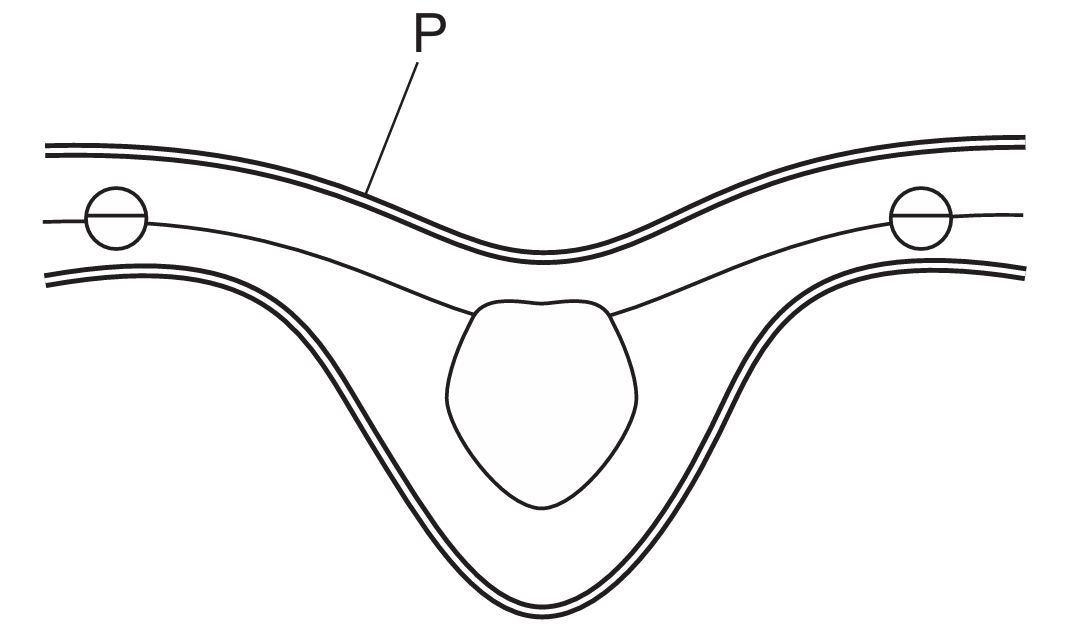
In a leaf cross-section, the uppermost single-cell layer at the top of the diagram is the upper epidermis; it lacks chloroplasts and is covered by a waxy cuticle to prevent water loss and protect inner tissues.
Below the upper epidermis lies the palisade mesophyll (tightly packed cells with many chloroplasts), then the spongy mesophyll with air spaces, making it easy to identify P as the top layer.
✅ Answer: (C)
Below the upper epidermis lies the palisade mesophyll (tightly packed cells with many chloroplasts), then the spongy mesophyll with air spaces, making it easy to identify P as the top layer.
✅ Answer: (C)
▶️ Answer/Explanation
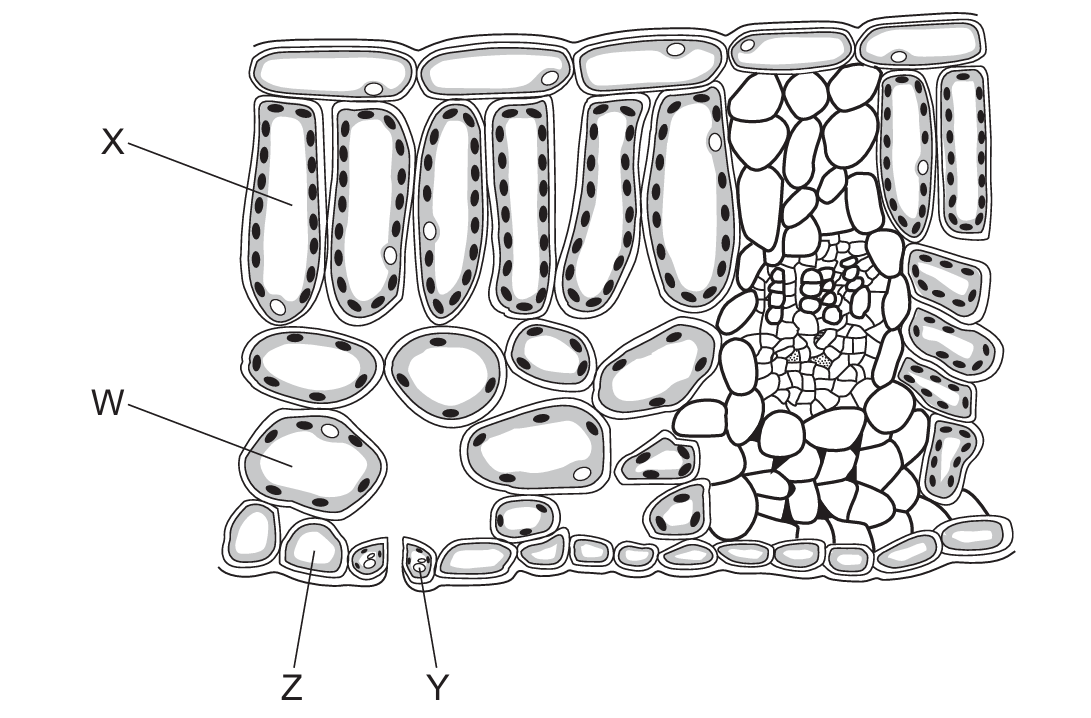
Water vapour is lost mainly through the stomata on the lower epidermis by diffusion to the air outside.
Carbon dioxide for photosynthesis also enters through the stomata and diffuses to the palisade and spongy mesophyll cells.
The labelled cells closest to the stomatal pore and air spaces are responsible for the most water loss and carbon dioxide uptake.
✅ Answer: (A)
Carbon dioxide for photosynthesis also enters through the stomata and diffuses to the palisade and spongy mesophyll cells.
The labelled cells closest to the stomatal pore and air spaces are responsible for the most water loss and carbon dioxide uptake.
✅ Answer: (A)
▶️ Answer/Explanation
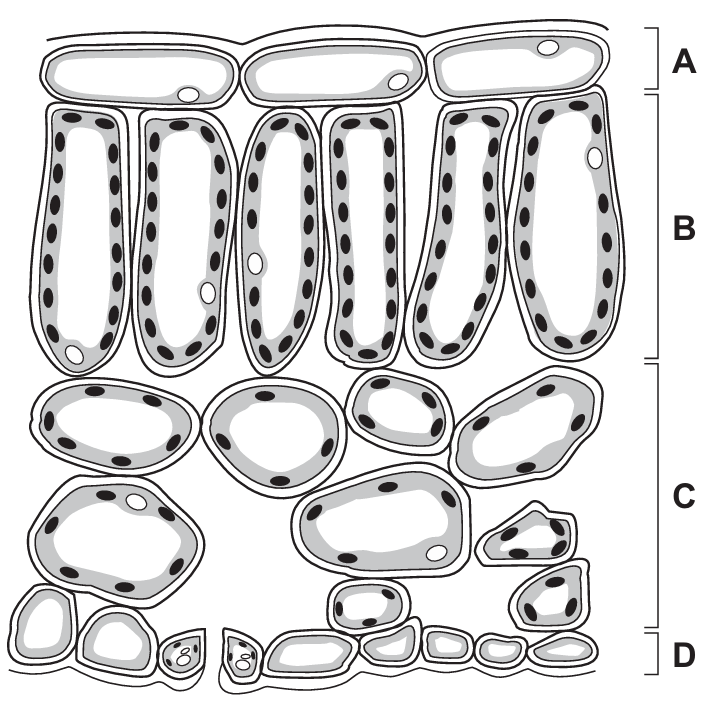
The spongy mesophyll is the layer of loosely packed, irregularly shaped cells with large air spaces between them.
It lies below the palisade mesophyll and above the lower epidermis in a typical leaf cross-section.
The mark scheme confirms the correct labelled layer is option C.
✅ Answer: (C)
It lies below the palisade mesophyll and above the lower epidermis in a typical leaf cross-section.
The mark scheme confirms the correct labelled layer is option C.
✅ Answer: (C)