CIE iGCSE Co-Ordinated Science B7.1 Diet Exam Style Questions Paper 1
Question
A 5-year-old child has rickets.
Which nutrient is deficient in the child’s diet?
A. carbohydrate
B. protein
C. vitamin C
D. vitamin D
▶️ Answer/Explanation
Rickets is a disease caused by a deficiency of vitamin D in the diet. Vitamin D is essential for the absorption of calcium and phosphate from the gut, which are needed for the proper development and maintenance of strong bones. A lack of vitamin D leads to soft, weak bones that can become bowed or deformed.
Carbohydrate deficiency leads to lack of energy, protein deficiency causes kwashiorkor or marasmus, and vitamin C deficiency causes scurvy (bleeding gums, poor wound healing). Therefore, the nutrient deficient in a child with rickets is vitamin D.
✅ Answer: (D)
Question
Which food helps prevent scurvy?
A. bread
B. cheese
C. eggs
D. lemons
▶️ Answer/Explanation
✅ Answer: (D)
Question
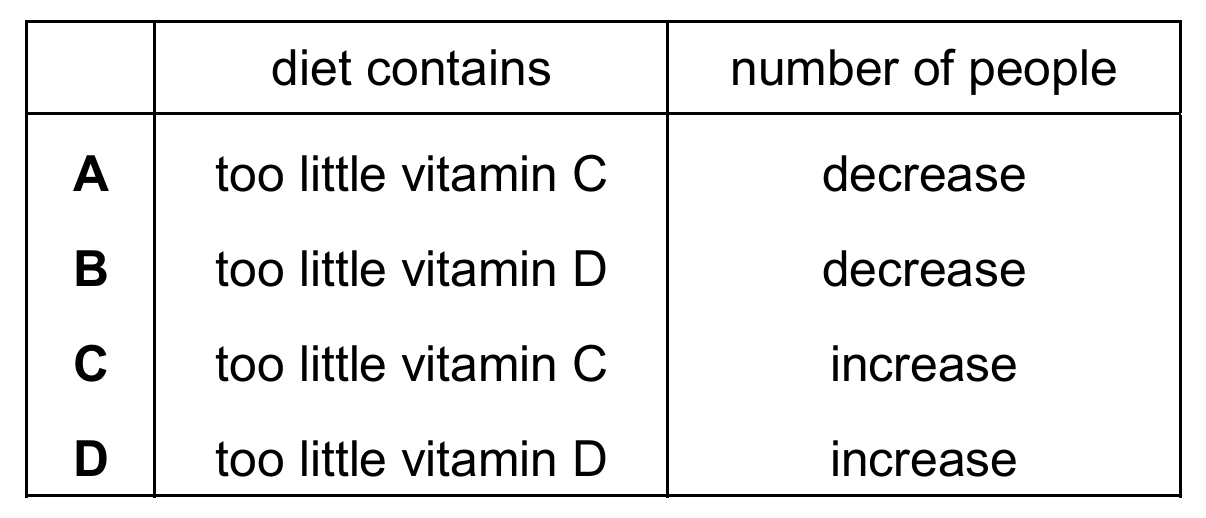
There was an increase of 27% in the number of hospital admissions related to scurvy between 2009 and 2014.
Which row explains this change?

▶️ Answer/Explanation
✅ Answer: (C)
Question
Calcium and iron are components of the diet. Which parts of the body need these components?

▶️ Answer/Explanation
Iron is needed to produce haemoglobin in red blood cells, which is the pigment responsible for carrying oxygen around the body.
✅ Answer: (C)
Question
What is the dietary importance of fibre?
A. It builds and repairs tissue.
B. It builds strong bones and teeth.
C. It helps to prevent constipation.
D. It provides a source of iron.
▶️ Answer/Explanation
Without sufficient fibre, food moves too slowly through the large intestine, leading to constipation; fibre does not build tissue, bones, or supply iron — those are roles of protein, calcium/vitamin D, and iron minerals respectively.
✅ Answer: (C)
