CIE iGCSE Co-Ordinated Science B7.1 Diet Exam Style Questions Paper 2
Question
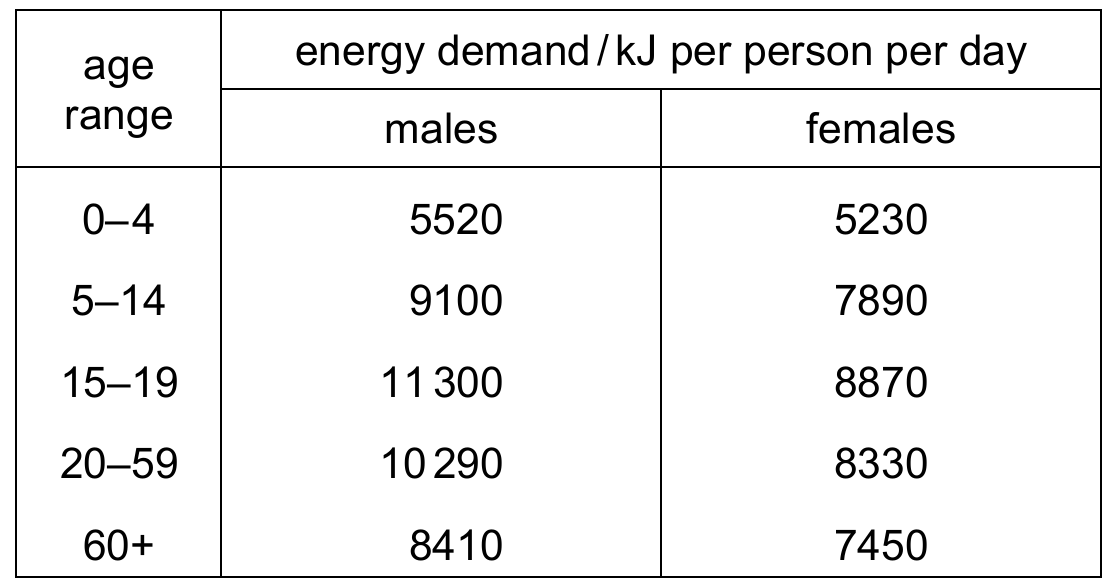
The table shows the energy demand of males and females of different ages.

Which conclusions can be made from this data?
- The energy demand of males is greater than that of females at all ages.
- The energy demand of both males and females for age range 0–4 is the lowest.
- The energy demand of males and females decreases after age range 15–19.
A. 1, 2 and 3
B. 1 and 2 only
C. 1 and 3 only
D. 2 only
▶️ Answer/Explanation
✅ Answer: (A)
Question
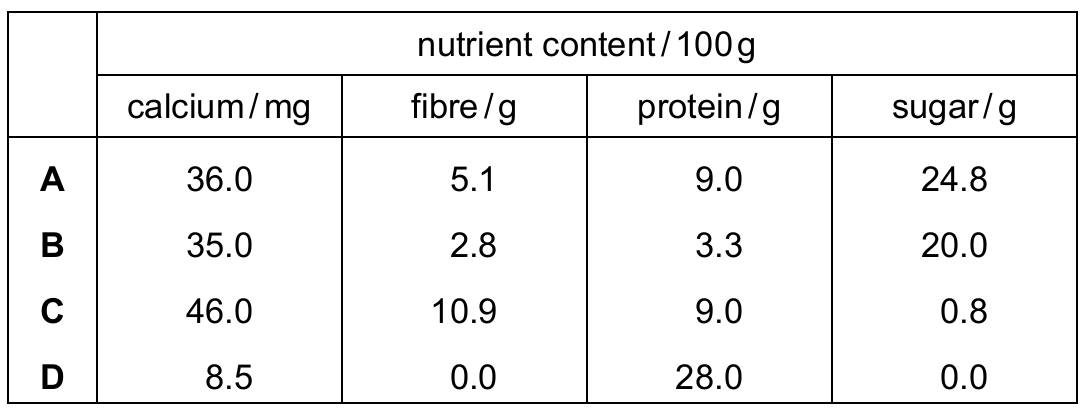
Which row provides the greatest amount of the nutrient needed to move food through the alimentary canal?

▶️ Answer/Explanation
Row C has the highest fibre content (10.9 g per 100 g) compared to the other rows.
✅ Answer: (C)
Question
A person is unwell with the following symptoms.
- swollen abdomen (belly)
- red patches on their skin
- loss of muscle mass
What is the likely condition that this person has?
A. iron deficiency
B. kwashiorkor
C. marasmus
D. scurvy
▶️ Answer/Explanation
Marasmus, by contrast, causes overall severe wasting without the swollen belly, and iron deficiency or scurvy produce different symptoms (anaemia, or bleeding gums respectively).
The combination of symptoms described matches kwashiorkor specifically.
✅ Answer: (B)
Question
The condition kwashiorkor is characterised by a poor growth rate, swelling of the hands and feet, and a bulging stomach.
Which component of a balanced diet is lacking in someone with kwashiorkor?
A. fibre
B. protein
C. iron
D. vitamin D
▶️ Answer/Explanation
Low protein intake lowers blood protein levels, reducing water reabsorption into the blood and causing swelling (oedema).
Poor growth also results from insufficient protein for building new tissue.
✅ Answer: (B)
Question
Which component of a balanced diet is needed to prevent constipation?
(A) carbohydrate
(B) fat
(C) protein
(D) fibre
▶️Answer/Explanation
Ans : D