
CIE iGCSE Co-Ordinated Science B8.3 Transpiration Exam Style Questions Paper 3
Question
Most-appropriate topic codes (Cambridge IGCSE Co-ordinated Sciences 0654):
• Topic B8.1 — Xylem and phloem (Part (a))
• Topic B6.1 — Photosynthesis (Part (b))
• Topic B8.2 — Water uptake (Part (c))
• Topic B8.3 — Transpiration (Part (d))
▶️ Answer/Explanation
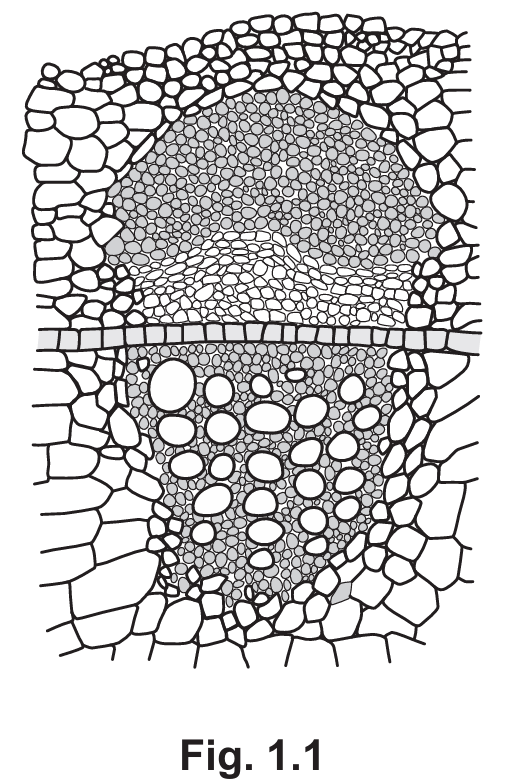
(a) Correct line drawn and labelled Y on the phloem tissue in the vascular bundle.
Sucrose is transported in the phloem, which is part of the vascular bundle in the stem. The label line should point to the phloem region.
(b) Plants make carbohydrates using the process of photosynthesis.
This process requires water and carbon dioxide in the presence of light energy and chlorophyll.
Photosynthesis is the process by which plants synthesise carbohydrates from carbon dioxide and water using light energy absorbed by chlorophyll in chloroplasts.
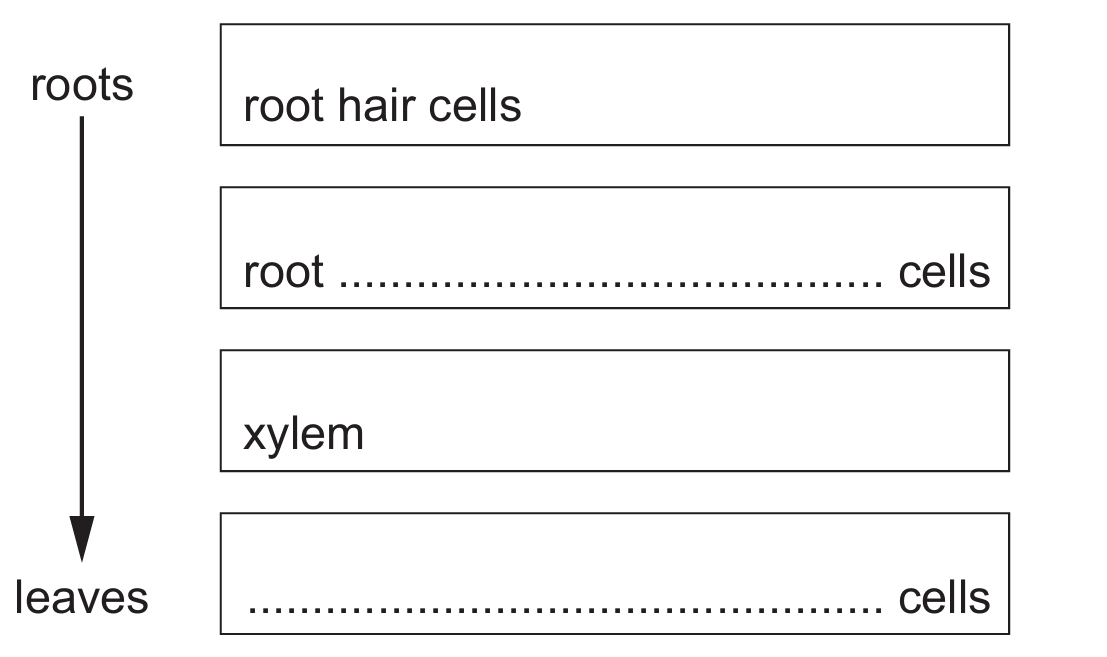
(c) roots → root hair cells → root cortex cells → xylem → leaves → mesophyll cells
Water enters through root hair cells by osmosis, passes through the cortex to the xylem, travels up the stem, and reaches the mesophyll cells in the leaves where it is used for photosynthesis or evaporates.
(d)(i) Transpiration
Transpiration is the loss of water vapour from the leaves of a plant, mainly through stomata.
(d)(ii) Stomata
Stomata are small pores on the leaf surface through which water vapour diffuses out of the leaf during transpiration.
Question
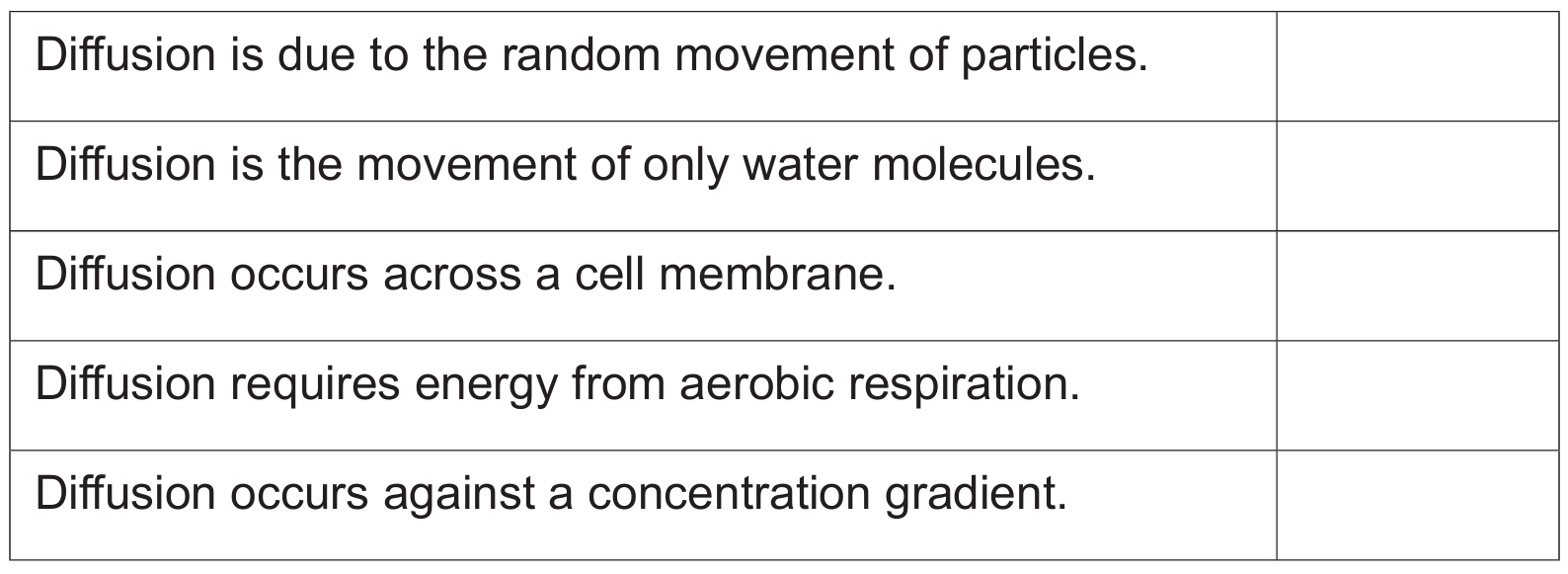
Place ticks (✓) next to all the statements that correctly describe diffusion.
Most-appropriate topic codes (Cambridge IGCSE Co-ordinated Sciences 0654):
• Topic B11.1 — Gas exchange in humans (Parts (a)–(c))
• Topic B8.3 — Transpiration (Part (d))
▶️ Answer/Explanation
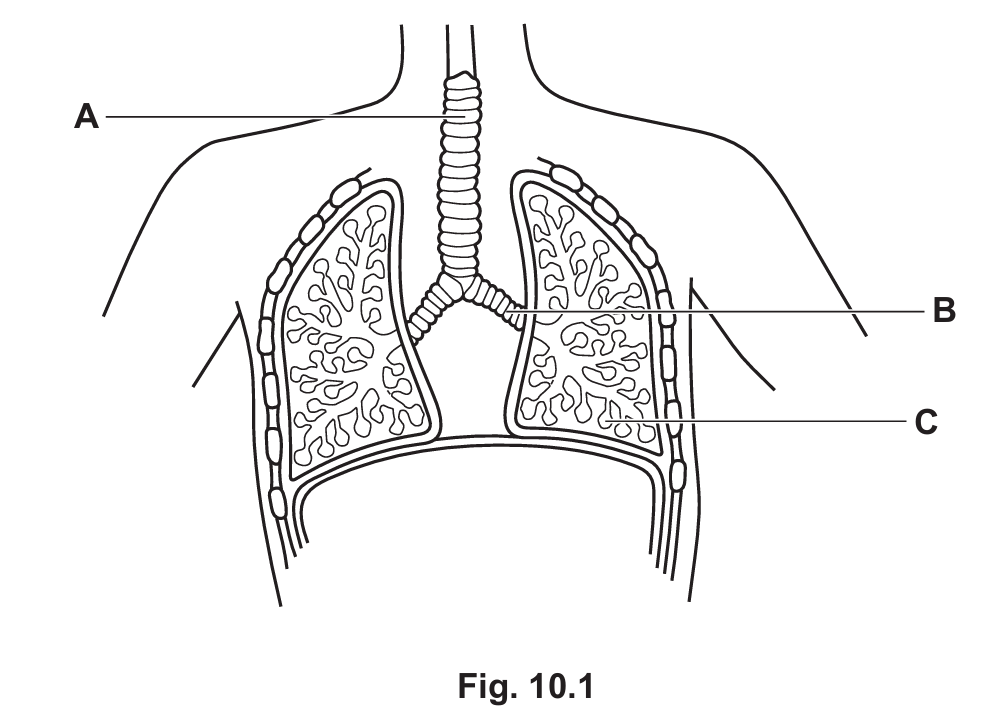
(a) A – trachea; B – bronchus; C – alveoli
The trachea (windpipe) leads into the bronchi, which branch into smaller tubes ending in the alveoli.
Gas exchange with the blood takes place at the alveoli.
(b) Expired air contains more carbon dioxide, less oxygen, and more water vapour
Oxygen is used up by the body during respiration, so expired air contains less of it than inspired air.
Carbon dioxide is produced by respiration, so expired air contains more of it.
Water vapour is added to the air as it passes through the moist respiratory passages, so expired air contains more water vapour.
(c) 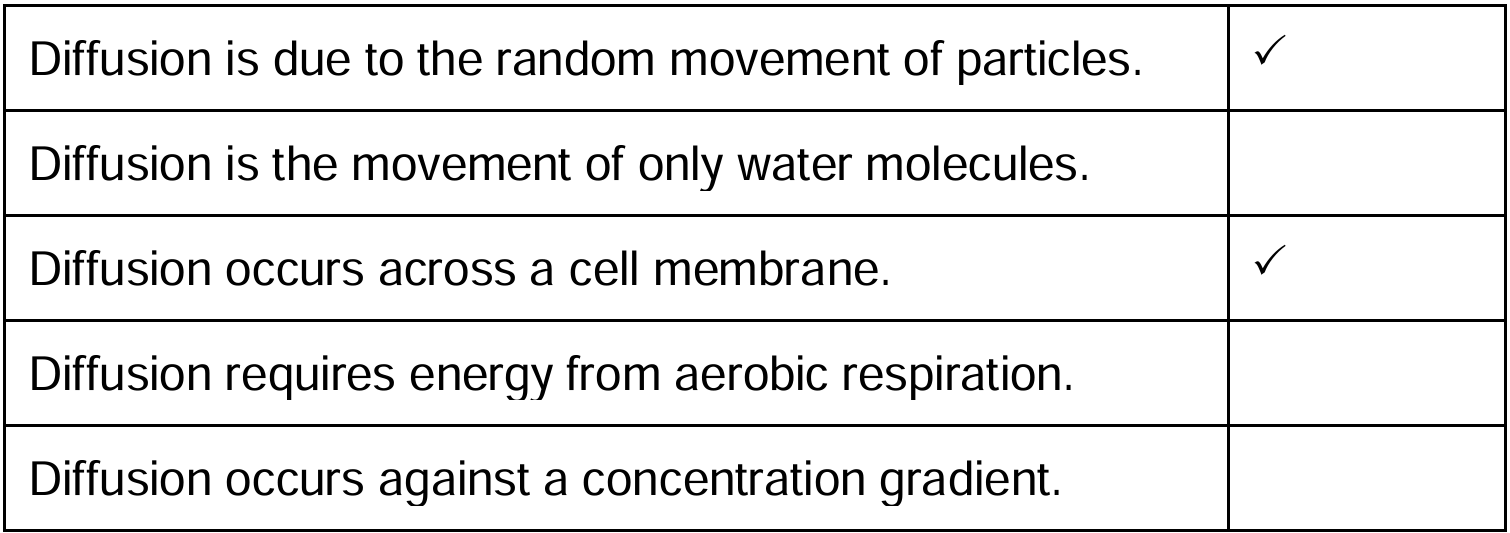
Diffusion is the net movement of any particles (not only water) due to their random motion.
It occurs down a concentration gradient (from high to low concentration), not against it, and does not require energy from respiration.
It can occur across a cell membrane, such as at the alveoli or in plant leaves.
(d)(i) Stoma / stomata
Water vapour exits the leaf through small pores called stomata, usually located on the underside of the leaf.
(d)(ii) Transpiration
Transpiration is the term for the evaporation of water from inside the leaf followed by its diffusion out through the stomata.
(d)(iii) Increase in temperature; decrease in humidity
Higher temperature increases the rate of evaporation of water from leaf cells, speeding up transpiration.
Lower humidity increases the concentration gradient between the leaf and the air, speeding up diffusion of water vapour out of the leaf.