
CIE iGCSE Co-Ordinated Science B8.3 Transpiration Exam Style Questions Paper 4
Question
Most-appropriate topic codes (Cambridge IGCSE Co-ordinated Sciences 0654):
• Topic B8.3 — Transpiration (Part (a)(i), (a)(ii))
• Topic B8.1 — Xylem and phloem (Part (b)(i))
• Topic B8.4 — Translocation (Part (b)(ii))
• Topic B9.1 — Circulatory systems (Part (c)(i), (c)(ii))
▶️ Answer/Explanation
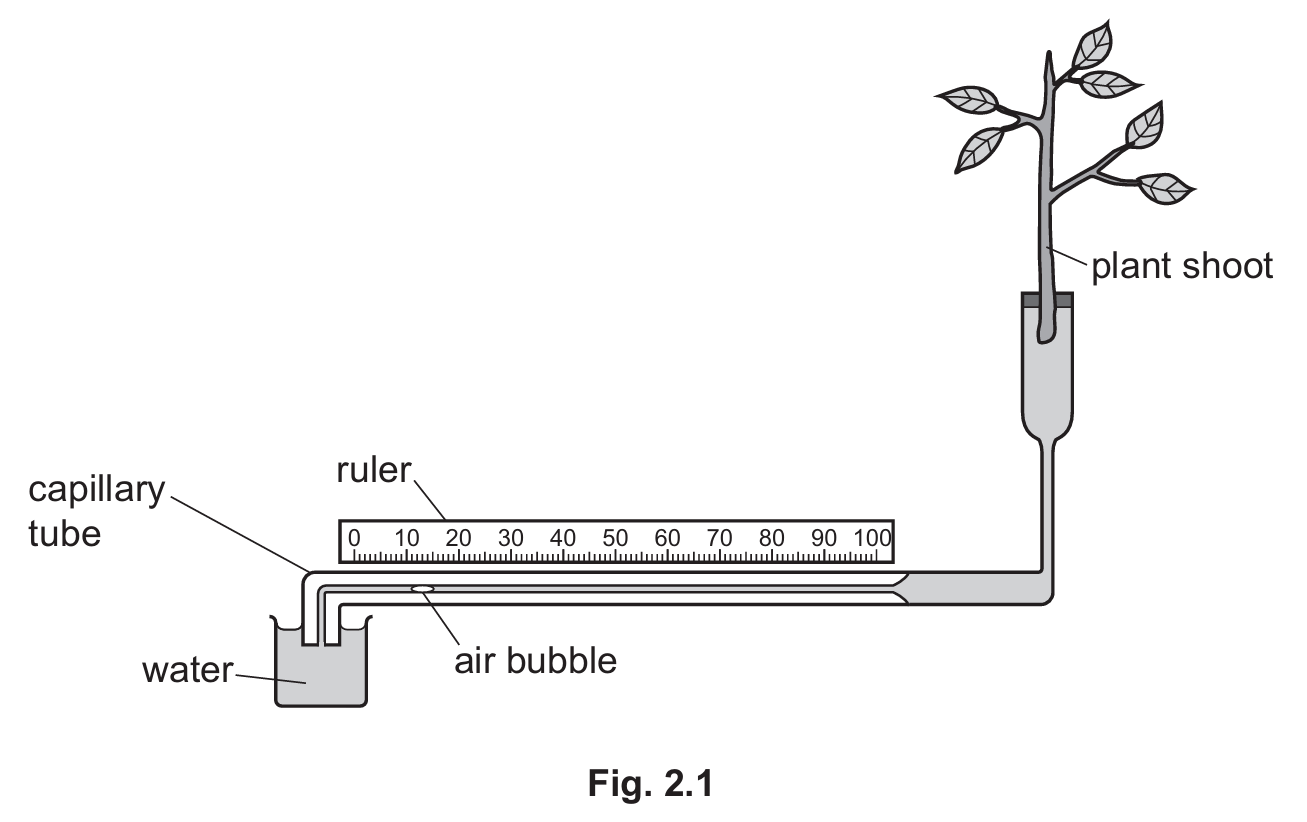
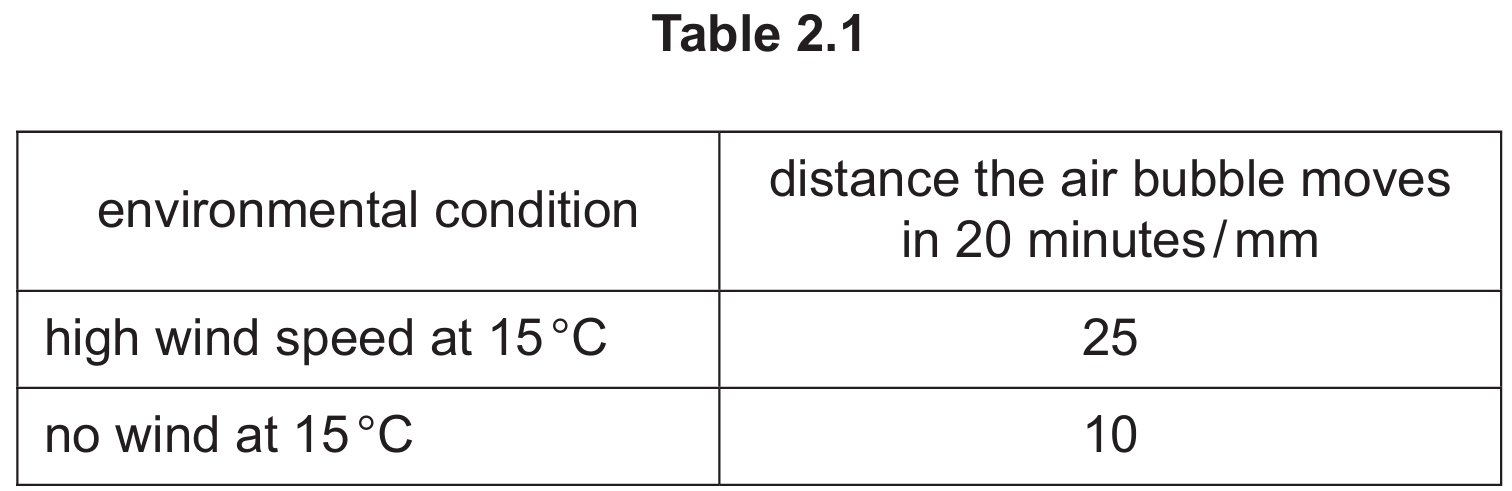
(a)(i) High wind speed increases the rate of transpiration because:
- Wind removes water vapour from around the leaf.
- This maintains a steep concentration gradient of water vapour between the leaf and the outside air.
- Increased diffusion of water vapour from the stomata occurs.
Transpiration is the loss of water vapour from the leaves. Wind increases the transpiration rate by removing the layer of humid air that builds up around the leaf surface. This maintains a steep concentration gradient between the water vapour inside the leaf (high concentration) and the air outside (low concentration), which increases the rate of diffusion of water vapour out through the stomata.
(a)(ii) Effect on distance: Increases (for 25°C compared to 15°C).
Explanation (any two from):
- Increase in the rate of transpiration.
- Increased rate of water evaporating from the mesophyll cell surfaces.
- Increased rate of diffusion of water vapour out of the leaf through the stomata.
Higher temperature increases the kinetic energy of water molecules, causing them to evaporate more rapidly from the surfaces of mesophyll cells inside the leaf. This increases the concentration of water vapour in the air spaces, leading to a greater diffusion gradient and a faster rate of transpiration, so the air bubble moves a greater distance.
(b)(i) Mineral ions.
Xylem vessels transport water and dissolved mineral ions (such as nitrates, phosphates, and potassium ions) absorbed from the soil by root hair cells, up the plant to the leaves.
(b)(ii) Translocation is the movement of sucrose and amino acids from sources to sinks through phloem vessels.
Translocation is the transport of sucrose (produced during photosynthesis) and amino acids (produced from nitrate ions) in the phloem. Sucrose and amino acids are transported from sources (where they are made or stored, e.g., leaves) to sinks (where they are used or stored, e.g., roots, fruits, growing tips).
(c)(i) In a single circulatory system, blood only goes through the heart once during each complete circuit of the body.
Path: Heart → Gills (for oxygenation) → Body (for delivery of oxygen and nutrients) → Heart.
In fish, blood is pumped from the heart to the gills where it is oxygenated. It then flows directly to the rest of the body where oxygen is delivered and carbon dioxide is picked up, before returning to the heart. This means blood passes through the heart only once per complete circuit.
(c)(ii) Any one from:
- Allows faster metabolism because blood can be pumped at higher pressure to the body.
- Allows different blood pressures in the pulmonary circulation (low pressure to lungs) and systemic circulation (high pressure to body).
- Oxygenated blood and deoxygenated blood are kept separate, making oxygen delivery more efficient.
The double circulation in mammals has two separate circuits: pulmonary circulation (heart to lungs and back) and systemic circulation (heart to body and back). This separation allows blood pressure to be lower in the lungs, preventing damage to delicate capillaries, while maintaining higher pressure for efficient delivery of oxygen and nutrients to the rest of the body, which supports a faster metabolic rate.
Question
Most-appropriate topic codes (Cambridge IGCSE Co-ordinated Sciences 0654):
• Topic B2.1 — Cell structure (Part (a))
• Topic B8.4 — Translocation (Part (b))
• Topic B3.3 — Active transport / B8.2 — Water uptake (Part (c))
• Topic B3.2 — Osmosis (Part (d))
• Topic B8.3 — Transpiration (Part (e))
▶️ Answer/Explanation
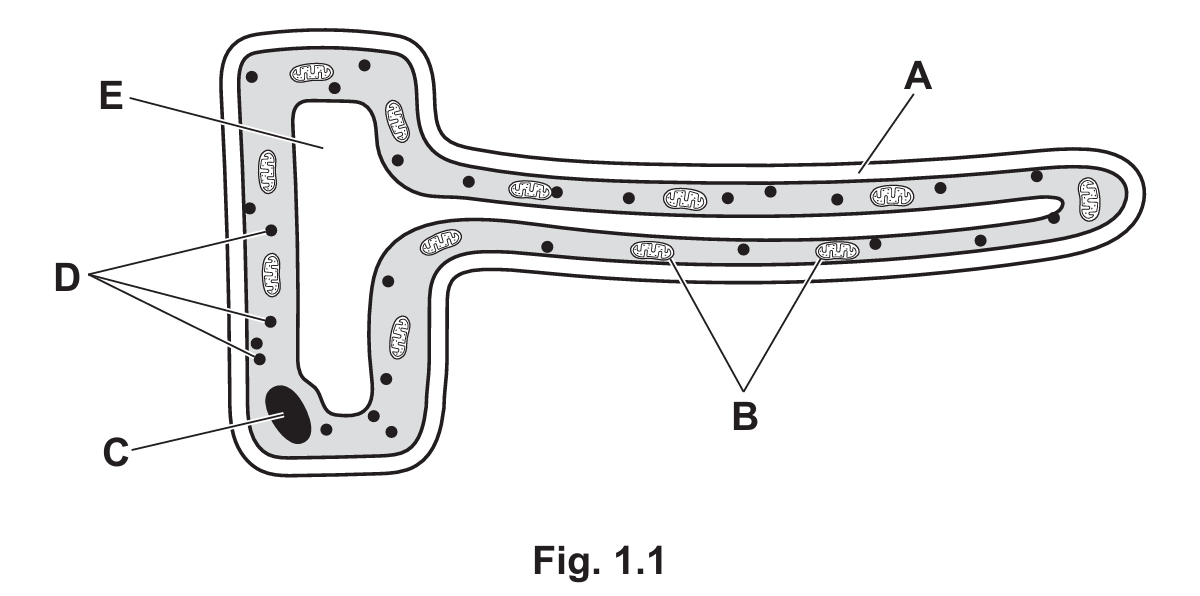
(a)(i) D
The part labelled D represents the ribosomes, which are the sites of protein synthesis in the cell. Ribosomes translate mRNA into polypeptide chains during translation.
(a)(ii) A
The part labelled A represents the cell wall, which is made of cellulose (a structural polysaccharide) in plant cells. Cellulose provides structural support and protection.
(b) Translocation
Translocation is the process by which sucrose and amino acids are transported in the phloem from sources (where they are produced or stored) to sinks (where they are used or stored).
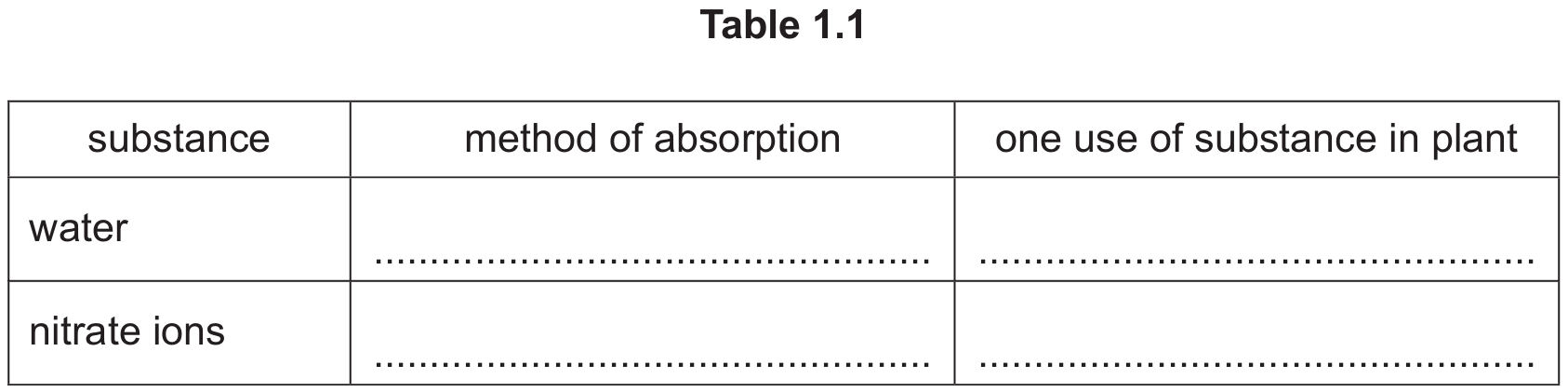
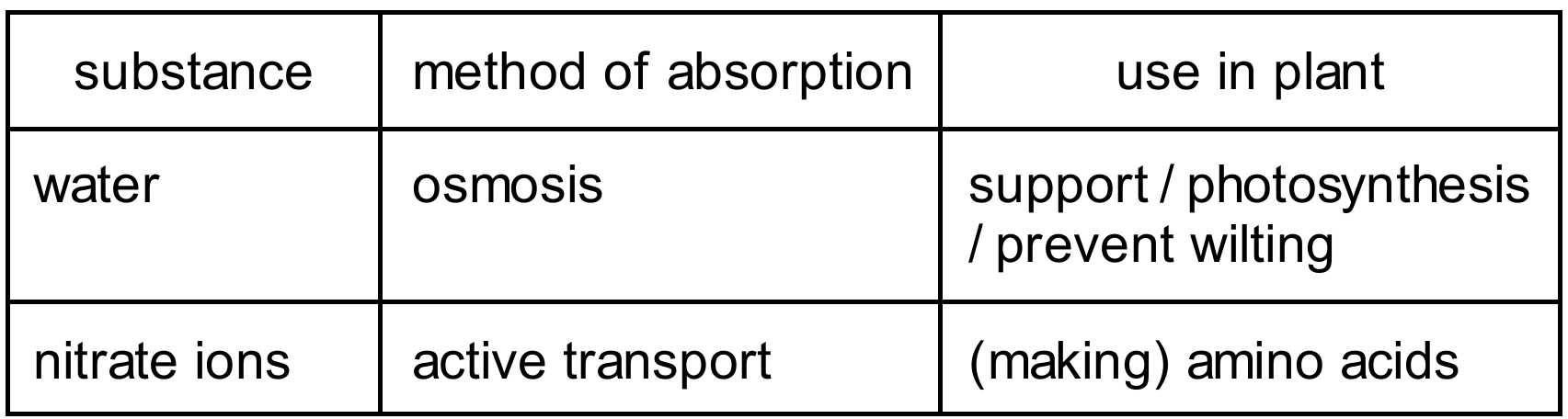
(c) Table completion:
(d) Plant cell in concentrated salt solution:
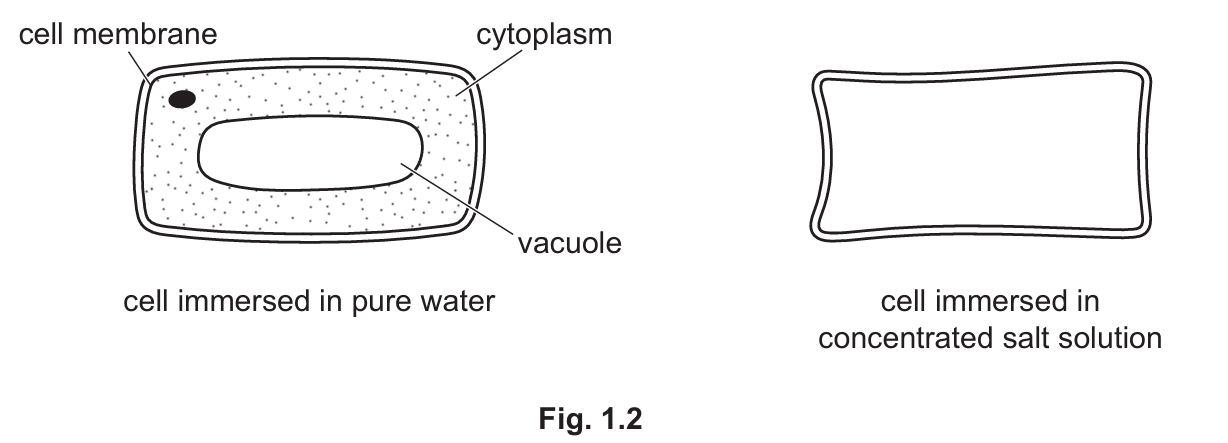
The plant cell undergoes plasmolysis. The cell membrane pulls away from the cell wall as water leaves the cell by osmosis. The vacuole shrinks and becomes smaller. The cell becomes flaccid because water potential outside the cell is lower than inside the cell.
(e) High winds increase the transpiration rate.
Wind blows water vapour away from the leaf surface, maintaining a steep concentration gradient between the inside of the leaf and the external air. This increases the rate of evaporation of water from the mesophyll cells and diffusion of water vapour out through the stomata.