
CIE iGCSE Co-Ordinated Science B9.2 Heart Exam Style Questions Paper 4
Question
Most-appropriate topic codes (Cambridge IGCSE Co-ordinated Sciences 0654):
• Topic B9.2 — Heart (Part (a)(i) & (a)(ii))
• Topic B9.4 — Blood / Platelets (Part (b)(i))
• Topic B9.4 — Blood / Plasma (Part (b)(ii))
• Topic B9.4 — Red blood cells (Part (b)(iii))
• Topic B9.4 — White blood cells / Lymphocytes (Part (b)(iv))
▶️ Answer/Explanation
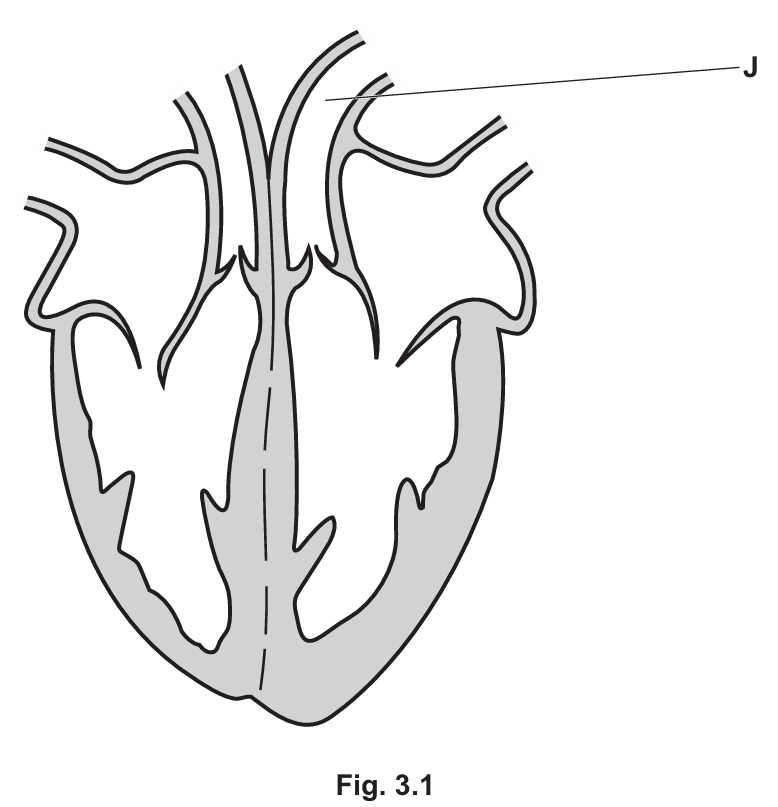
(a)(i) Septum labelled S (the muscular wall dividing left and right sides); Valve labelled V (e.g. atrioventricular or semilunar valve).
The septum prevents mixing of oxygenated and deoxygenated blood. Valves ensure one-way flow of blood through the heart.
(a)(ii) Artery J has a thick muscular wall and a small lumen to maintain and withstand the high pressure of blood pumped from the heart.
The elastic and muscular tissue in the artery wall allows it to stretch and recoil, helping to maintain high blood pressure and continuous flow.
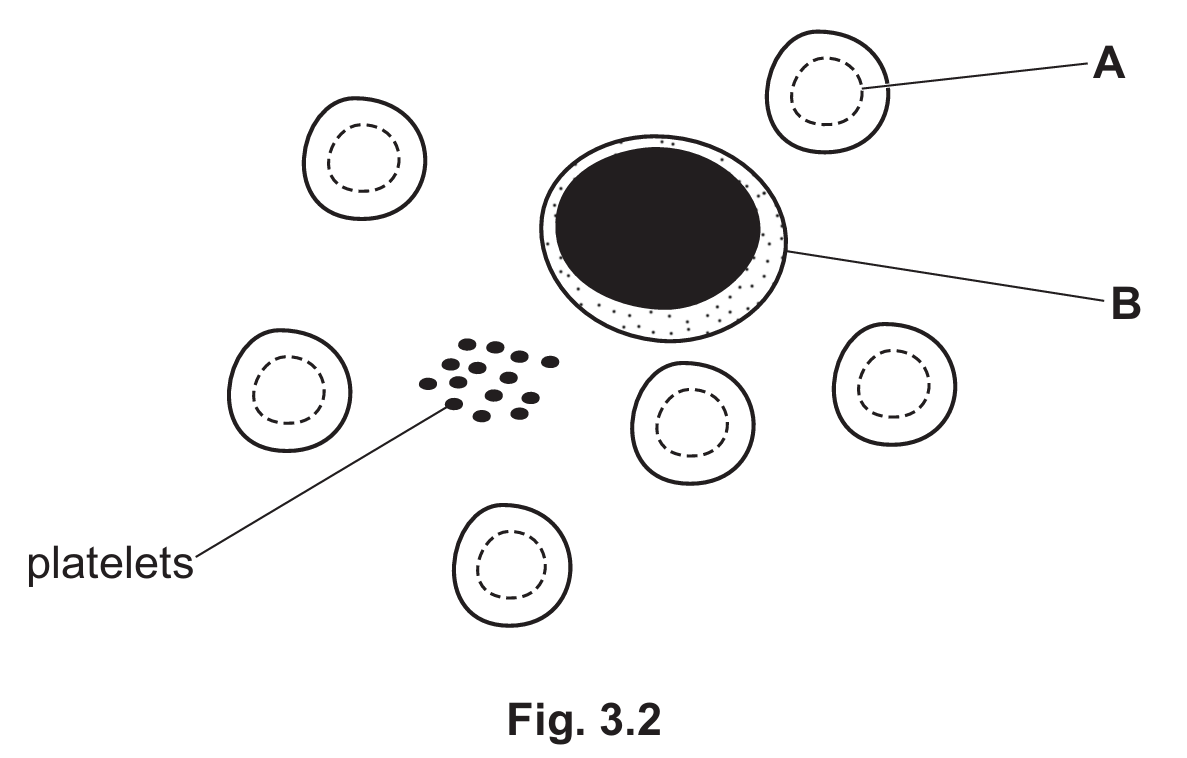
(b)(i) Platelets clot blood at wound sites, sealing the wound and preventing entry of pathogens into the body.
By forming a plug, platelets create a physical barrier that stops blood loss and prevents microorganisms from entering through damaged skin.
(b)(ii) Ions / nutrients / urea / hormones / carbon dioxide / antibodies
Plasma transports many dissolved substances including waste products, hormones, and nutrients required for cellular activities.
(b)(iii) Fewer red blood cells means insufficient oxygen is transported to muscles for aerobic respiration, so less energy is released for muscle contraction, leading to increased lactic acid and oxygen debt.
Red blood cells contain haemoglobin which carries oxygen. Without enough oxygen, muscles cannot respire aerobically, causing fatigue and cramp.
(b)(iv) Cell B (lymphocyte) produces antibodies.
Lymphocytes are white blood cells that recognise specific pathogens and produce antibodies to neutralise them or mark them for destruction.
Question
• increased breathing rate and depth
• hotter body temperature.
(i) State what is meant by the term drug.
(ii) State one other way the patient may reduce his risk of coronary heart disease.
Most-appropriate topic codes (Cambridge IGCSE Co-ordinated Sciences 0654):
• Topic B13.1 — Coordination and response (Part (a)(i))
• Topic B13.3 — Homeostasis (Part (a)(ii))
• Topic B14.1 — Drugs (Part (b)(i))
• Topic B9.2 — Heart / Coronary heart disease (Part (b)(ii))
▶️ Answer/Explanation
(a)(i) Three effects explained:
• Muscles require more energy during exercise, so the rate of respiration increases.
• More oxygen and glucose must be delivered to the muscles for aerobic respiration.
• Increased carbon dioxide concentration in the blood is detected by the brain, which sends impulses to increase the heart rate (pumping blood faster) and breathing rate/depth (to remove CO₂ and take in more O₂).
• The heart pumps blood faster to deliver oxygen and remove waste products more quickly.
(a)(ii) Three responses to increased body temperature:
• The increased blood temperature is detected by the thermoregulatory centre in the brain.
• Sweating increases; sweat evaporates from the skin surface, transferring thermal energy away from the body.
• Vasodilation occurs — arterioles near the skin surface widen, increasing blood flow to skin capillaries, allowing more heat to be lost to the surroundings.
• Hair erector muscles relax, causing hairs to lie flat, reducing insulation and allowing more heat loss.
(b)(i) A drug is a substance/chemical taken into the body that affects or modifies chemical reactions in the body.
Drugs can alter physiological processes, including those involved in disease prevention and treatment.
(b)(ii) One other way to reduce the risk of coronary heart disease:
• Maintaining a balanced diet (low in saturated fats and cholesterol).
• Reducing stress levels.
• Stopping smoking.
• Maintaining a healthy body weight.