
CIE iGCSE Co-Ordinated Science C10.2 Air quality and climate Exam Style Questions Paper 4
Question
Most-appropriate topic codes (Cambridge IGCSE Co-ordinated Sciences 0654):
• Topic C4.2 — Hydrogen-oxygen fuel cells
• Topic C10.2 — Air quality and climate
▶️ Answer/Explanation
(a)(i) water
The only product formed in a hydrogen-oxygen fuel cell is water, making it an environmentally friendly energy source.
(a)(ii) loss of electrons (from hydrogen)
Oxidation is defined as the loss of electrons. At the anode, hydrogen atoms lose electrons to form protons, so they are oxidised.
(b)
Any three from:
Hydrogen-oxygen fuel cell:
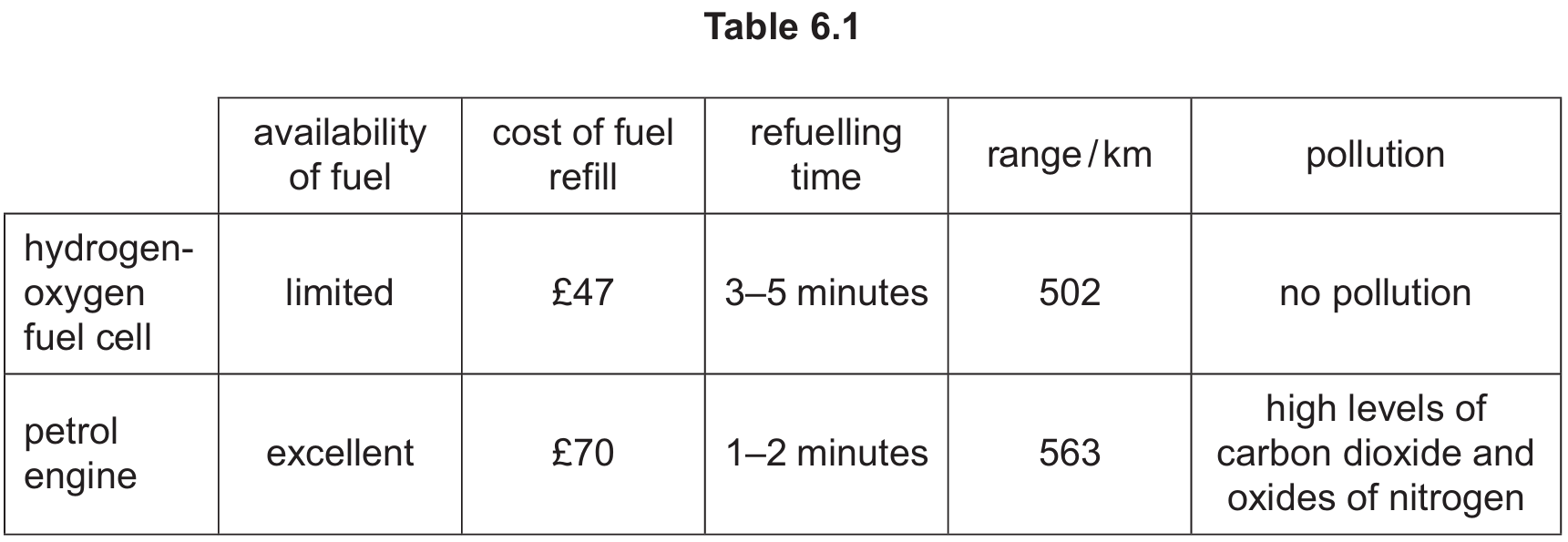
- cheaper (than petrol) to refill
- short refuelling time
- good range
- no pollution
OR
Petrol engine:
- high availability / excellent availability
- quicker refuelling
- longer range (than hydrogen-oxygen)
The most suitable fuel depends on the criteria prioritised. Hydrogen-oxygen fuel cells produce no pollution but have limited availability, while petrol engines have excellent availability and slightly longer range but produce harmful emissions.
(c)(i) acid rain / respiratory problems
Oxides of nitrogen dissolve in rainwater to form acid rain, which damages buildings, soil, and aquatic ecosystems. They also irritate the respiratory system.
(c)(ii) nitrogen reacts with oxygen ; at high temperature (inside a car engine)
The high temperatures and pressures in car engines cause atmospheric nitrogen and oxygen to react, forming nitrogen oxides.
(c)(iii) 2CO + 2NO → 2CO₂ + N₂
In catalytic converters, carbon monoxide reduces nitrogen oxides, producing harmless carbon dioxide and nitrogen gas. This prevents toxic gases from being released into the atmosphere.
Question
Topic codes:
• Topic C2.2 — Atomic structure and the Periodic Table (Part (a) & (b))
• Topic C2.3 — Isotopes (Part (c))
• Topic C7.2 — Oxides (Part (d))
• Topic C10.2 — Air quality and climate / Global warming (Part (e))
• Topic C3.3 — The mole and the Avogadro constant (Part (f))
▶️ Answer/Explanation
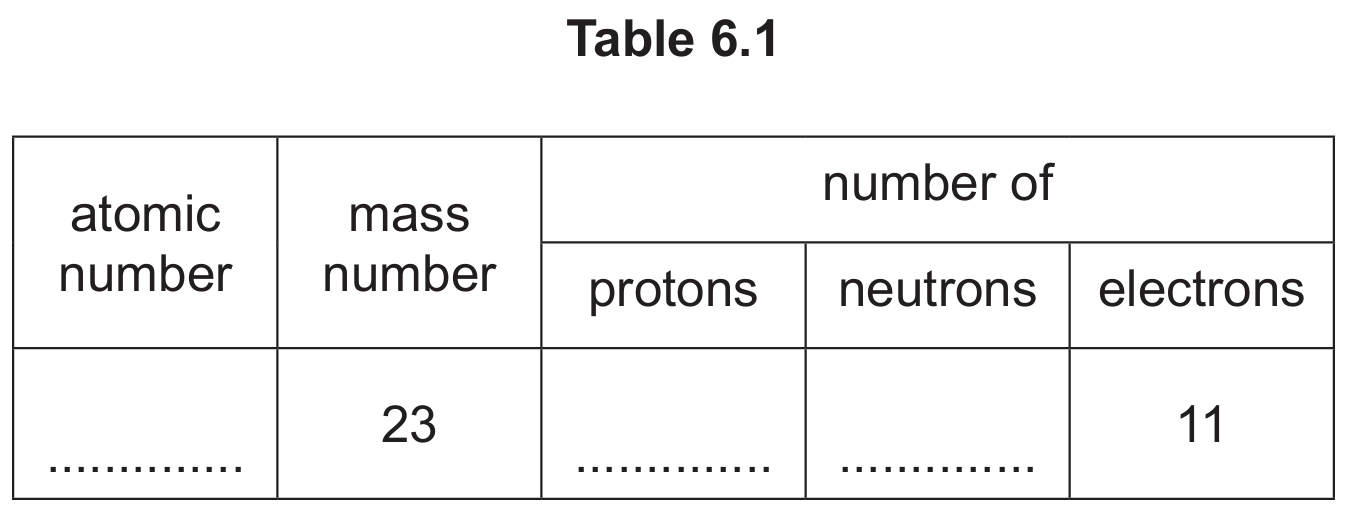
(a) Complete Table 6.1:
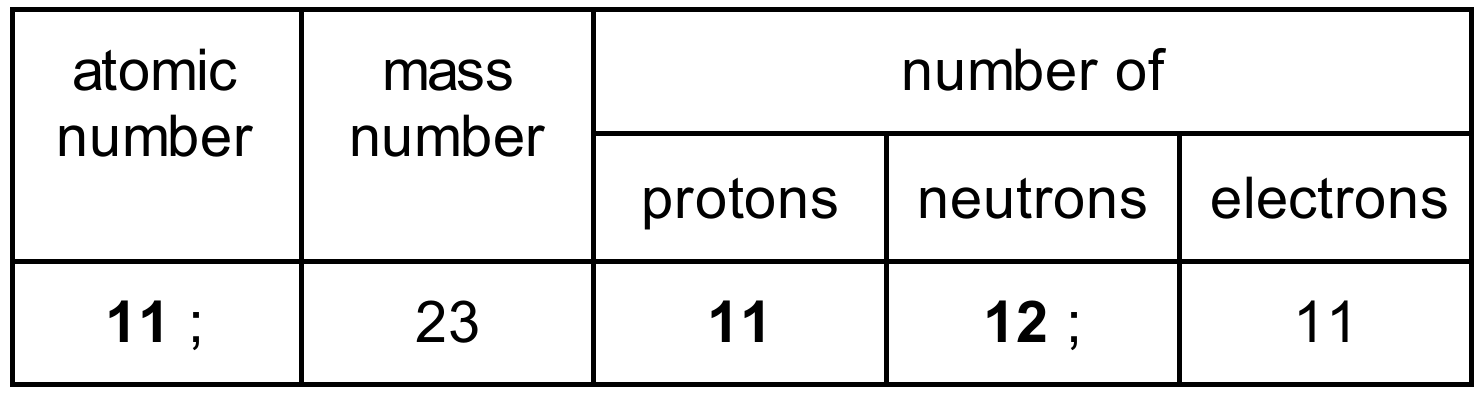
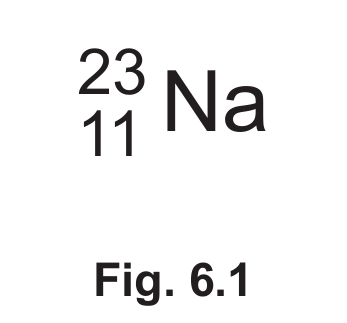
Sodium has 11 protons (atomic number = 11), 11 electrons (neutral atom), and 23 − 11 = 12 neutrons.
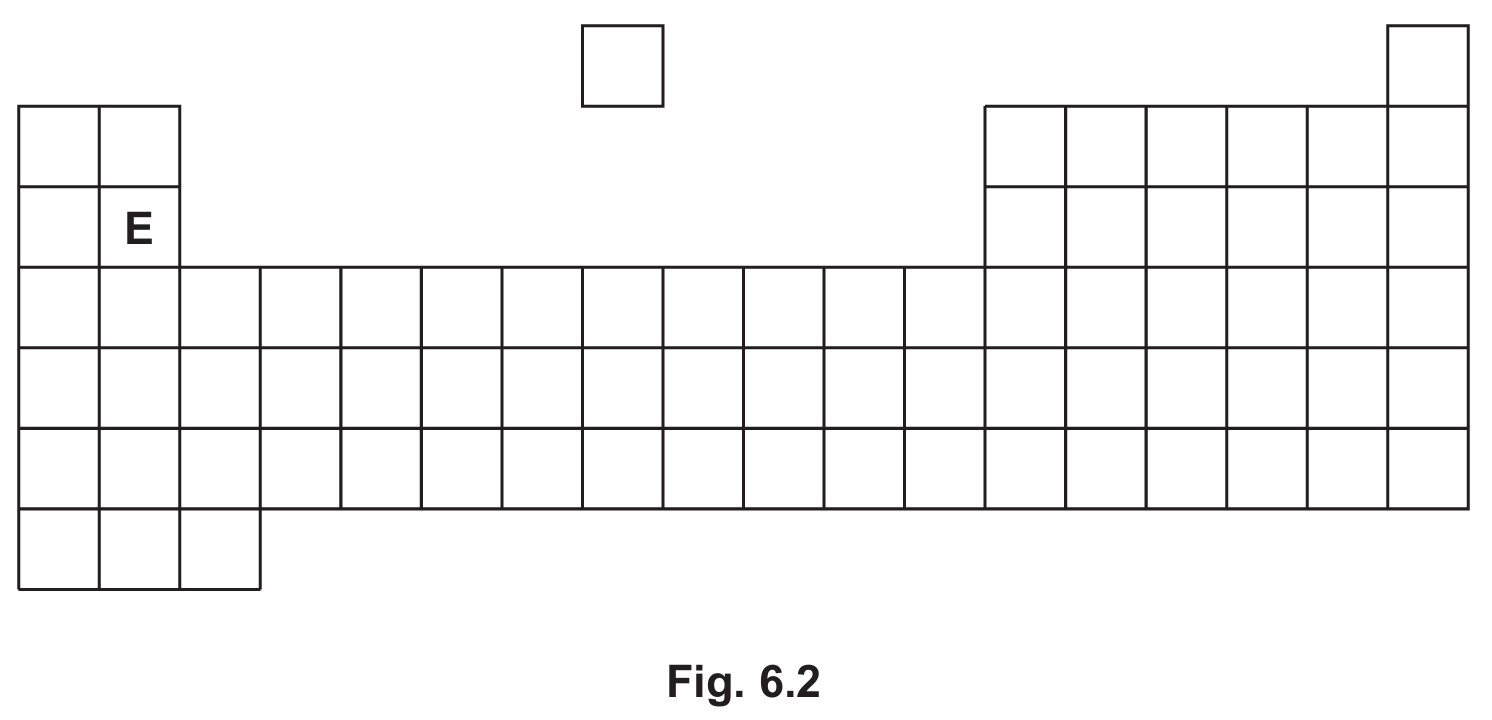
(b) ☑ 2.8.2
Element E is in Period 3 (three electron shells) and Group II (two outer-shell electrons). Therefore, the electronic configuration is 2,8,2.
(c) Isotopes of carbon have the same chemical properties because they have the same number of electrons / the same electronic configuration. Chemical properties depend on the number and arrangement of electrons in the atom.
(d) Acidic oxide — carbon dioxide is an acidic oxide because it reacts with bases to form salts and water.
(e) Energy from the Sun reaches the Earth’s surface. Some energy is reflected back into space. Most of the energy is absorbed by the Earth’s surface, causing an increase in temperature. The warm Earth emits energy. Some of this emitted energy is then absorbed by greenhouse gases. When this energy is re-emitted, it can be transferred back to the Earth’s surface.
(f) \(M_r\) of CO₂ = 12 + (2 × 16) = 44
Moles of CO₂ = 11000 ÷ 44 = 250 mol
Volume of CO₂ = 250 × 24 = 6000 dm³