
CIE iGCSE Co-Ordinated Science C11.3 Fuels Exam Style Questions Paper 4
Question
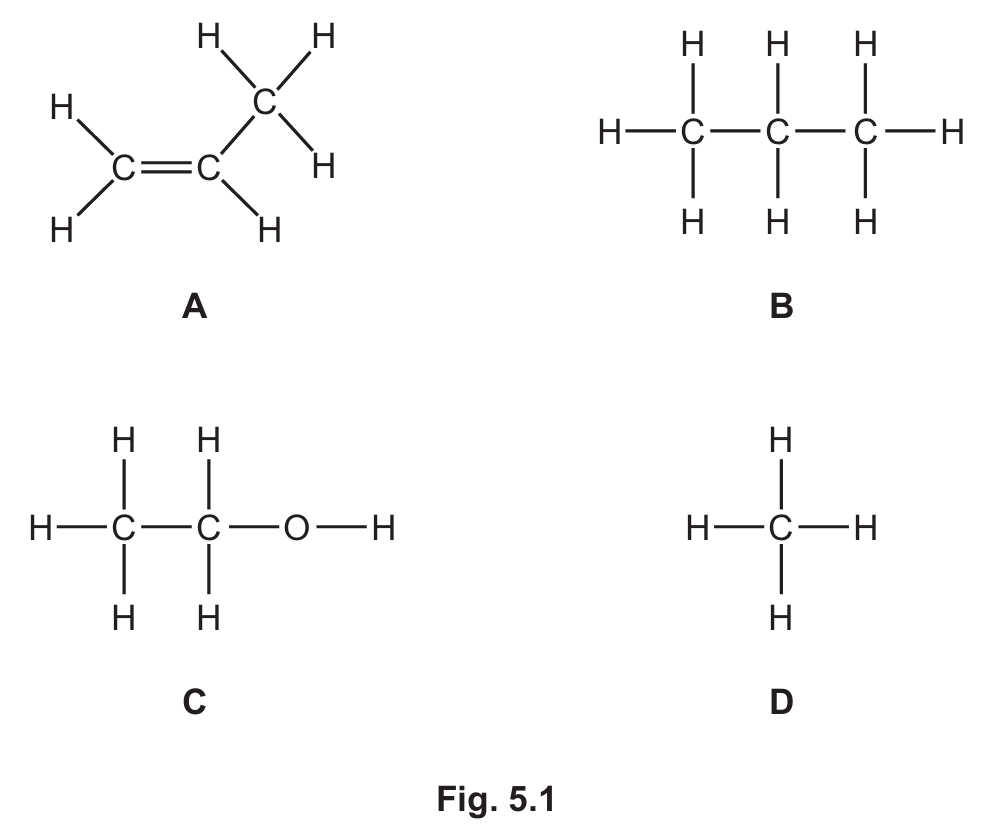
Most-appropriate topic codes (Cambridge IGCSE Co-ordinated Sciences 0654):
• Topic C11.1 — Formulas and terminology / Hydrocarbons (Part (a))
• Topic C11.3 — Fuels / Natural gas (Part (b))
• Topic C11.2 — Naming organic compounds (Part (c))
• Topic C11.7 — Polymers / Addition polymerisation (Part (d)(i) & (d)(ii))
• Topic C3.1 — Formulas / Balancing equations (Part (e))
▶️ Answer/Explanation
(a) Compound C is not a hydrocarbon because it contains oxygen; hydrocarbons contain only hydrogen and carbon.
Compound C has an -OH group (alcohol functional group), meaning it contains oxygen atoms in addition to carbon and hydrogen, so it is not a hydrocarbon.
(b) Natural gas
Compound D is methane (CH₄), which is the main constituent of natural gas, a fossil fuel formed from ancient organic matter.
(c) Propane
Compound B has the formula C₃H₈, which is the third member of the alkane homologous series, named propane.
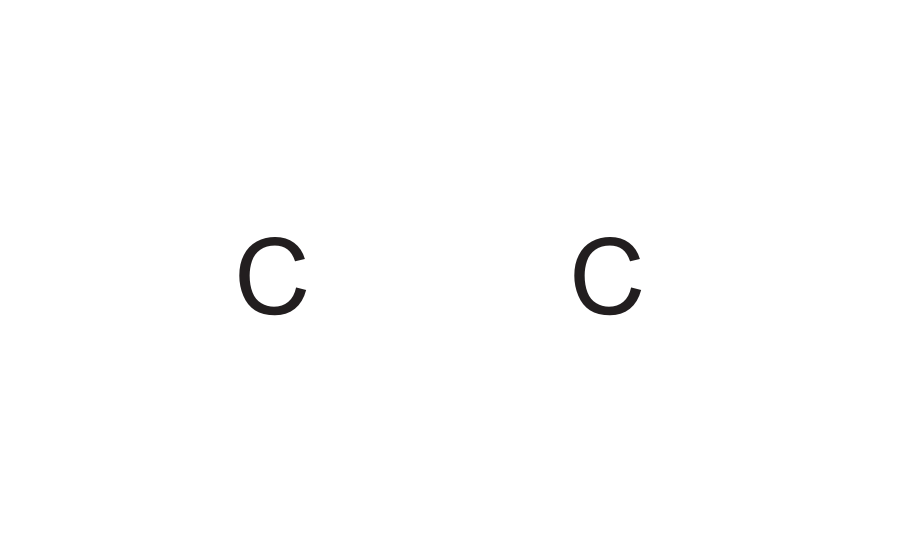
(d)(i) The polymer structure is –[–CH₂–CH₂–]– with single bonds between carbon atoms:
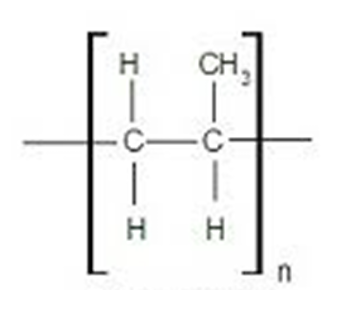
Ethene monomers (compound A with C=C bond) join by breaking the double bond and forming single bonds between carbon atoms in a long chain.
(d)(ii) Difference 1: Addition polymerisation only occurs in unsaturated monomers (with C=C bonds), while condensation polymerisation involves different types of monomers.
Difference 2: Addition polymerisation only forms the polymer molecule, whereas condensation polymerisation forms the polymer and a small molecule (like water) per linkage.
Addition polymerisation uses monomers with double bonds; condensation polymerisation joins monomers with functional groups, releasing a by-product.
(e) \( \text{C}_3\text{H}_8 + 5\text{O}_2 \rightarrow 3\text{CO}_2 + 4\text{H}_2\text{O} \)
Propane combustion requires 5 molecules of oxygen to produce 3 molecules of carbon dioxide and 4 molecules of water. The equation is balanced with 3 carbon, 8 hydrogen, and 10 oxygen atoms on both sides.
Question
Most-appropriate topic codes (Cambridge IGCSE Co-ordinated Sciences 0654):
• Topic C11.3 — Fuels
• Topic C11.4 — Alkanes
• Topic C11.5 — Alkenes
• Topic C3.3 — The mole and Avogadro constant
▶️ Answer/Explanation
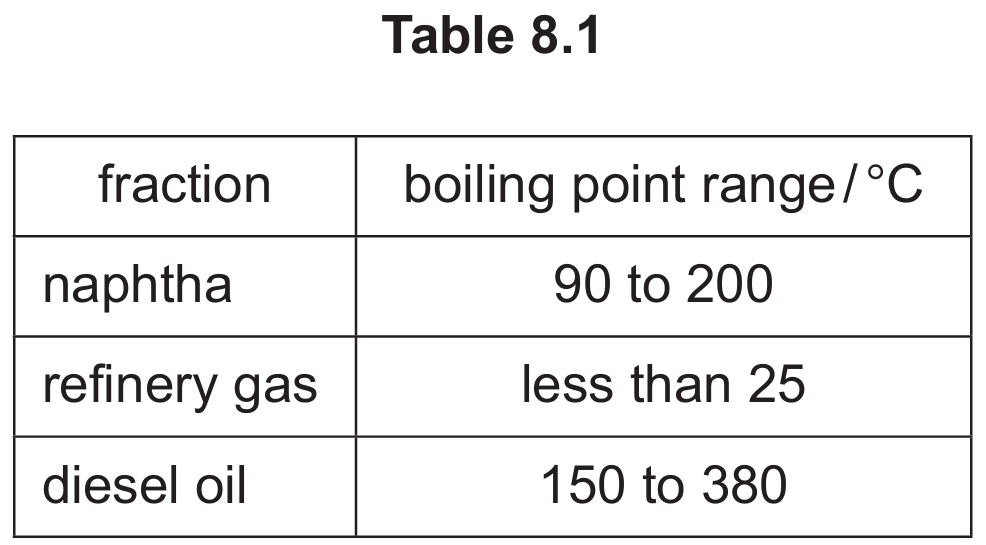
(a) refinery gas
In fractional distillation, the fraction with the lowest boiling point condenses at the top of the column where it is coolest. Refinery gas has the lowest boiling point range (< 25°C).
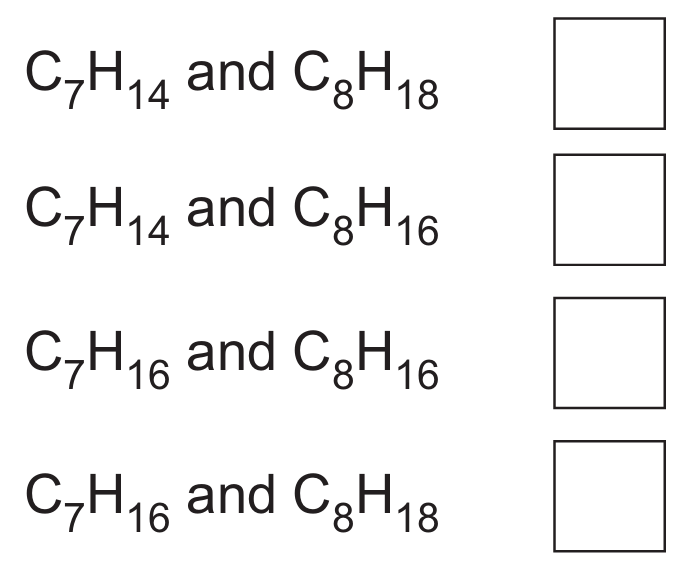
(b) C₇H₁₄ and C₈H₁₆
Alkenes are unsaturated hydrocarbons containing a C=C double bond. They turn aqueous bromine colourless through addition reactions. C₇H₁₄ and C₈H₁₆ have the general formula CₙH₂ₙ, characteristic of alkenes.
(c)(i) single ; saturated
Alkanes contain only single C–C bonds, making them saturated hydrocarbons. This means they can hold the maximum number of hydrogen atoms.
(c)(ii) 10,800 dm³
Molar mass of C₉H₂₀ = (9 × 12) + (20 × 1) = 128 g/mol
Moles of C₉H₂₀ = 6400 ÷ 128 = 50 mol
From the equation, 1 mol C₉H₂₀ produces 9 mol CO₂
Moles of CO₂ = 50 × 9 = 450 mol
Volume of CO₂ = 450 × 24 = 10,800 dm³
(d)
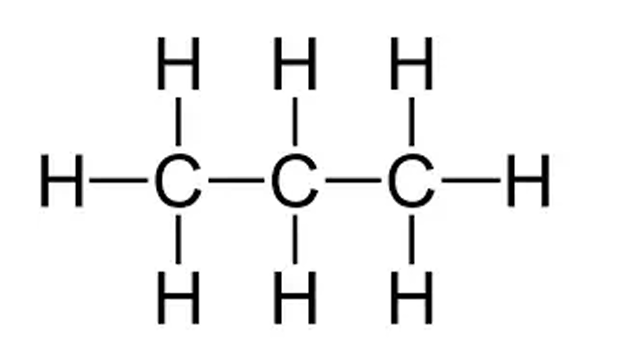
Propane has three carbon atoms connected by single bonds, with each carbon bonded to enough hydrogen atoms to complete its valence of four. Each line represents a covalent bond.