Home / iGCSE / Coordinated Sciences / C5.1 Exothermic and endothermic reactions Paper 4

CIE iGCSE Co-Ordinated Science C5.1 Exothermic and endothermic reactions Exam Style Questions Paper 4

Question
A student investigates the decomposition of hydrogen peroxide, \( \text{H}_2\text{O}_2 \).
The equation for the reaction is shown.
\( 2\text{H}_2\text{O}_2(\text{aq}) \rightarrow 2\text{H}_2\text{O}(\text{l}) + \text{O}_2(\text{g}) \)
(a) Describe a test and its positive result to identify the gas made in the reaction.
(b) The student uses manganese(IV) oxide as a catalyst in the reaction.
The catalyst speeds up the reaction.
State why the catalyst speeds up the reaction.
(c) The student measures the total volume of gas made every minute.
The student does the experiment using manganese(IV) oxide powder.
The student repeats the experiment using manganese(IV) oxide lumps.
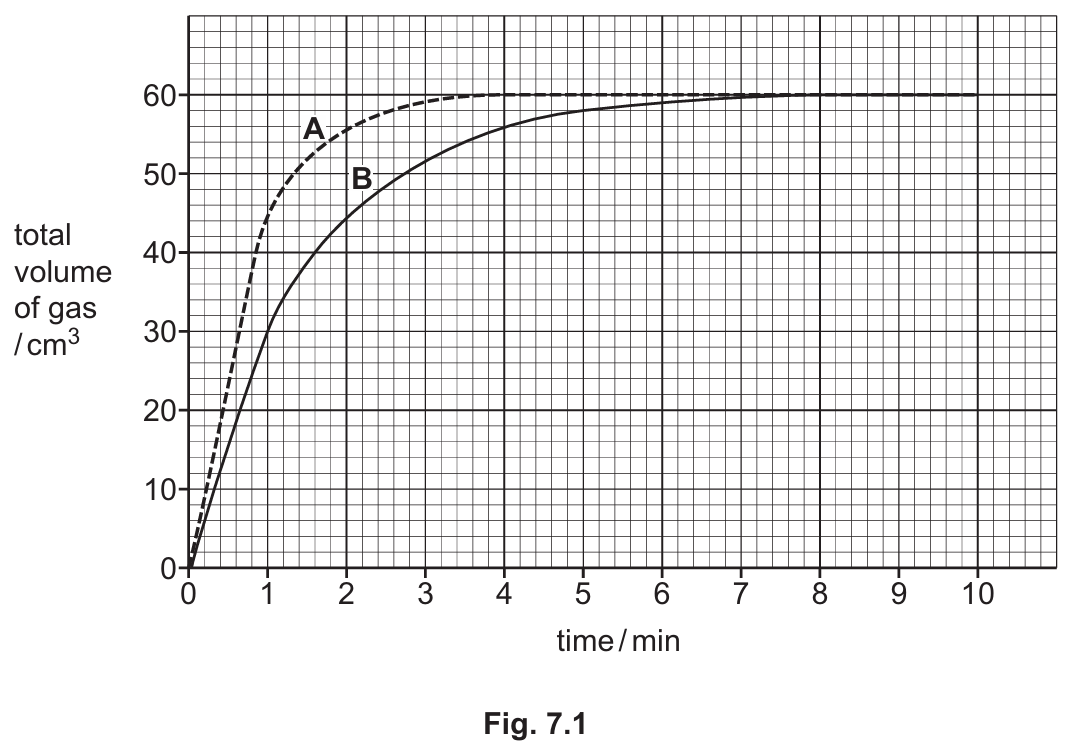
Fig. 7.1 shows a graph of the student’s results.
State which line, A or B, shows the results using manganese(IV) oxide powder.
Use the graph to explain your answer.
(d) The decomposition of hydrogen peroxide is highly exothermic.
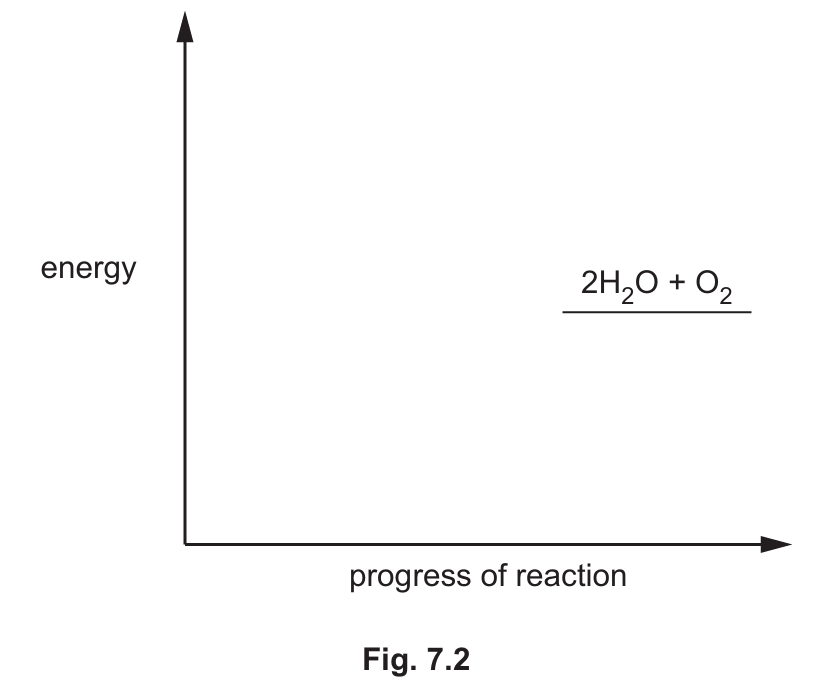
(i) Complete Fig. 7.2 to show an energy level diagram for the reaction.
Label the activation energy and the energy change (enthalpy change) on your diagram.
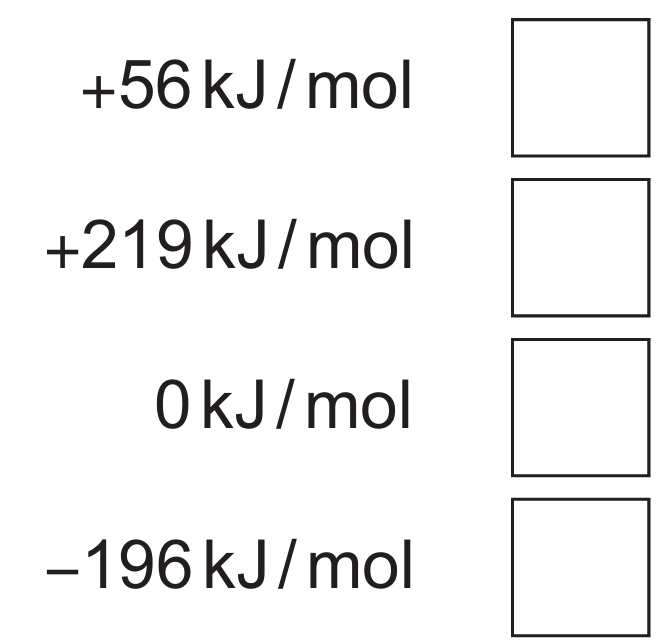
(ii) Suggest the enthalpy change, \( \Delta H \), for the decomposition reaction.
Tick (✔) one box.

Most-appropriate topic codes (Cambridge IGCSE Co-ordinated Sciences 0654):

• Topic C12.5 — Qualitative analysis / Gas tests (Part (a))
• Topic C6.2 — Rate of reaction / Catalysts (Part (b) & (c))
• Topic C5.1 — Exothermic and endothermic reactions / Energy level diagrams (Part (d)(i) & (d)(ii))

▶️ Answer/Explanation

(a) Test: Use a glowing splint. Positive result: The glowing splint relights.

Oxygen gas supports combustion, so a glowing splint bursts back into flame when placed in a test tube of oxygen.

(b) The catalyst decreases the activation energy (Eₐ) of the reaction.

By providing an alternative pathway with a lower energy barrier, more particles have sufficient energy to react, increasing the rate without being consumed.

(c) Line A shows the results using manganese(IV) oxide powder.

Explanation: Line A has a steeper gradient / is steeper, indicating a higher rate of reaction / faster reaction / the reaction finishes first / volume of gas increases faster.
Powdered catalyst has a larger surface area than lumps, providing more active sites for the reaction, so the rate of gas production is faster.

(d)(i) Energy level diagram for exothermic reaction:

  • The reactants (2H₂O₂) line should be drawn above the products (2H₂O + O₂) line.
  • An arrow should be drawn from the reactants level to the peak of the curve and labelled activation energy.
  • An arrow should be drawn from the reactants level down to the products level and labelled energy change / enthalpy change.
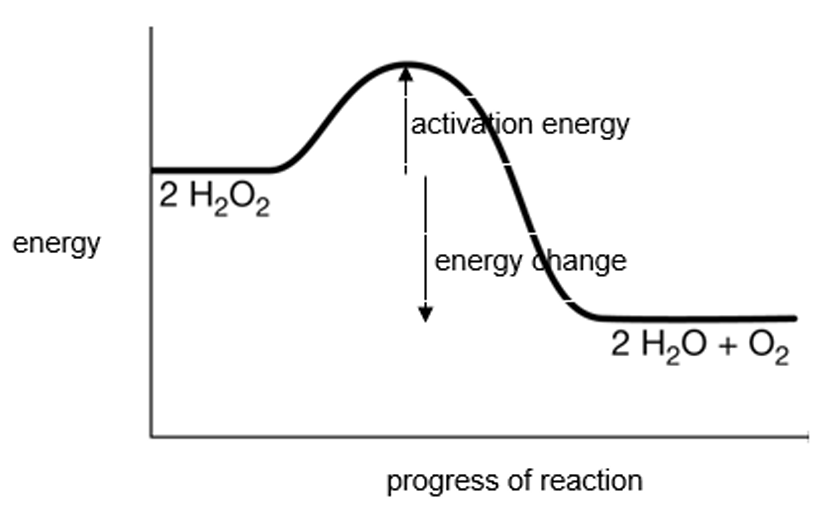
In an exothermic reaction, the products have less energy than the reactants, and the energy change is negative (released to the surroundings).

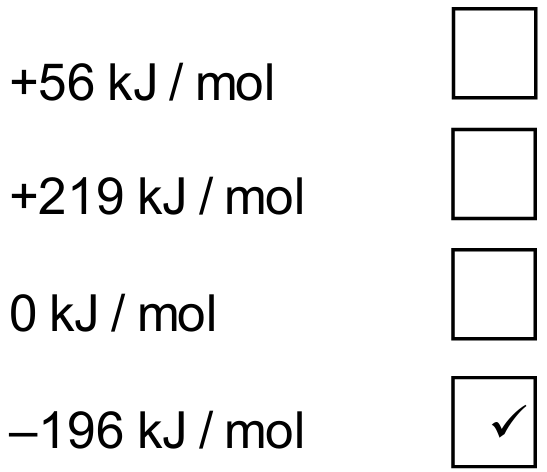
(d)(ii) ✔ -196 kJ/mol

The decomposition of hydrogen peroxide is highly exothermic, so \( \Delta H \) is negative. The value -196 kJ/mol is the standard enthalpy change for this reaction.

Question

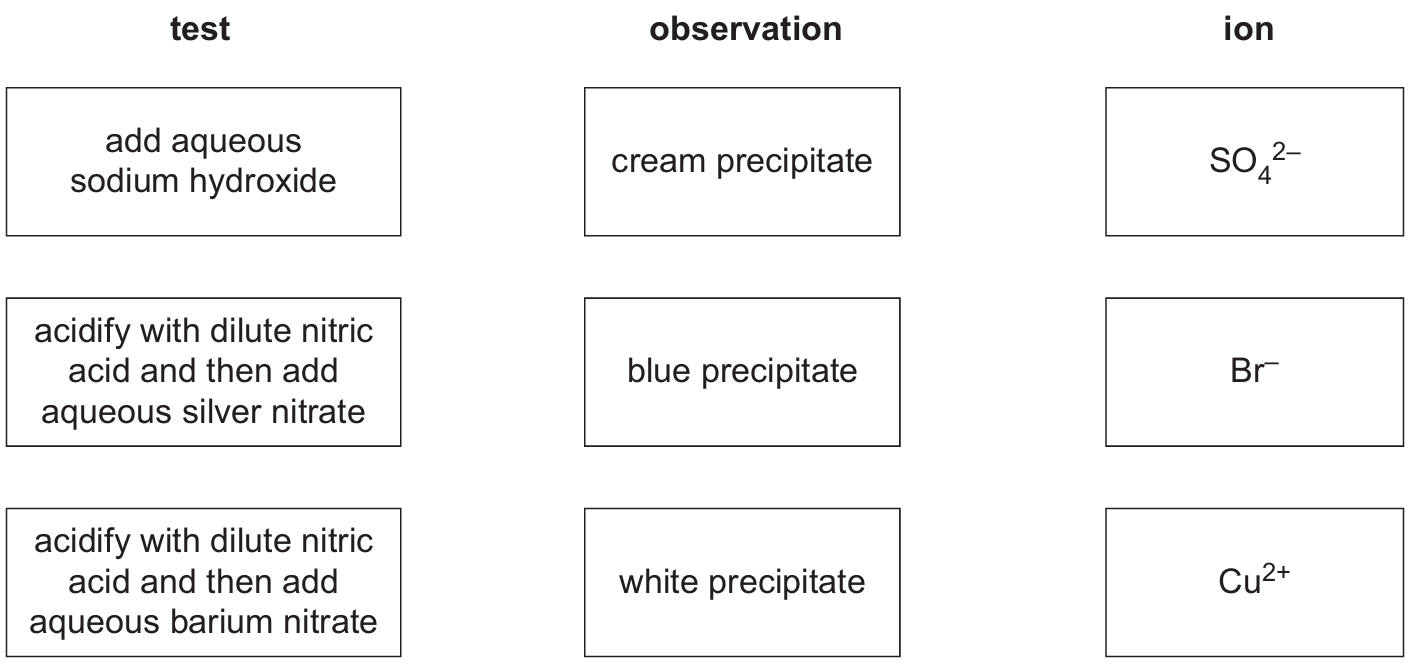
(a) A student tests three different solutions to identify the ion in each solution.
Draw lines to match each test to the observation and the ion in each solution.
(b) Dilute sulfuric acid, H₂SO₄, reacts with solid copper oxide, CuO. Copper sulfate solution and water are made.
(i) Construct the balanced symbol equation for this reaction. Include state symbols.
(……) + (……) → (……) + (……)
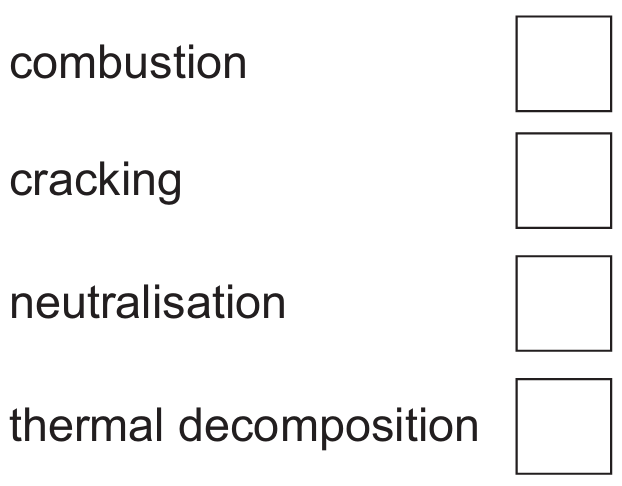
(ii) Tick \((\checkmark)\) the correct box to identify the type of reaction that takes place.
(iii) The reaction between dilute sulfuric acid and copper oxide is faster when more concentrated acid is used.
Explain why, using collision theory.
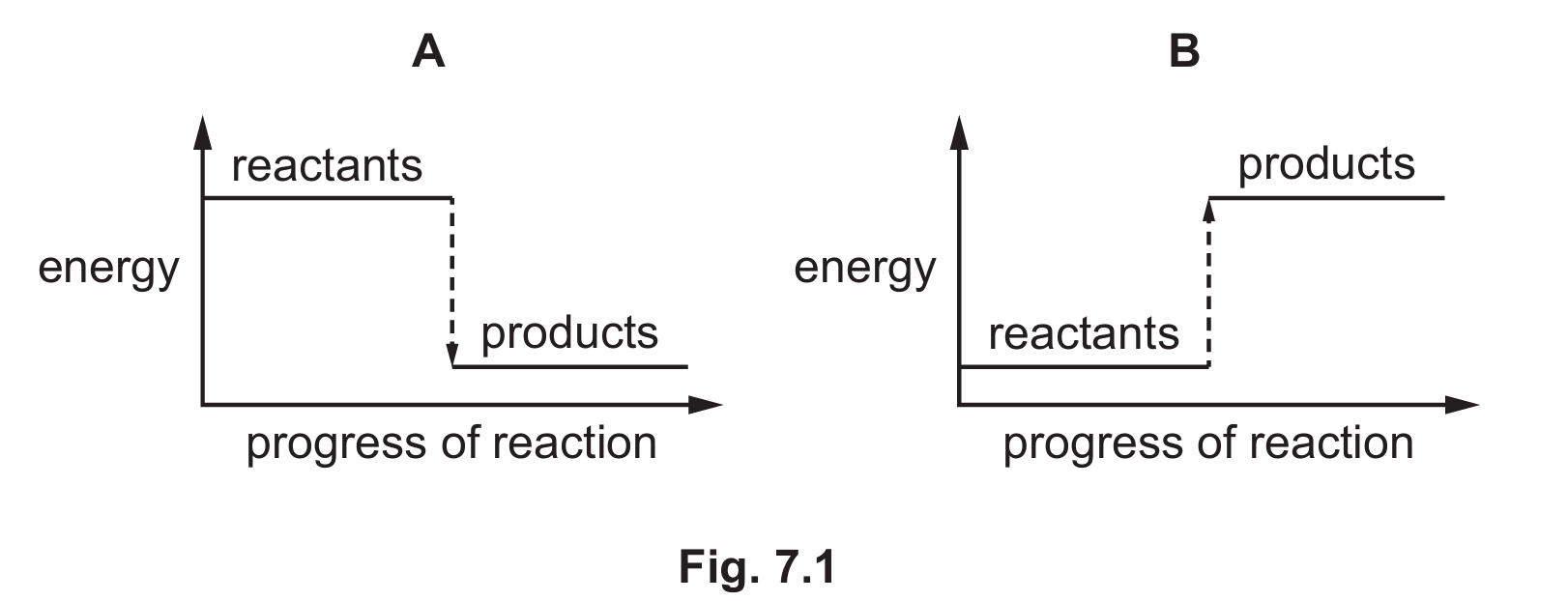
(iv) The enthalpy change, \(\Delta H\), for the reaction is negative.
Fig. 7.1 shows two reaction pathway diagrams, A and B.
State which of these reaction pathway diagrams, A or B, represents the energy change for this reaction. Explain your answer.

Most-appropriate topic codes (Cambridge IGCSE Co-ordinated Sciences 0654):

• Topic C12.5 — Qualitative analysis
• Topic C7.1 — Characteristic properties of acids and bases
• Topic C6.2 — Rate of reaction
• Topic C5.1 — Exothermic and endothermic reactions

▶️ Answer/Explanation

(a)
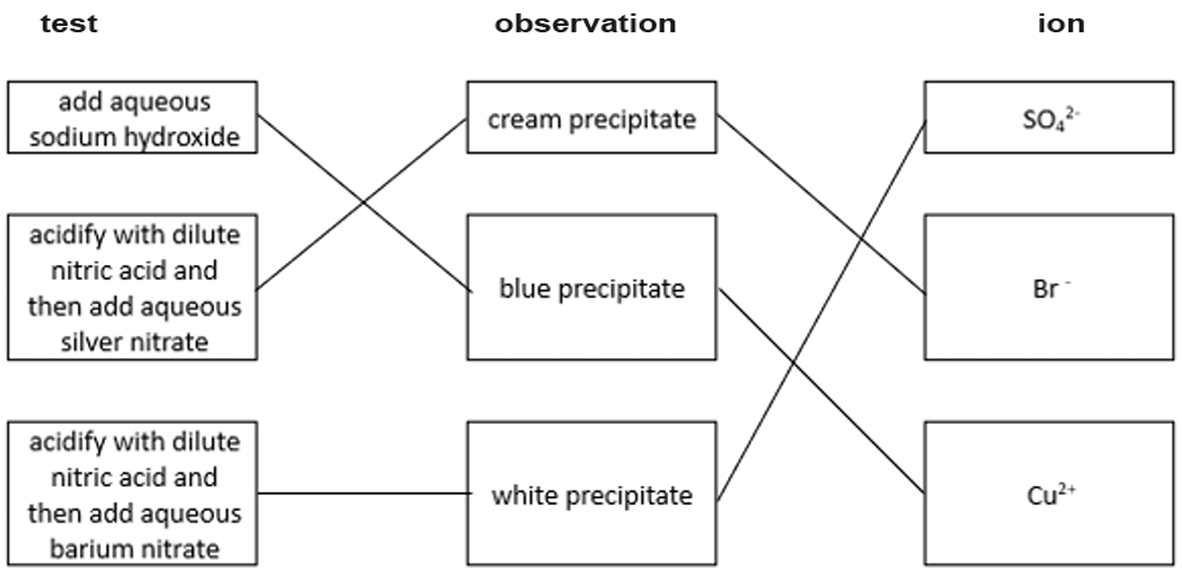
These tests are standard qualitative analysis techniques used to identify ions in solution. The colour of precipitates formed with specific reagents helps identify the ions present.

(b)(i) H₂SO₄(aq) + CuO(s) → CuSO₄(aq) + H₂O(l)
Sulfuric acid reacts with copper oxide to form copper sulfate and water. Copper sulfate is a soluble salt, so it is in aqueous solution.

(b)(ii) neutralisation
This is an acid-base reaction where an acid (H₂SO₄) reacts with a base (CuO) to form a salt (CuSO₄) and water.

(b)(iii) more particles per unit volume ; frequency of collision (of particles) is higher
Higher concentration means more acid particles in the same volume, increasing the frequency of successful collisions with copper oxide particles and speeding up the reaction.

(b)(iv) diagram A ; any two from:

• exothermic
• products have lower energy than reactants
• energy is released to the surroundings

A negative ΔH indicates an exothermic reaction, where the products have lower energy than the reactants and energy is released to the surroundings. Diagram A shows this energy profile.

Scroll to Top