
CIE iGCSE Co-Ordinated Science P1.5.3 Centre of gravity Exam Style Questions Paper 3
Question
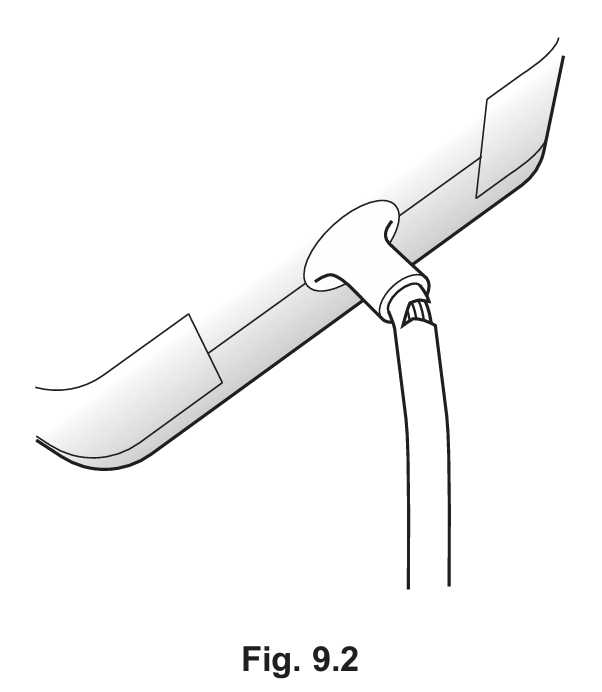
The power cable insulation is damaged.
Most-appropriate topic codes (Cambridge IGCSE Co-ordinated Sciences 0654):
• Topic P1.2 — Motion (Part (a))
• Topic P4.4 — Electrical safety (Part (b))
• Topic P3.2.1 — Reflection of light (Part (c))
• Topic P5.2.2 — The three types of nuclear emission (Part (d)(i))
• Topic P5.2.5 — Applications and safety precautions (Part (d)(ii))
• Topic P1.5.2 & P1.5.3 — Turning effect of forces & Centre of gravity (Part (e))
▶️ Answer/Explanation
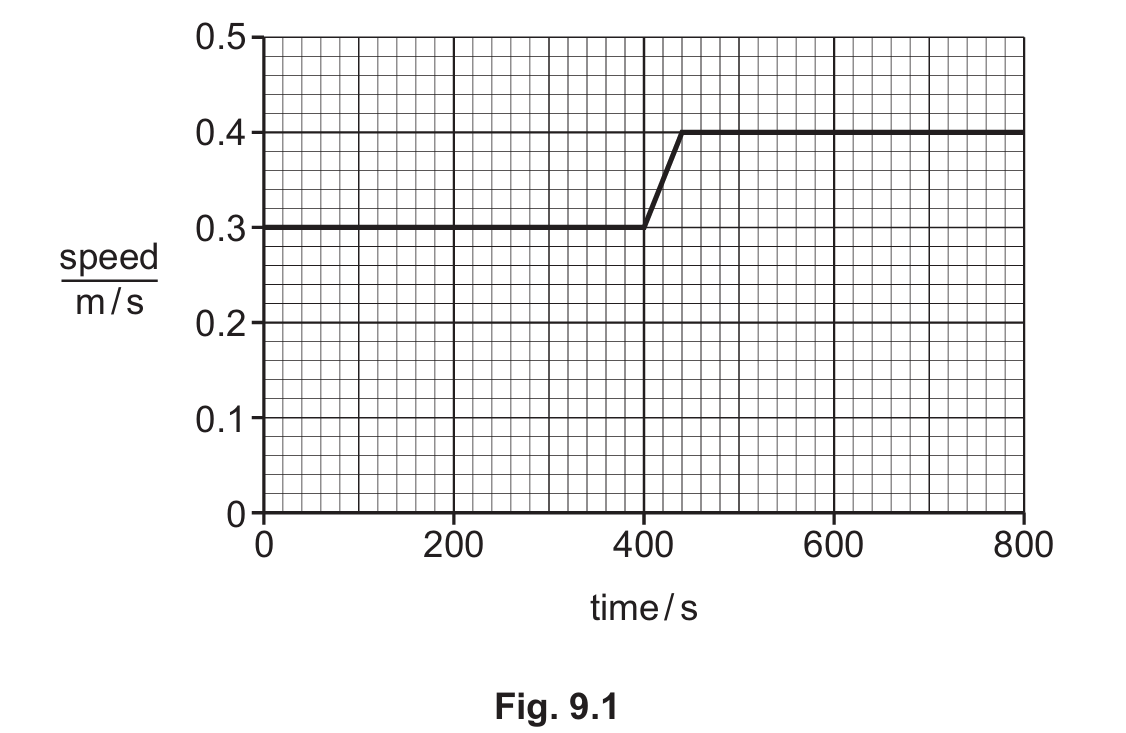
(a)(i) C anywhere between t = 0 and t = 400 or between t = 440 and t = 800
Constant speed is shown by a horizontal line on a speed-time graph. The graph has two horizontal sections: from 0 to 400 seconds and from 440 to 800 seconds.
(a)(ii) anywhere from t = 400 s to t = 440 s
Acceleration is shown by a line with a positive gradient (sloping upwards). The graph shows this between 400 and 440 seconds, where the speed increases from 0.2 m/s to 0.4 m/s.
(a)(iii) 0.4 m/s
The maximum speed is the highest point on the graph, which is 0.4 m/s.
(b) electrocution/electric shock
Damaged insulation exposes the live wire inside the cable. If a person touches the exposed wire, they could receive an electric shock or be electrocuted, which can be fatal.
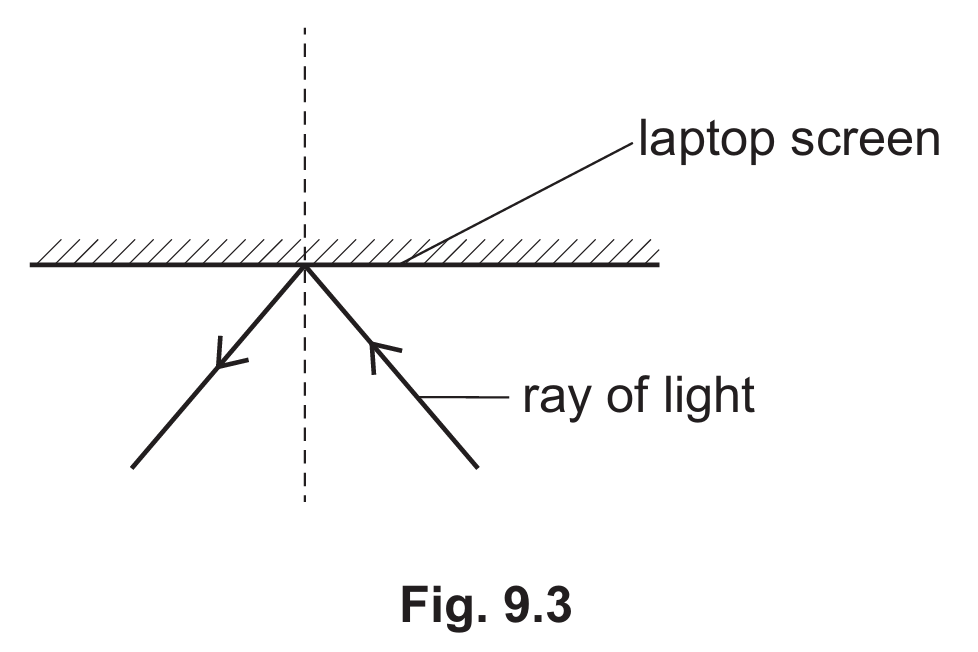
(c)(i) i and r labelled correctly on the figure
The angle of incidence (\(i\)) is the angle between the incident ray and the normal (a line perpendicular to the surface at the point of reflection). The angle of reflection (\(r\)) is the angle between the reflected ray and the normal.
(c)(ii) angle of incidence = angle of reflection
This is the law of reflection: the angle of incidence is always equal to the angle of reflection.
(d)(i) negative/minus 1 / –
Beta particles (\(\beta^-\)) are high-speed electrons emitted from the nucleus. They have a relative charge of -1.
(d)(ii) in a lead container
Radioactive sources should be stored in lead containers. Lead is dense and absorbs the radiation, shielding people from exposure. The container should also be labelled with a radiation warning symbol.
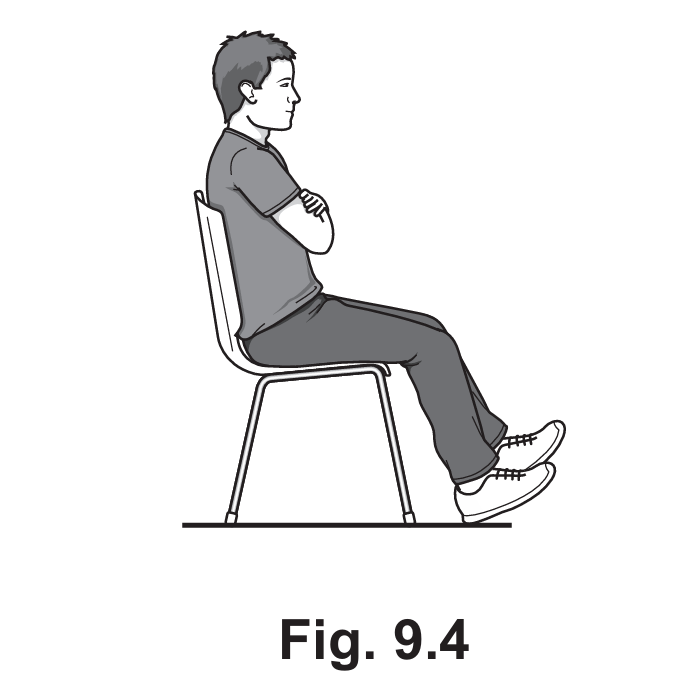
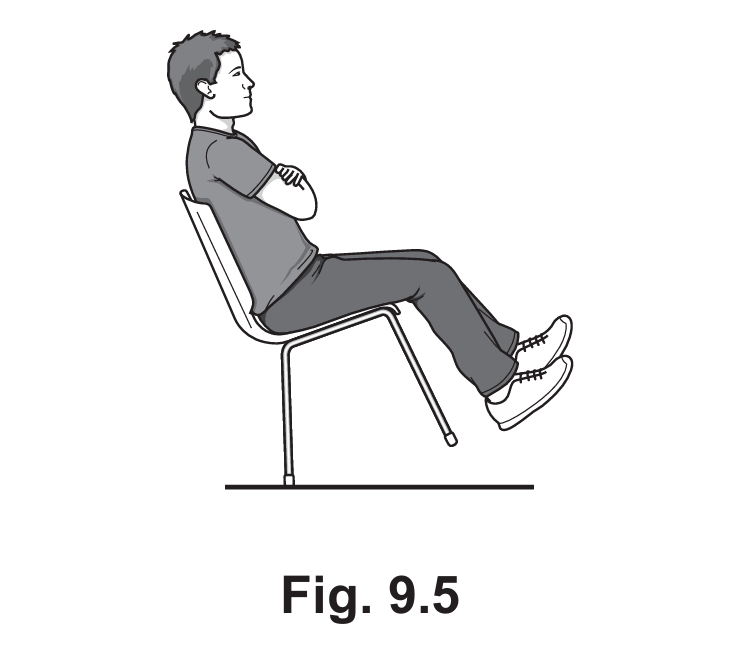
(e) The centre of gravity is not over the base; a moment is produced by the weight.
For an object to be stable, its centre of gravity must be above the area of its base. When the chair is tilted backwards, the centre of gravity moves outside the base. The weight of the student and chair then acts at a distance from the pivot (the edge of the base), creating a turning effect (moment). This moment causes the student and chair to fall over.