
▶️ Answer/Explanation
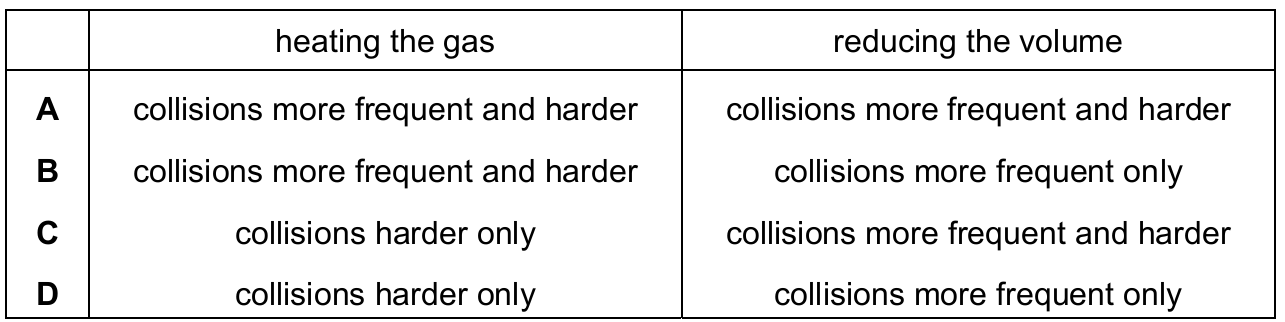
Heating the gas gives the molecules more kinetic energy, so they move faster and hit the walls harder and more often.
Reducing the volume packs the same number of molecules into a smaller space, so they hit the walls more frequently, but each collision is no harder since their speed hasn’t changed.
✅ Answer: (B)
Reducing the volume packs the same number of molecules into a smaller space, so they hit the walls more frequently, but each collision is no harder since their speed hasn’t changed.
✅ Answer: (B)
▶️ Answer/Explanation
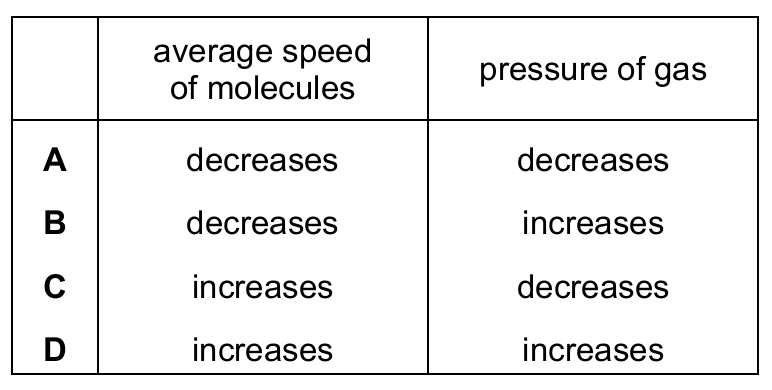
Cooling a gas reduces the kinetic energy of its molecules, so the average speed of the molecules decreases.
Slower-moving molecules collide with the container walls less often and with less force per collision.
Fewer, gentler collisions per unit area mean the pressure of the gas decreases.
✅ Answer: (A)
Slower-moving molecules collide with the container walls less often and with less force per collision.
Fewer, gentler collisions per unit area mean the pressure of the gas decreases.
✅ Answer: (A)
▶️ Answer/Explanation
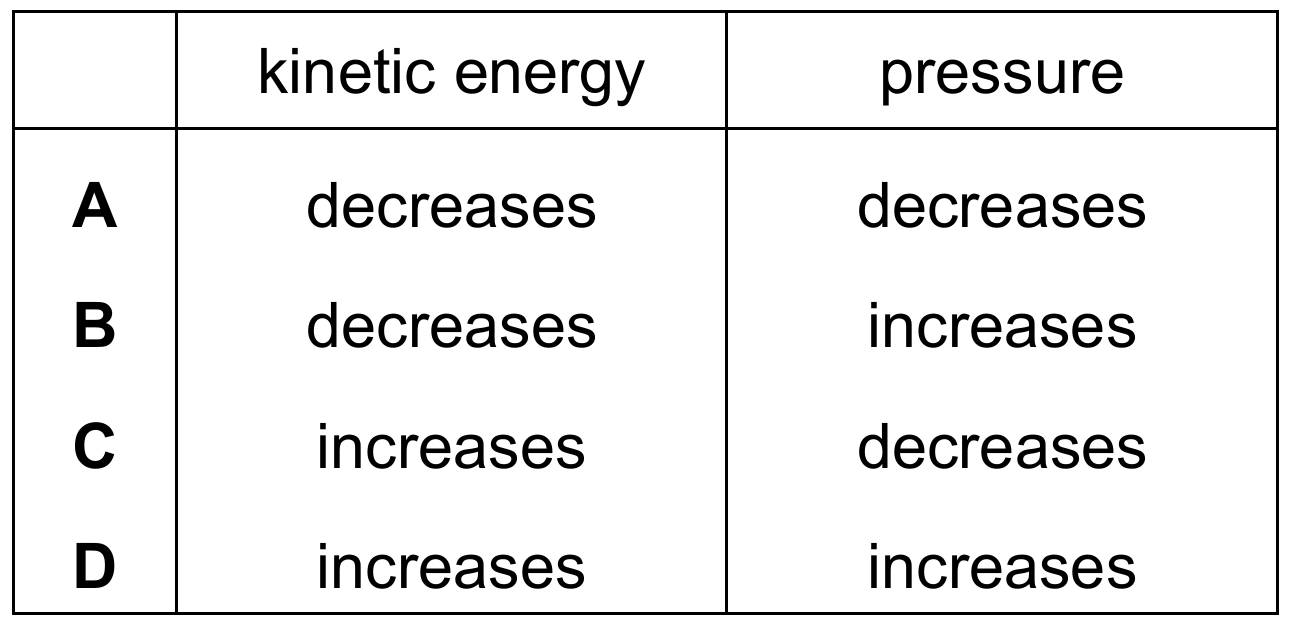
Heating the gas increases the average kinetic energy of its molecules.
Faster-moving molecules collide with the container walls more often and with greater force.
At constant volume, this means the pressure of the gas increases.
✅ Answer: (D)
Faster-moving molecules collide with the container walls more often and with greater force.
At constant volume, this means the pressure of the gas increases.
✅ Answer: (D)
▶️ Answer/Explanation
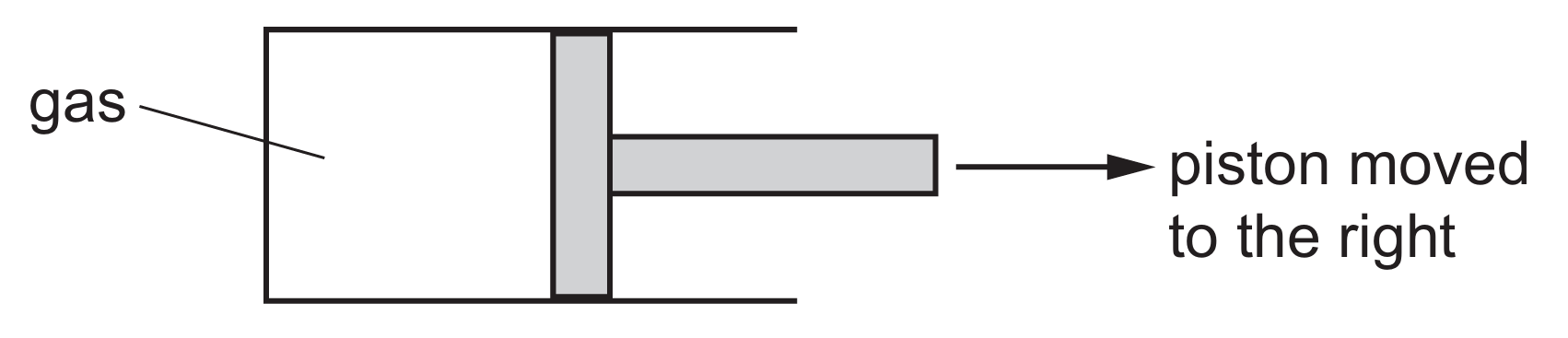
Moving the piston to the right increases the volume of the container. At constant temperature, the kinetic energy of the gas particles remains constant. With larger volume, the particles have more space to move, so they collide with the walls less frequently, causing pressure to decrease.
✅ Answer: (C)
✅ Answer: (C)