
CIE iGCSE Co-Ordinated Science P4.2.5 Electrical energy and electrical power Exam Style Questions Paper 3
Question
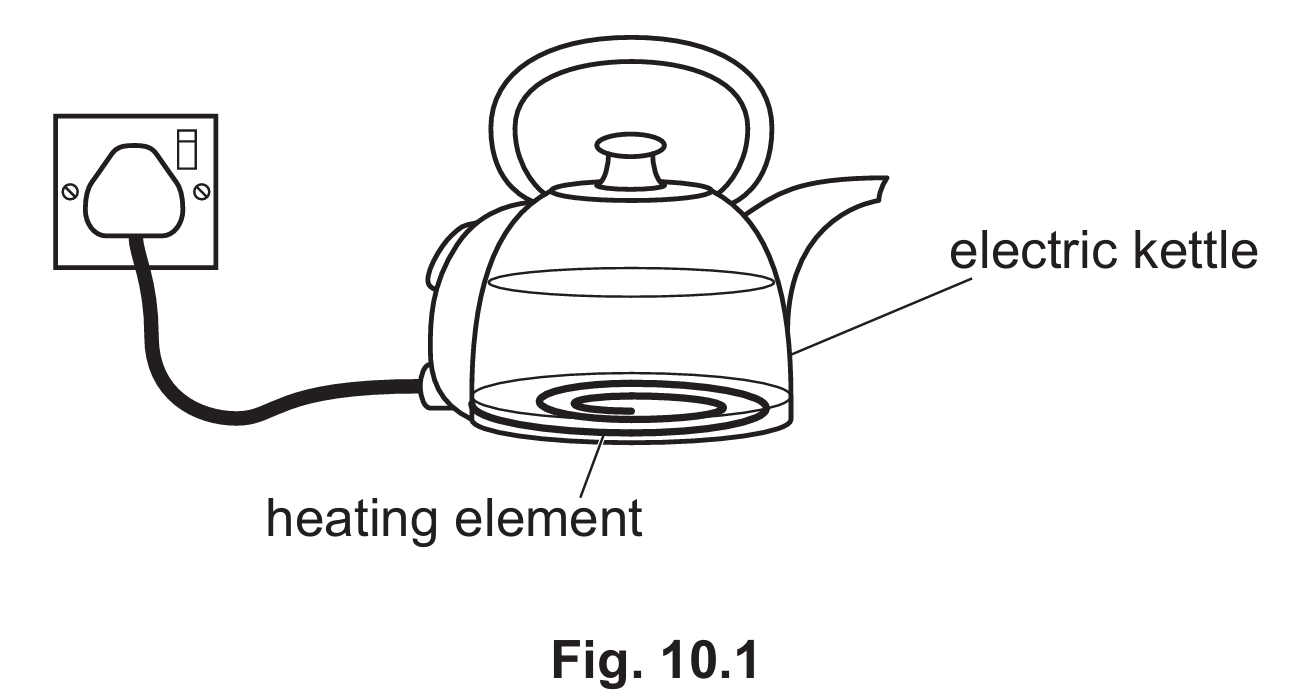
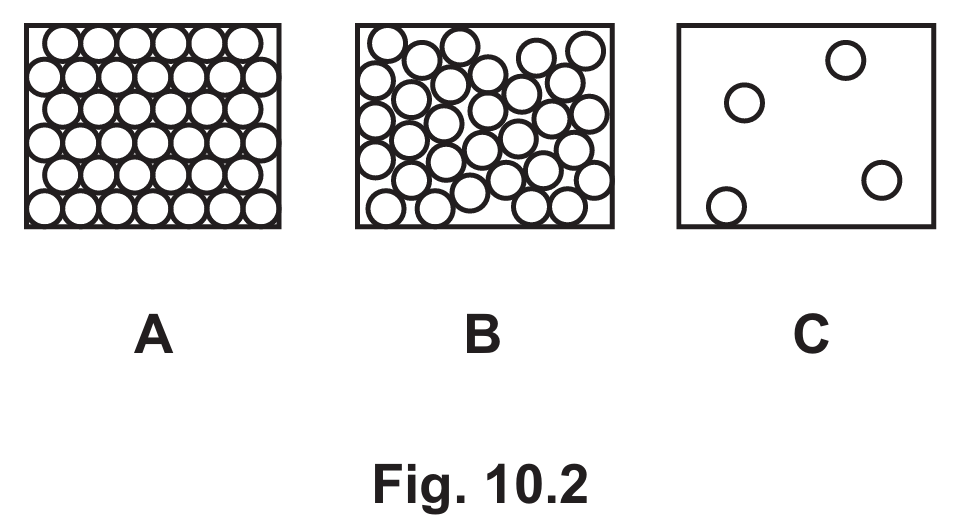
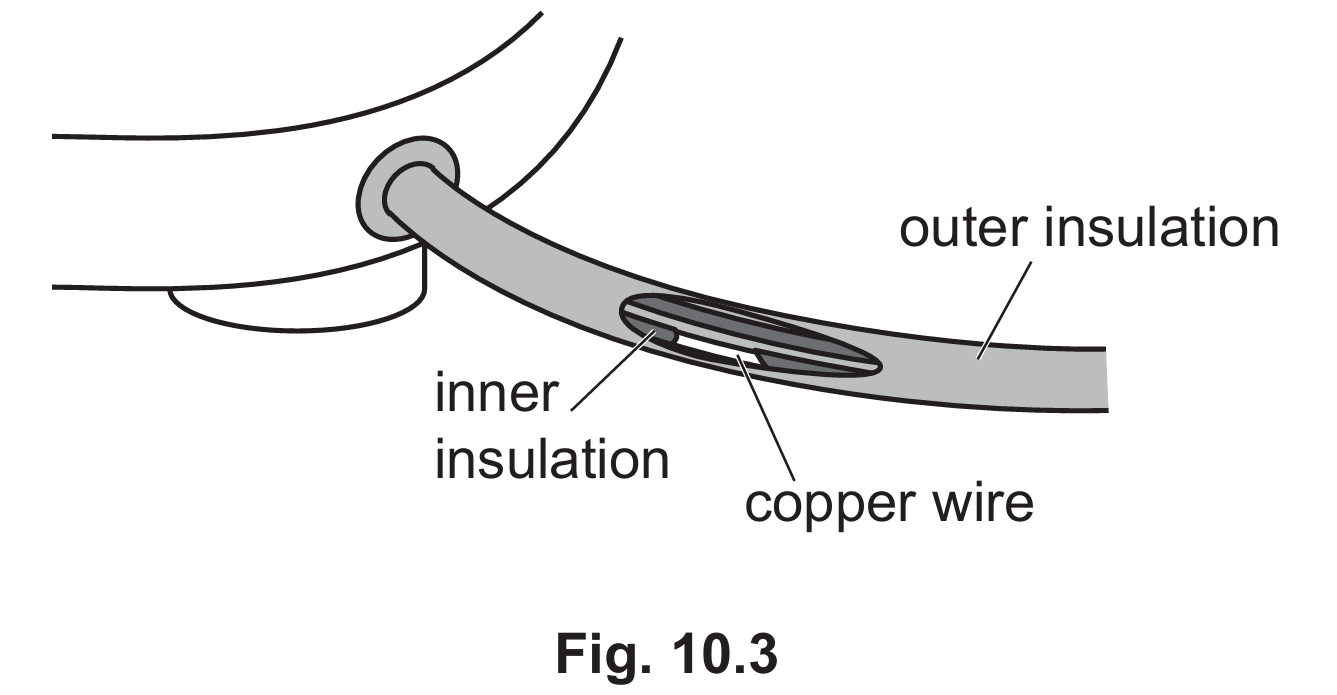
Most-appropriate topic codes (Cambridge IGCSE Coordinated Sciences 0654):
• Topic P2.3.2 — Convection (Part (a))
• Topic P2.1.1 — States of matter (Part (b))
• Topic P4.2.5 — Electrical energy and electrical power (Part (c)(i), (c)(ii), (c)(iii))
• Topic P4.4 — Electrical safety (Part (d))
▶️ Answer/Explanation
(a) convection
Convection is the transfer of thermal energy in fluids (liquids and gases) by the movement of the fluid itself. Heated water rises and cooler water sinks, creating convection currents.
(b) (gas is diagram) C and (liquid is diagram) B
In a gas (C), particles are far apart and move randomly. In a liquid (B), particles are close together but can slide past each other.
(c)(i) P = IV (in any form) OR (current =) 3000/240; 12.5 (A)
Using P = IV, I = P/V = 3000/240 = 12.5 A.
(c)(ii) energy = power × time (in any form); conversion of minutes to hours; conversion of W to kW; (= 0.5 kWh)
Energy = 3000 W × (10/60) h = 3.0 kW × 0.167 h = 0.5 kWh.
(c)(iii) ($) 0.25
Cost = 0.5 kWh × $0.50/kWh = $0.25.
(d) insulation damaged / exposed (live) wire; electric shock
Damaged insulation exposes live wires. If a person touches the exposed wire, they may receive an electric shock, which can be fatal as current passes through the body.
Question
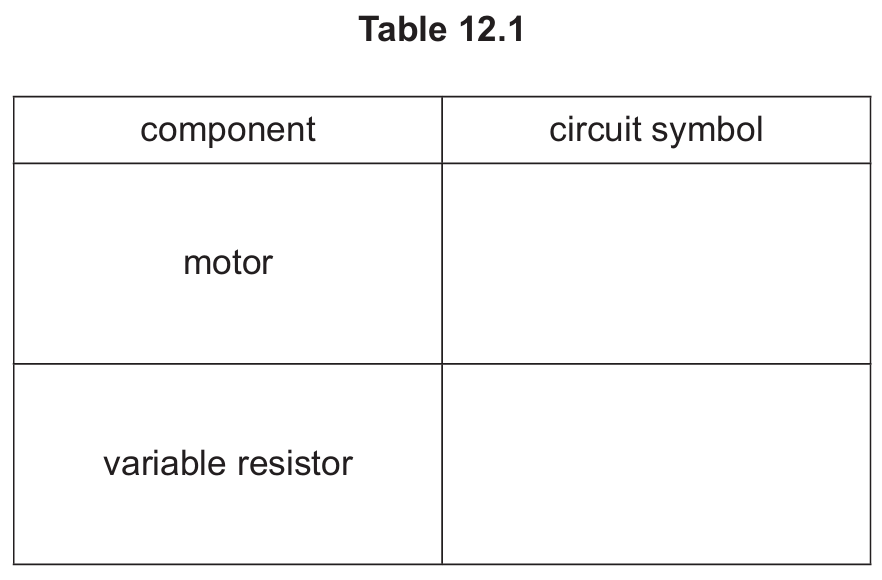
Topic codes (Cambridge IGCSE Co-ordinated Sciences 0654):
• Topic P4.3.1 — Circuit diagrams and circuit components
• Topic P1.6.3 — Energy resources
• Topic P4.2.4 — Resistance
• Topic P4.2.5 — Electrical energy and electrical power
• Topic P2.2.2 — Melting, boiling and evaporation
▶️ Answer/Explanation
(a) Motor: circle with ‘M’ inside. Variable resistor: rectangle (or zigzag) with a diagonal arrow across it.
The motor symbol indicates conversion of electrical energy to kinetic energy.
The arrow on the variable resistor symbol shows that its resistance can be adjusted, making it useful for controlling current in circuits such as dimmer switches or volume controls.
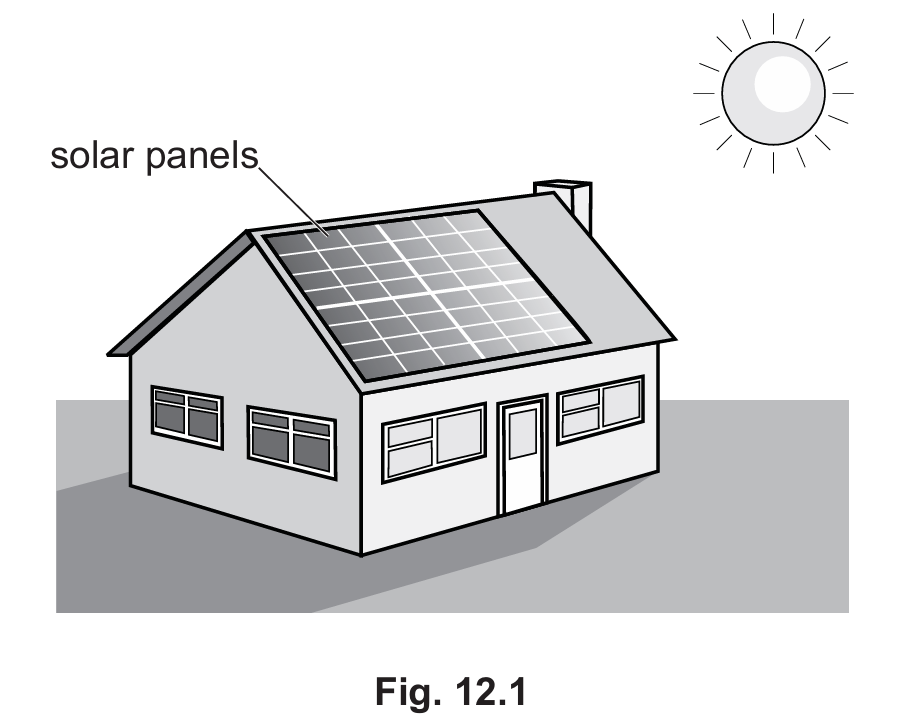
(b) Advantage: renewable / produces no greenhouse gases. Disadvantage: does not work at night / only works in sufficient sunlight.
Solar cells convert light energy directly into electricity with no fuel costs and zero emissions during operation.
However, their output depends entirely on sunlight availability, making them unreliable without battery storage, and initial installation costs can be high.
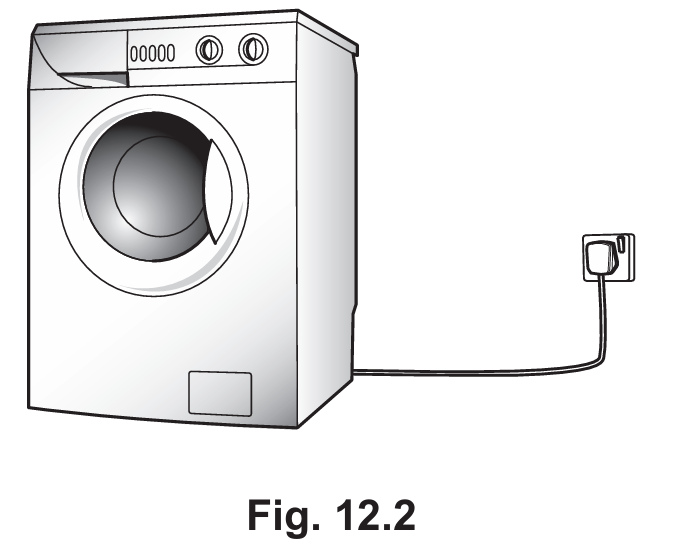
(c)(i) Current in the washing machine:
\(I = \dfrac{P}{V} = \dfrac{2500}{230} \approx \textbf{11\,A}\)
Using \(P = IV\) and rearranging for current, dividing the power (2500 W) by the supply voltage (230 V) gives approximately 10.87 A, which rounds to 11 A to 2 significant figures.
(c)(ii) Resistance of the heating element:
\(R = \dfrac{V}{I} = \dfrac{230}{3.0} \approx 77\,\Omega\)
Applying Ohm’s law \(V = IR\) and rearranging gives resistance as voltage divided by current.
The high resistance of the element is what causes electrical energy to be converted efficiently into heat.
(c)(iii) The most energetic particles near the liquid surface have enough kinetic energy to overcome intermolecular attractions and escape into the gas phase.
Because it is the fastest-moving particles that escape, the average kinetic energy of the remaining liquid falls, causing the liquid to cool.
Evaporation can occur at any temperature, unlike boiling which requires the entire liquid to reach a fixed boiling point.