IGCSE Biology Mock – Set 1 Paper 1-Updated 2026
IGCSE Biology Mock – Set 1 Paper 1 – Updated 2026
Preparing for your CIE IGCSE Biology exam can be daunting, but with the right approach, you can achieve your goals with CIE iGCSE Biology Mock test.
Ace your CIE iGCSE Biology exam! Find exam-style questions, detailed notes, and helpful resources to boost your understanding.
iGCSE Practice Questions, Past Papers, Flashcards and notes available for iGCSE Students at IITian Academy.
Question

B nutrition and excretion
C respiration and growth
D sensitivity and reproduction
▶️ Answer/Explanation
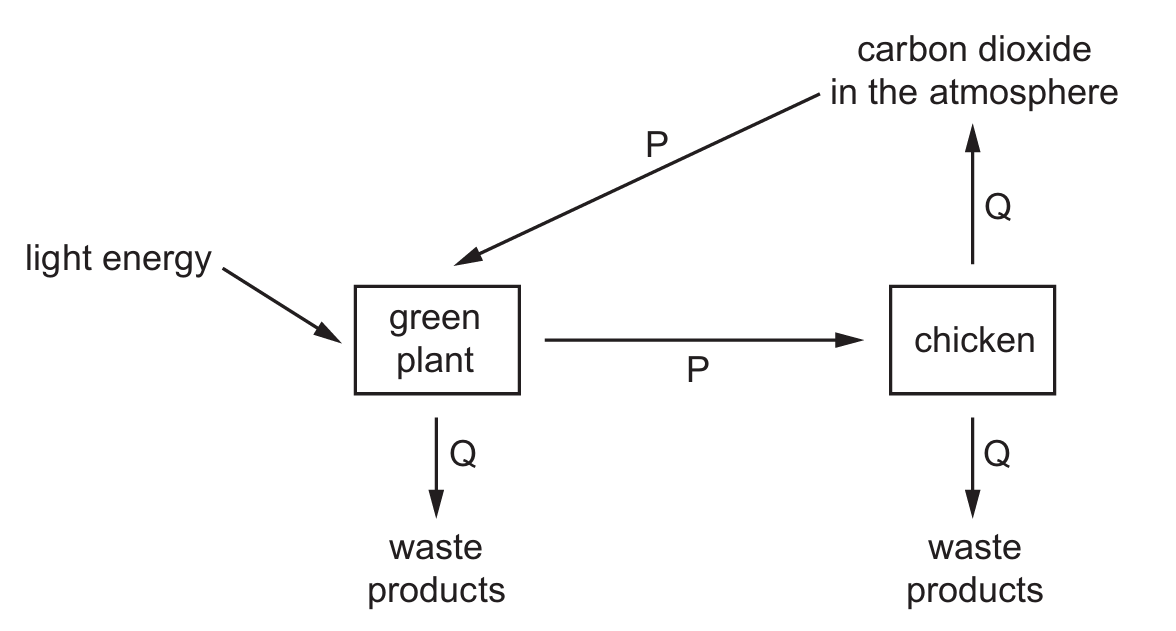
By observing the flow of the diagram, we can identify the specific biological functions occurring at each label:
1. Identification of Arrow $P$ (Nutrition):
This arrow represents the intake of energy and materials. We see $P$ moving from the atmosphere into the plant (photosynthesis) and from the plant into the chicken (feeding). Both are forms of nutrition.
2. Identification of Arrow $Q$ (Excretion):
This arrow tracks the removal of substances from the organisms. It leads directly to “waste products” and shows the release of $CO_2$ from the chicken. The removal of metabolic waste is the definition of excretion.
Summary:
Since $P$ involves taking in nutrients and $Q$ involves getting rid of waste, option B is the only logical choice.
Question

- A It is an arachnid, because the body is in segments.
- B It is a crustacean, because the legs have joints.
- C It is an insect, because there are three pairs of legs.
- D It is a myriapod, because there are two antennae.
▶️ Answer/Explanation
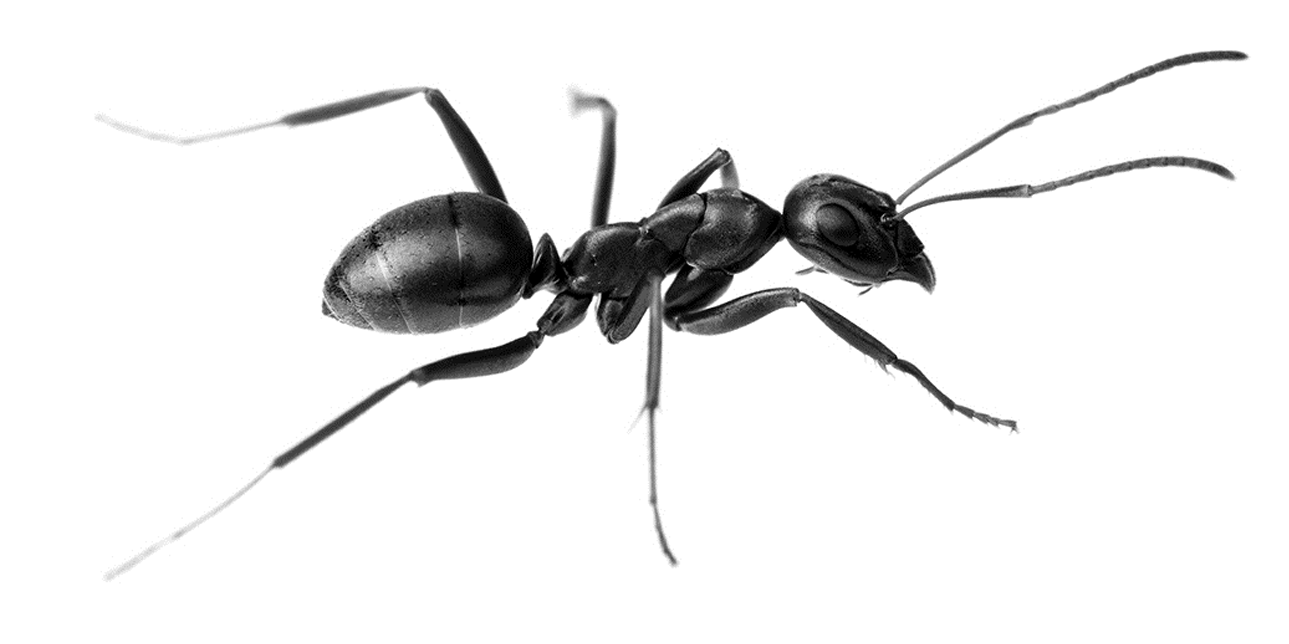
The correct answer is C.
The organism shown is an ant ($\textit{Formica fusca}$), which belongs to the class Insecta. The defining characteristic that distinguishes insects from other arthropod groups is the presence of three pairs of legs (a total of $6$ legs).
Question
- A cell vacuoles
- B chloroplasts
- C phloem
- D xylem
▶️ Answer/Explanation
Correct Answer: B
Carbohydrates (such as glucose and starch) are produced during the process of photosynthesis. This process takes place within specialized organelles called chloroplasts found in the cells of green leaves.
