Home / iGCSE / CIE iGCSE Biology

IGCSE Biology Mock – Set 3 Paper 2-Updated 2026

IGCSE Biology Mock – Set 3 Paper 2 – Updated 2026

Preparing for your CIE IGCSE Biology exam can be daunting, but with the right approach, you can achieve your goals with CIE iGCSE Biology Mock test.

Ace your CIE iGCSE Biology exam! Find exam-style questions, detailed notes, and helpful resources to boost your understanding.

iGCSE Practice Questions, Past Papers, Flashcards and notes available for iGCSE Students at IITian Academy.

CIE iGCSE Biology Mock test – All Sets

Question 

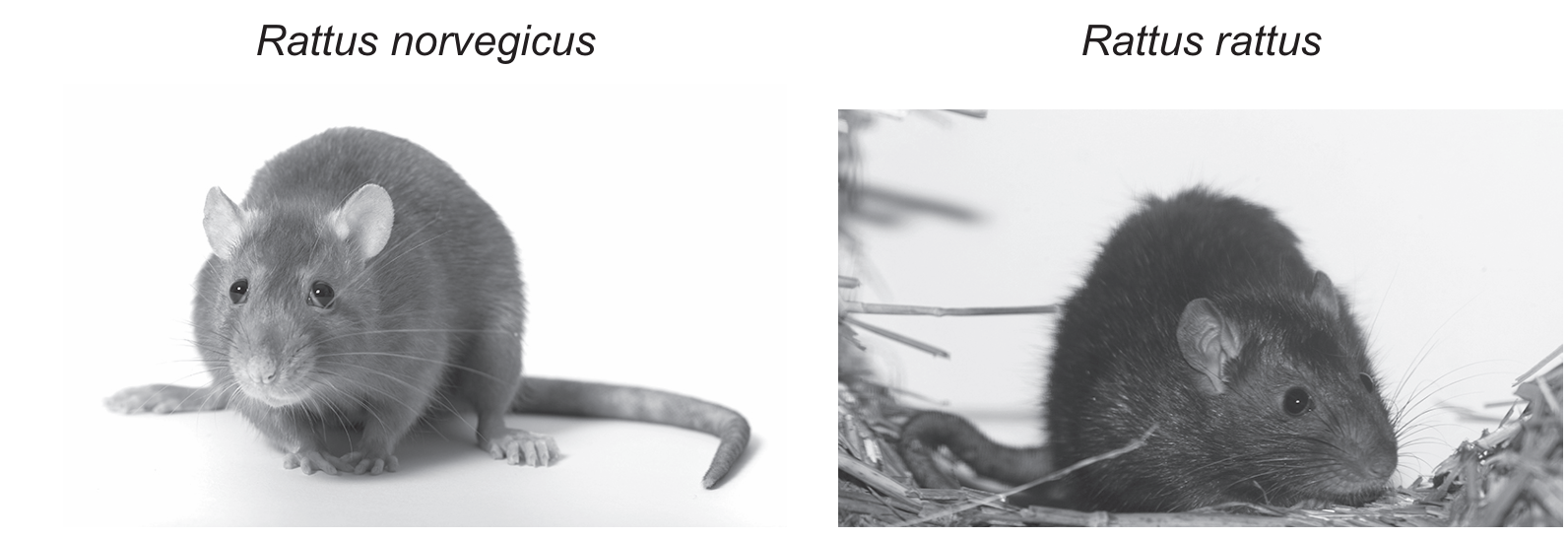
The photographs show two different rats

Which statement about the rats is correct?

(A) The rats belong to the same genus.
(B) The rats belong to the same species.
(C) The rats can breed together to produce fertile offspring.
(D) The rats do not share any of the same features.
▶️ Answer/Explanation
Binomial nomenclature uses two names: the first is the genus and the second is the species. Both rats share the first name, Rattus, meaning they belong to the same genus. They have different second names (norvegicus vs. rattus), which indicates they are different species. Because they are different species, they generally cannot breed to produce fertile offspring, making option (B) and (C) incorrect. Since they are in the same genus, they naturally share many biological features, making (D) incorrect.
Answer: (A)

Question 

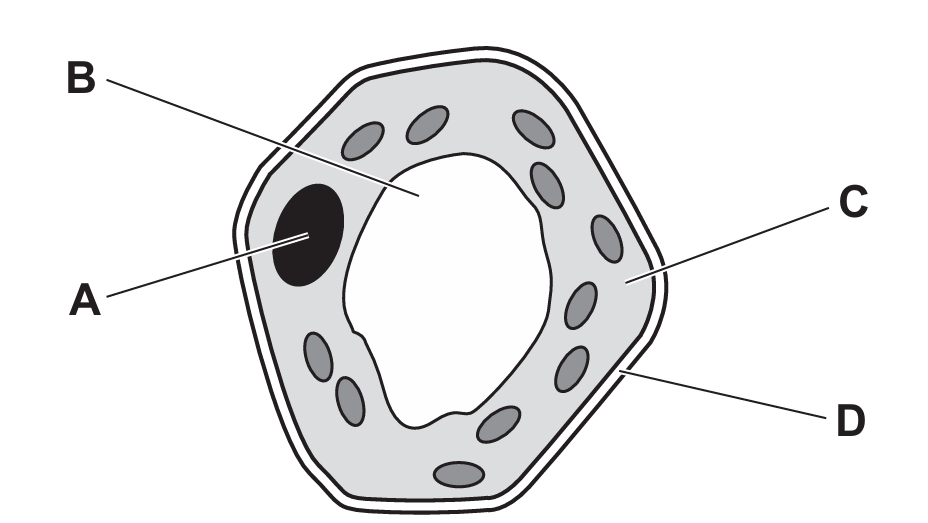
The diagram shows a plant cell.

A biologist wants to find out the number of chromosomes it contains.

Which labelled part should be examined more closely?

▶️ Answer/Explanation
Chromosomes are thread-like structures made of protein and a single molecule of DNA that serve to carry genomic information from cell to cell. In eukaryotic organisms like plants, these chromosomes are housed within the nucleus. Label A points directly to the nucleus, which acts as the control center of the cell and contains the genetic material. Label B indicates the large central vacuole, C points to the cytoplasm, and D represents the cell wall, none of which contain the primary set of chromosomes. Therefore, to count the number of chromosomes, a biologist must focus their examination on the nucleus.
Answer: (A)

Question 

The diagram shows the order of bases along part of one strand of DNA.

A—C—T—T—A—G—A—T

What is the order of bases on the complementary part of the other strand?

(A) A—C—T—T—A—G—A—T
(B) C—A—G—G—C—T—C—G
(C) T—A—G—A—T—T—C—A
(D) T—G—A—A—T—C—T—A
▶️ Answer/Explanation
DNA strands are held together by complementary base pairing rules. In a DNA molecule, the nitrogenous base Adenine ($A$) always pairs with Thymine ($T$), and Cytosine ($C$) always pairs with Guanine ($G$). To find the complementary sequence, we must replace each base in the original strand with its partner: $A$ becomes $T$, $C$ becomes $G$, $T$ becomes $A$, and $G$ becomes $C$. Following the given sequence A—C—T—T—A—G—A—T, the pairing results in T—G—A—A—T—C—T—A. This specific matching ensures the genetic code is copied accurately during replication.
Answer: (D)
Scroll to Top