
IB DP Biology Mock Exam HL Paper 1A Set 4 - 2025 Syllabus
IB DP Biology Mock Exam HL Paper 1A Set 4
Prepare for the IB DP Biology Exam with our comprehensive IB DP Biology Exam Mock Exam HL Paper 1A Set 4. Test your knowledge and understanding of key concepts with challenging questions covering all essential topics. Identify areas for improvement and boost your confidence for the real exam
Question
Pink flowers in the four o’clock plant (Mirabilis jalapa) result from incomplete dominance between the red-flower allele and the white-flower allele. A pink-flowering plant is crossed with a white-flowering plant.
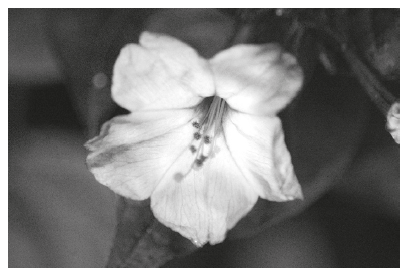
What possible flower phenotypes could appear in the offspring?
B. Pink and white flowers
C. Red and white flowers
D. Pink flowers only
▶️ Answer/Explanation
✅ Answer: (B)
Question
Which statement best describes analogous structures?
B. They share a common ancestor.
C. They originated from different evolutionary pathways.
D. They have identical structures but different functions.
▶️ Answer/Explanation
✅ Answer: (C)
Question
Both mutations and sexual reproduction help create variation, which natural selection acts upon. Which statements describe how this variation is produced?
II. Mutations generate new combinations of alleles.
III. Sexual reproduction generates new alleles.
B. III only
C. II and III only
D. I and III only
▶️ Answer/Explanation
✅ Answer: (A)